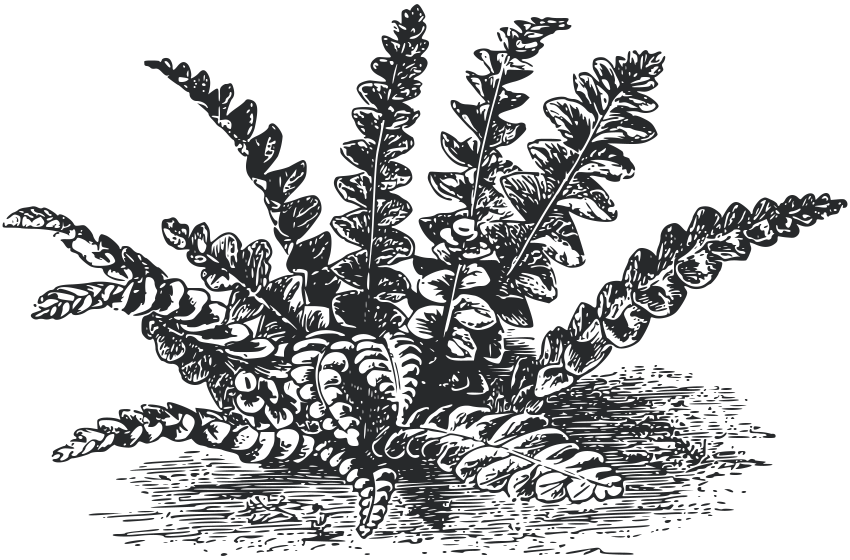
Dryopteris × deweveri (J.T.Jansen) Jansen & Wacht., 1934
Common names
- 🇫🇷 Dryoptéride de Dewèvre, Dryoptéris de Dewèvre
Taxonomy
- Kingdom: Plantae
- Clade: Tracheophytes
- Clade: Monilophytes
- Class: Polypodiopsida
- Subclass: Polypodiidae
- Order: Polypodiales
- Suborder: Polypodiineae
- Family: Dryopteridaceae
- Subfamily: Dryopteridoideae
- Genus: Dryopteris
- Species: Dryopteris × deweveri
Presence
Present.
Notes
Hybrid of D. carthusiana (Vill.) H.P.Fuchs, 1959 × D. dilatata (Hoffm.) A.Gray, 1848.
Possible confusion with D. expansa (C.Presl) Fraser-Jenk. & Jermy, 1977, which is absent below 800 m of altitude.
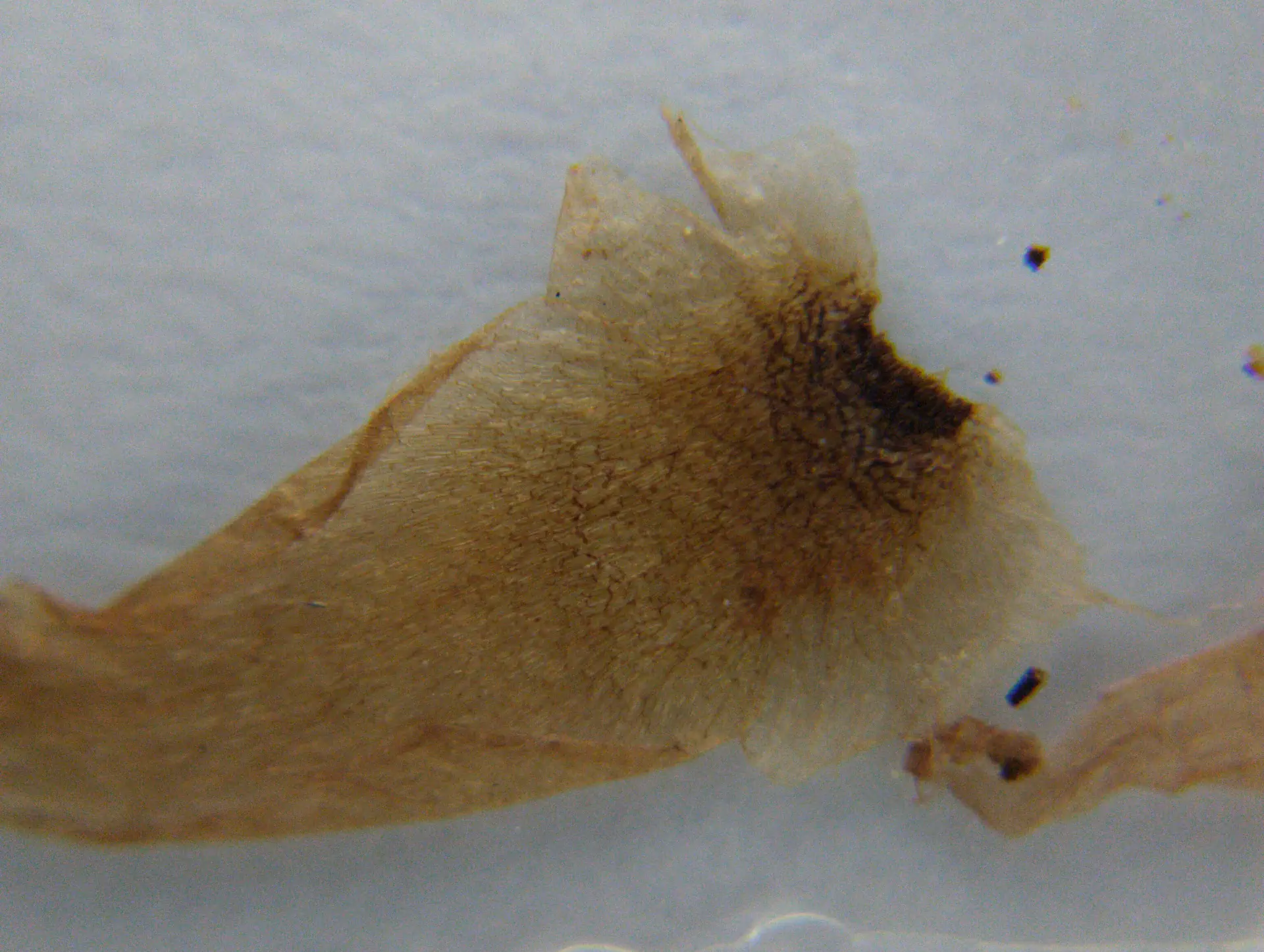
The first individual below was found in close proximity to its parent species in a mixed population. It shows light brown, concolorous scales on the petiole, pinnules that gradually narrow, and a long petiole, typical of D. carthusiana, and strongly expanded basal pinnae, typical of D. dilatata. Some of the petiole scales show a darker area at their point of insertion.
The second was found in a population of D. carthusiana. It shows light brown, concolorous scales on the petiole, typical of D. carthusiana, and strongly expanded basal pinnae, pinnules that narrow abruptly, and a short petiole, typical of D. dilatata. It is larger than the surrounding individuals of D. carthusiana, with fronds ≃ 100 cm long, which is not uncommon by itself for its parent species, but may indicate hybrid vigor.
Tetraploid (2n = 164).
Named after Alfred Dewèvre (1866-1897), a Belgian botanist.
While I am reasonably confident about the hybrid nature of these individuals based on macroscopic criteria, they have not been subjected to cytological examination or spore verification; thus, they remain potential hybrids.
Photographs




Sources
Badré, F., & Deschatres, R. (1979). Les Ptéridophytes de la France : liste commentée des espèces (taxinomie, cytologie, écologie et répartition générale). Candollea, 34(2), 379-457. https://doi.org/10.5169/seals-880127
Prelli, R., & Boudrie, M. (2024). Les fougères et plantes alliées d’Europe (2nd ed., p. 399). Biotope.