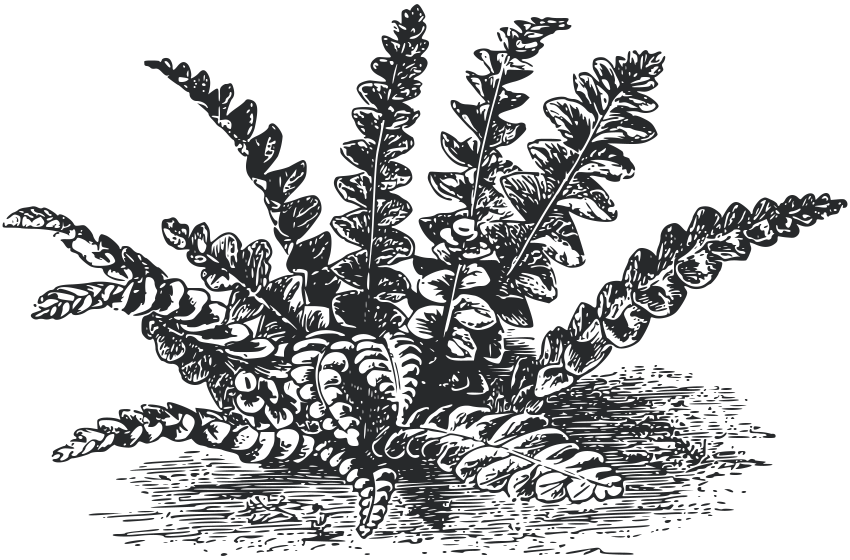
Polystichum × bicknellii Hahne, 1904
Common names
- 🇬🇧 Bicknell’s Shield-fern
- 🇫🇷 Polystic de Bicknell
Taxonomy
- Kingdom: Plantae
- Clade: Tracheophytes
- Clade: Monilophytes
- Class: Polypodiopsida
- Subclass: Polypodiidae
- Order: Polypodiales
- Suborder: Polypodiineae
- Family: Dryopteridaceae
- Subfamily: Dryopteridoideae
- Genus: Polystichum
- Species: Polystichum × bicknellii
Presence
Present.
Notes
Hybrid of P. aculeatum (L.) Roth, 1799 × P. setiferum (Forssk.) T.Moore ex Woynar, 1913.
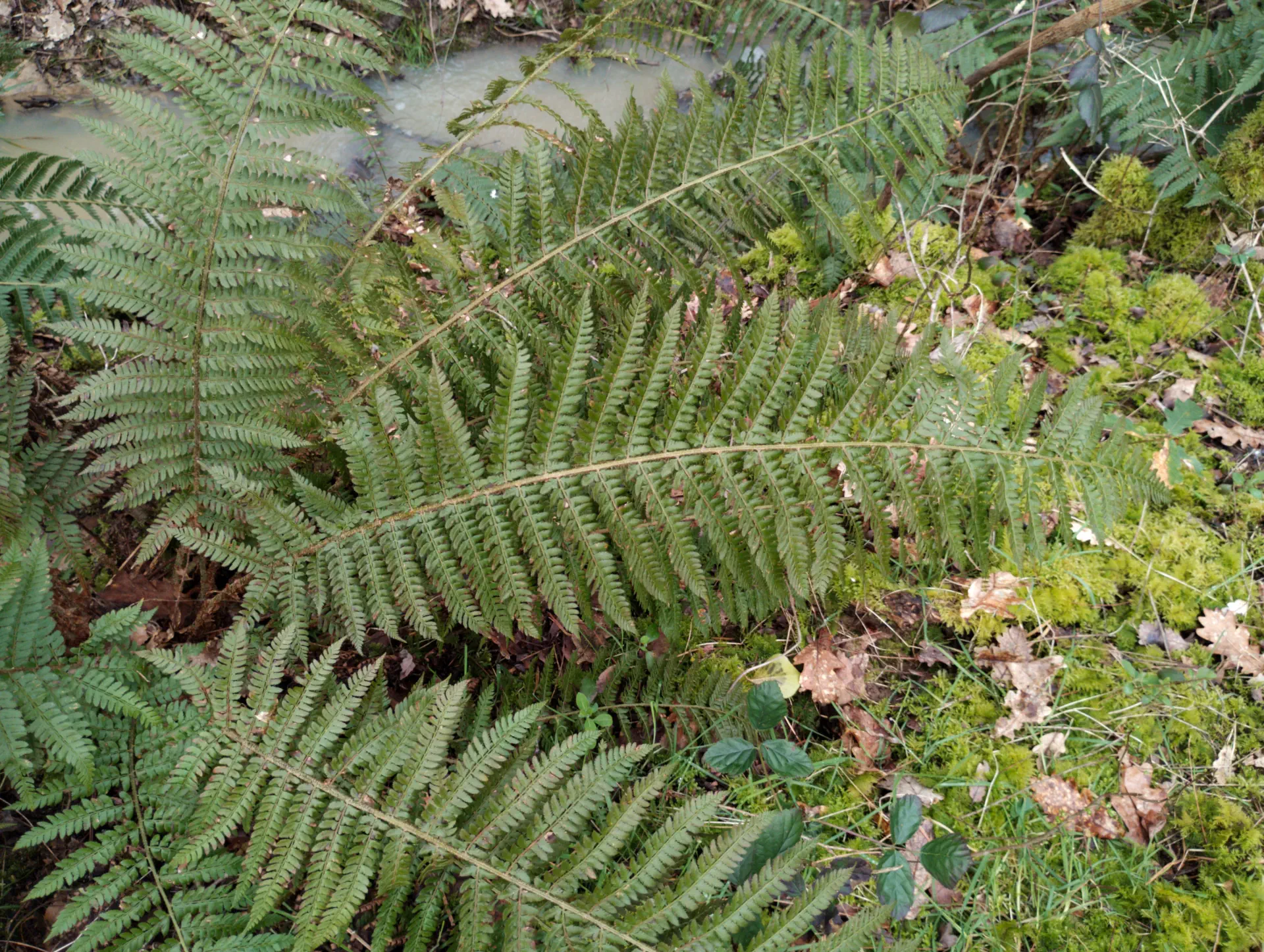
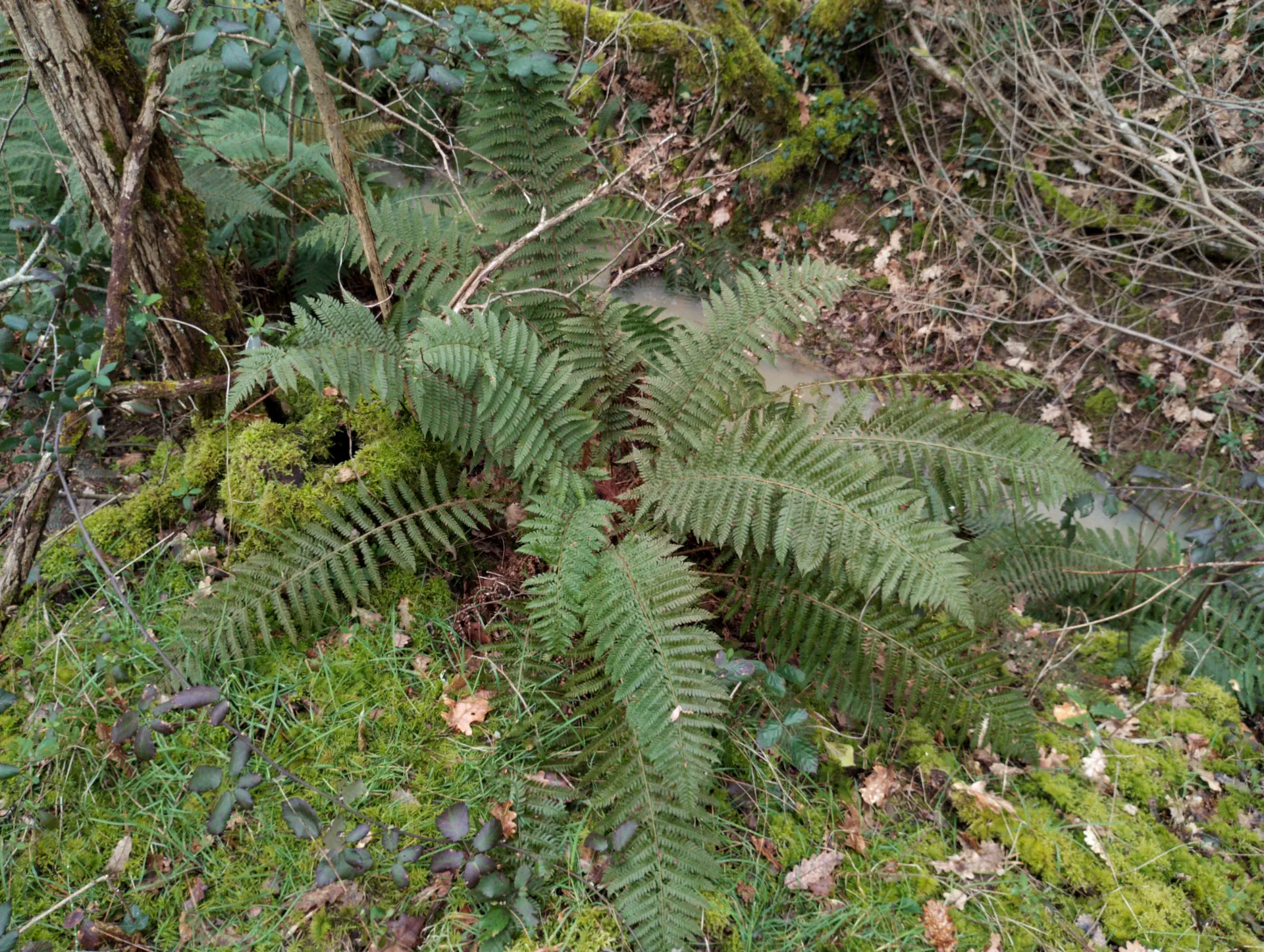
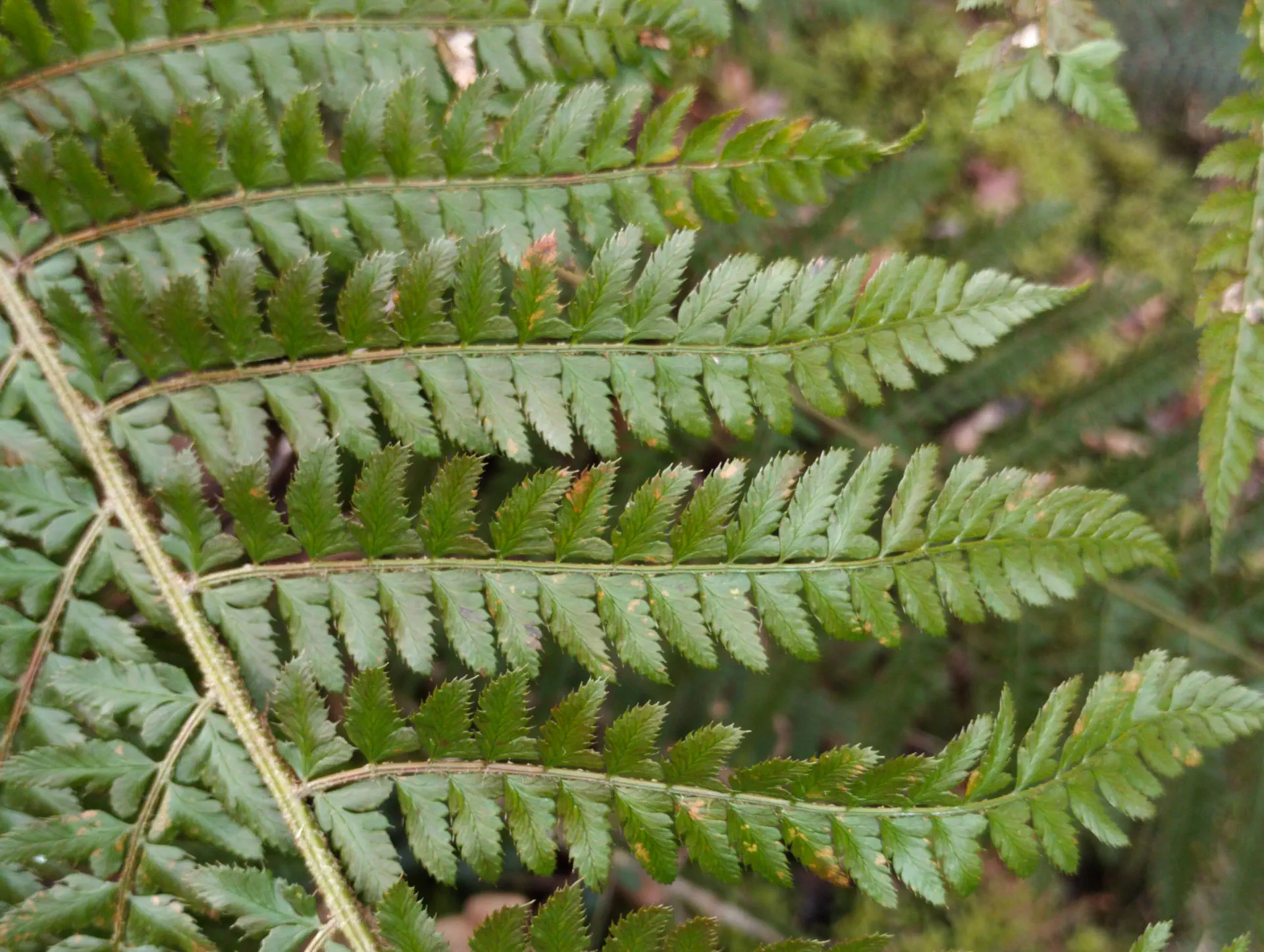
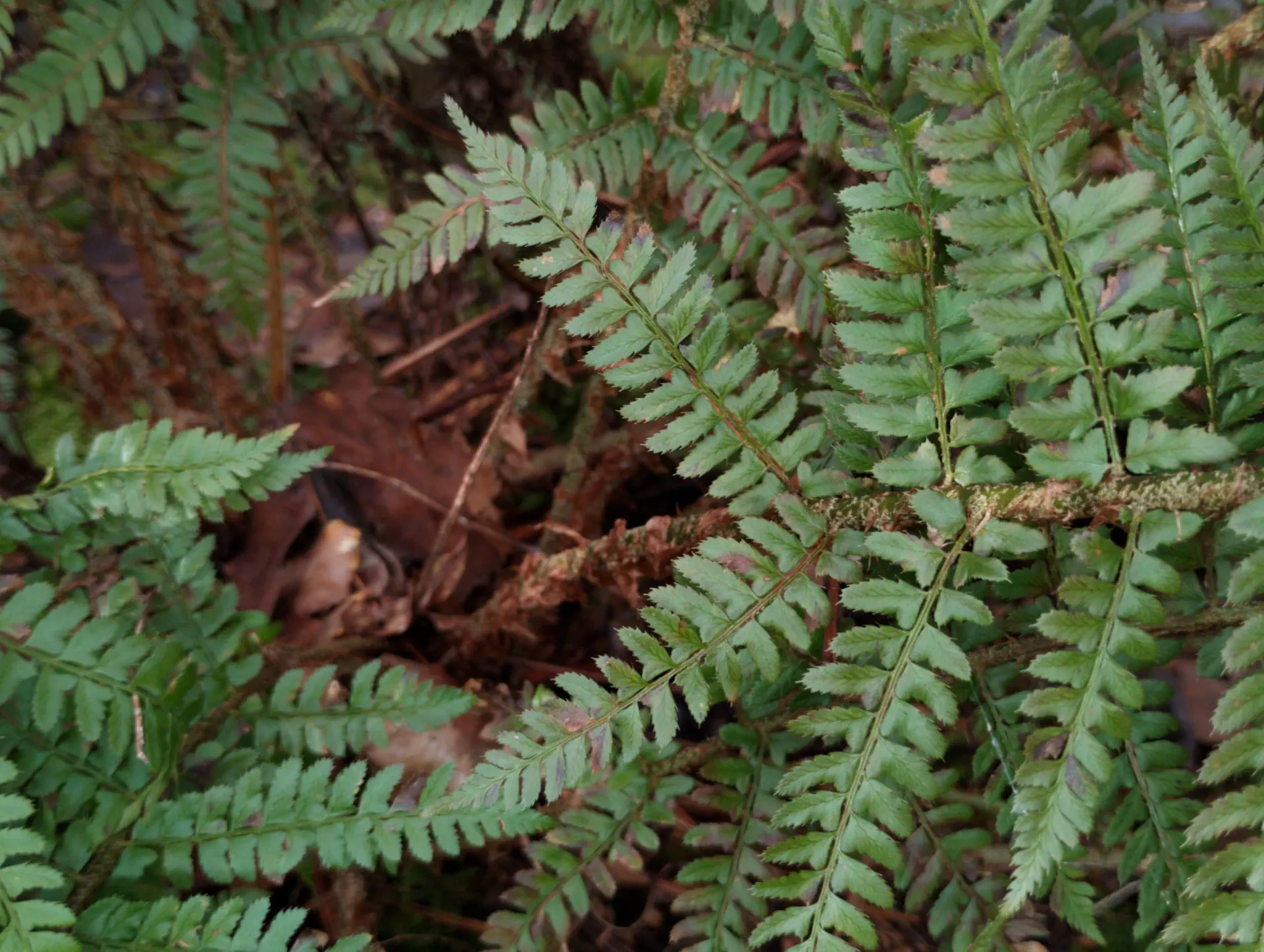
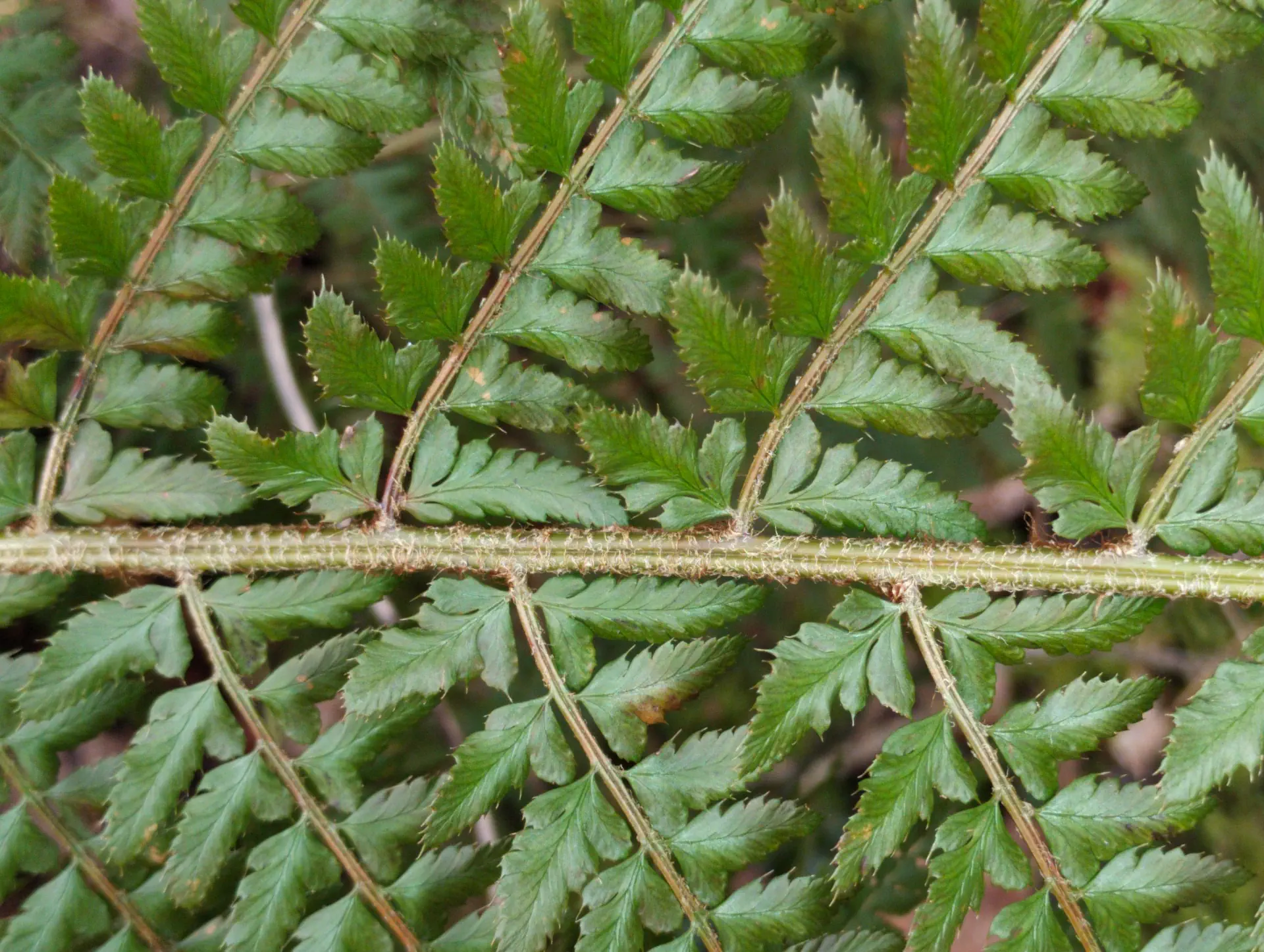
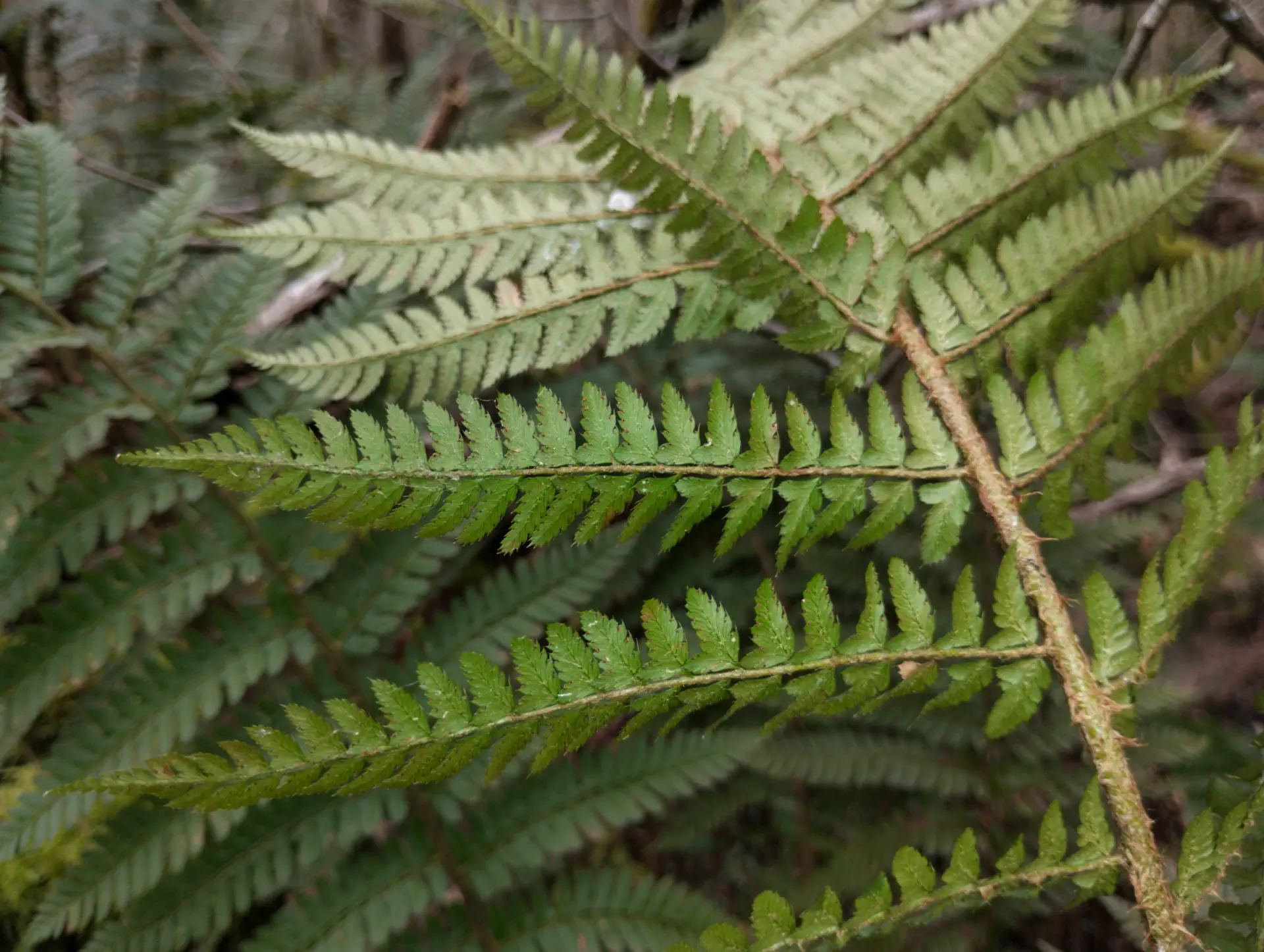
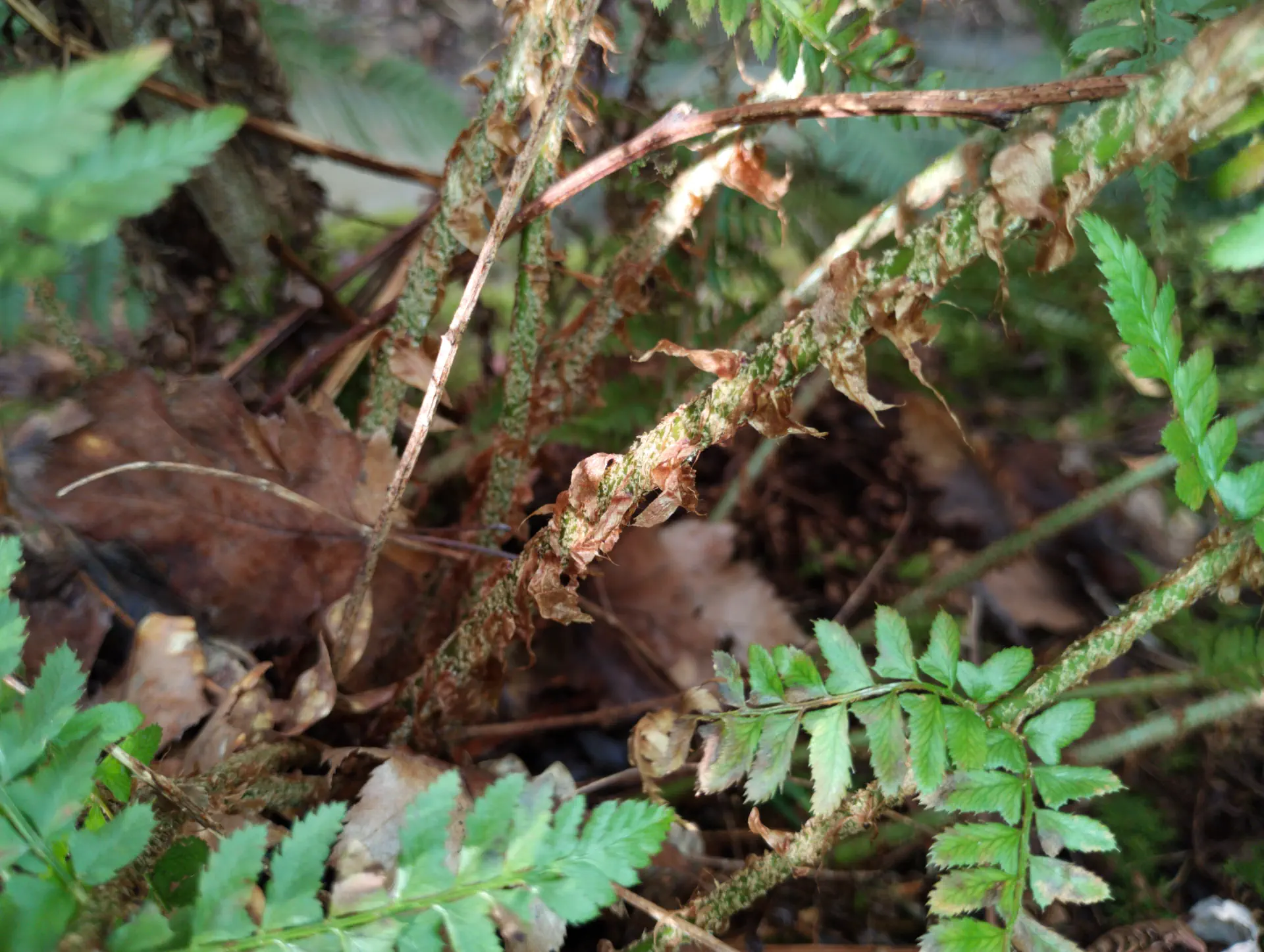
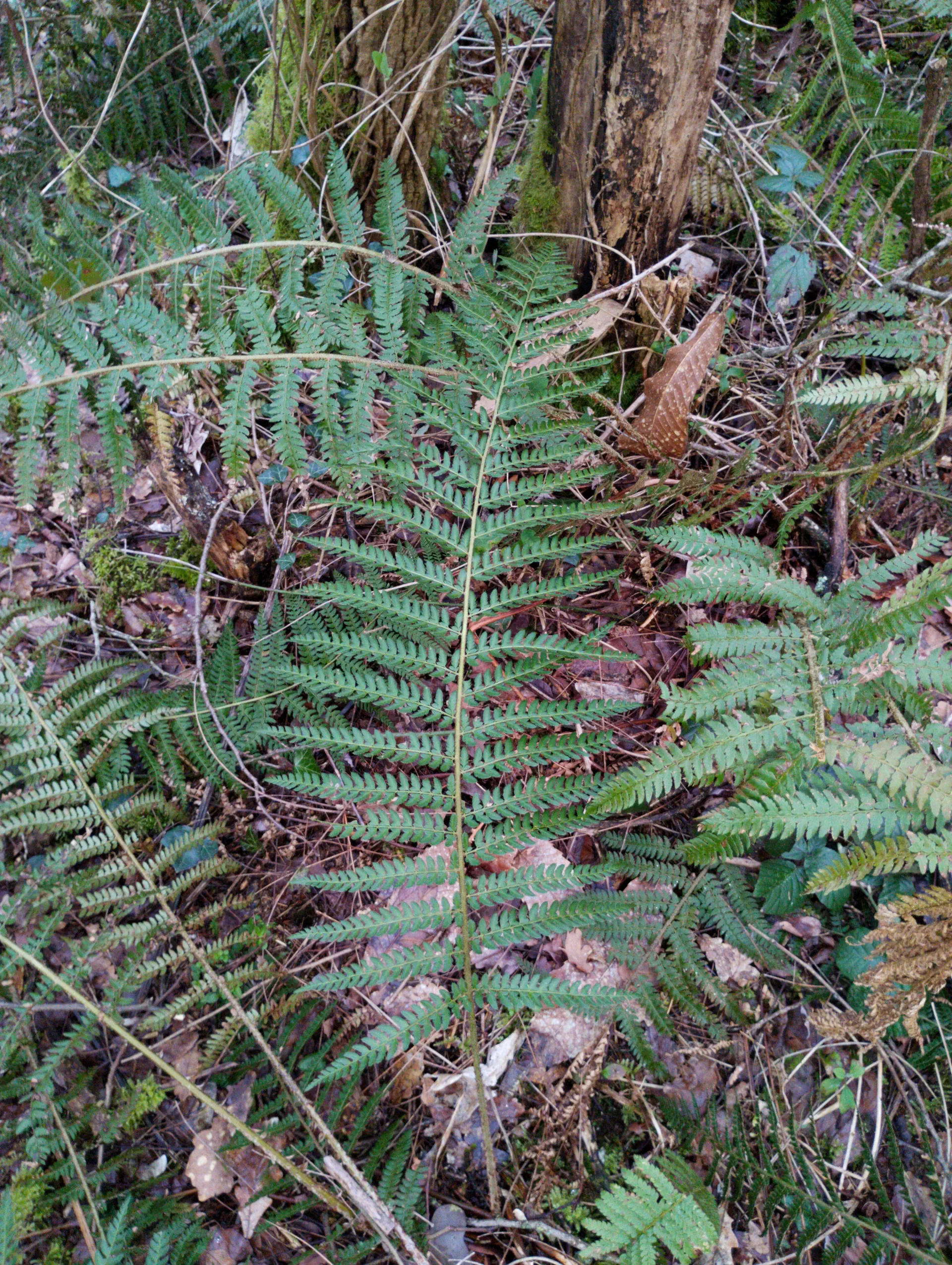
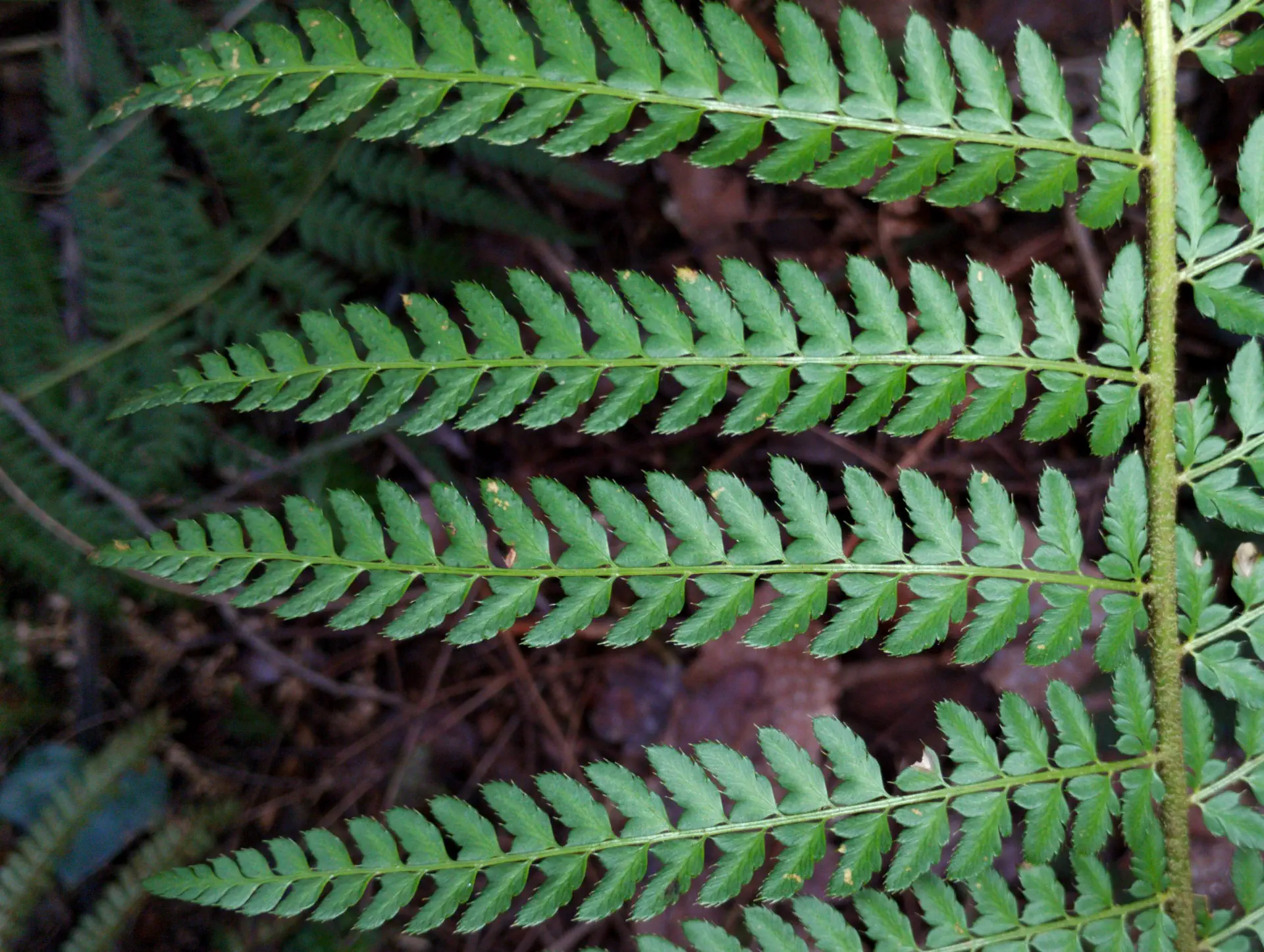
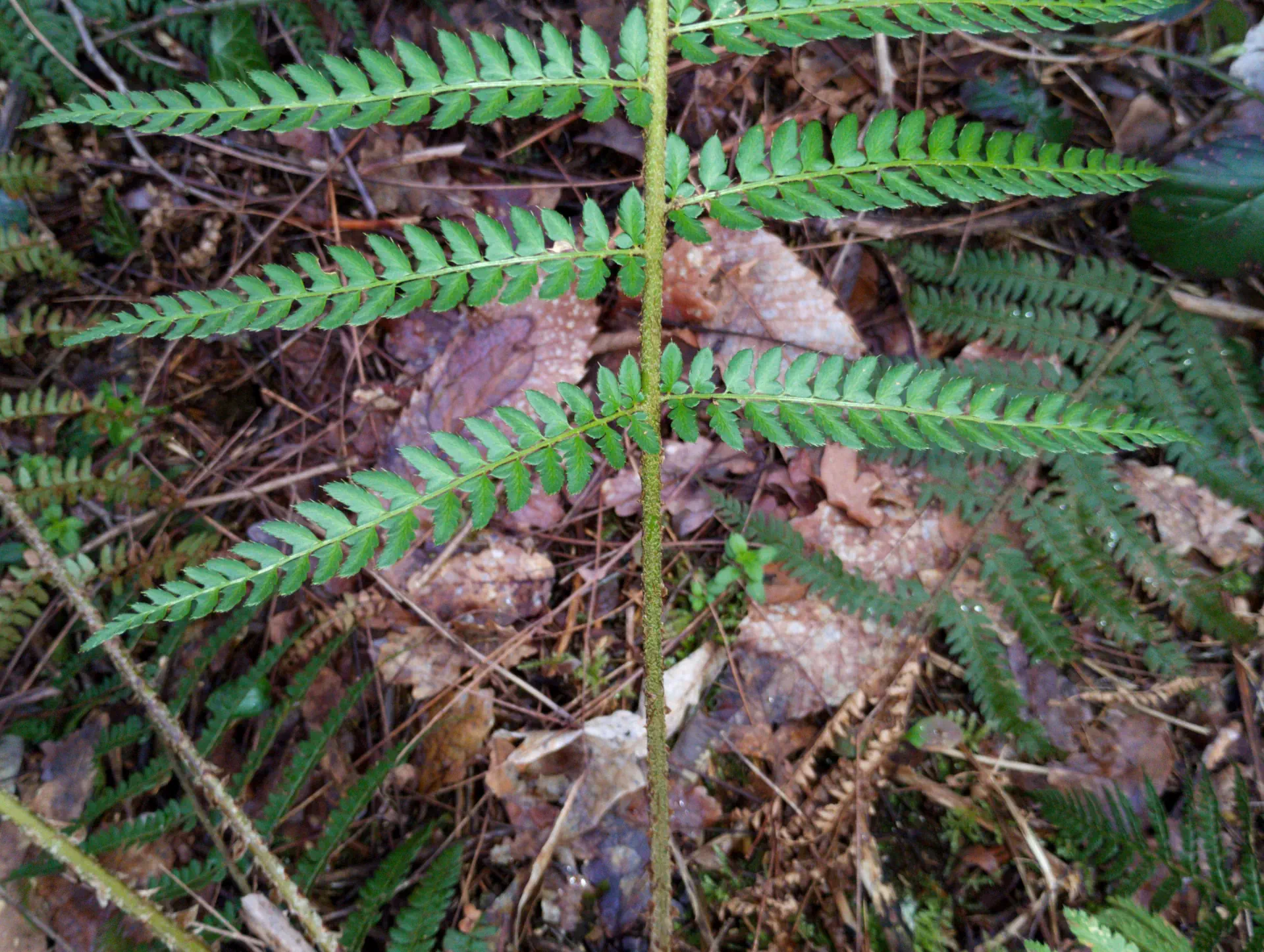
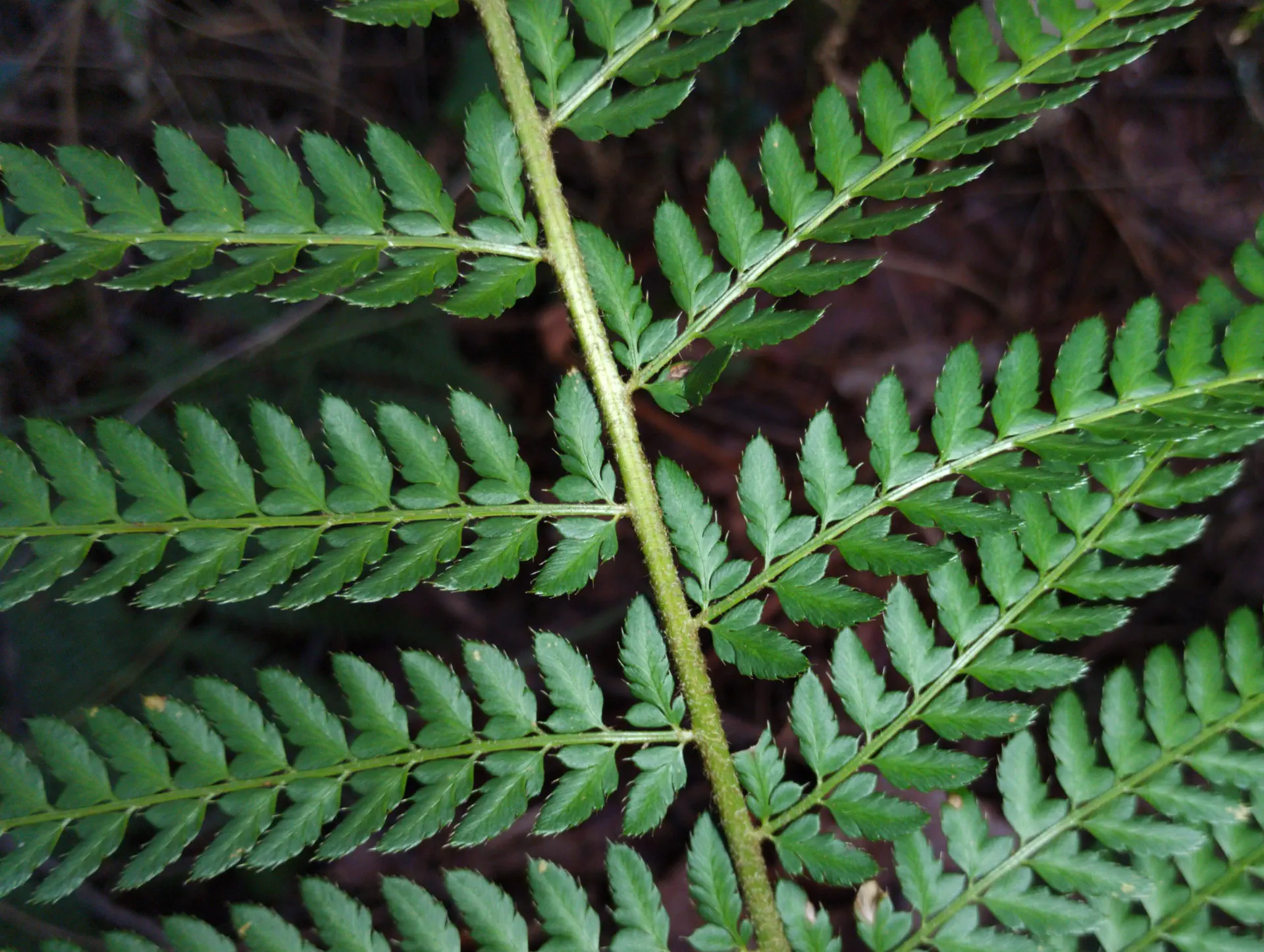
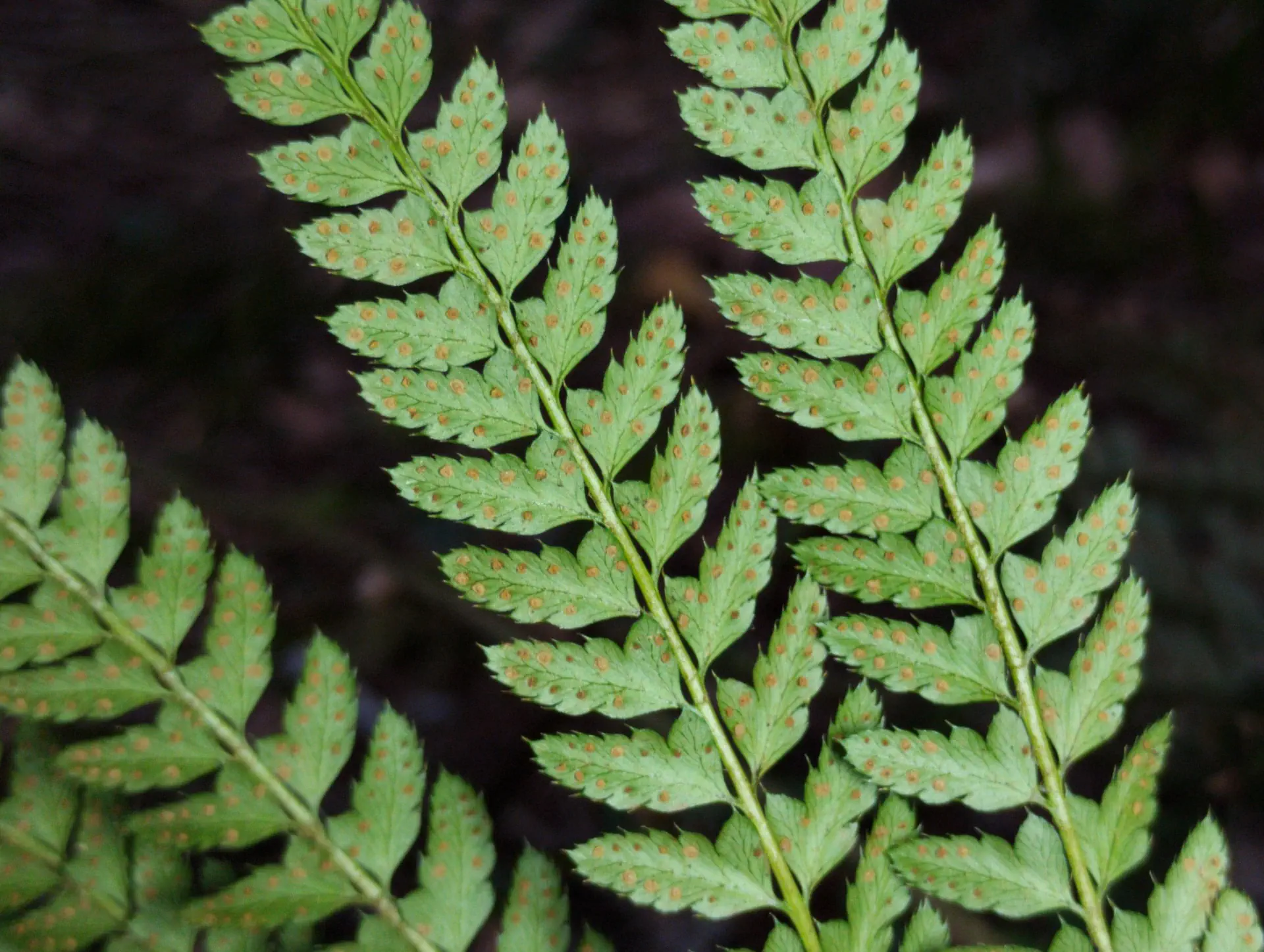
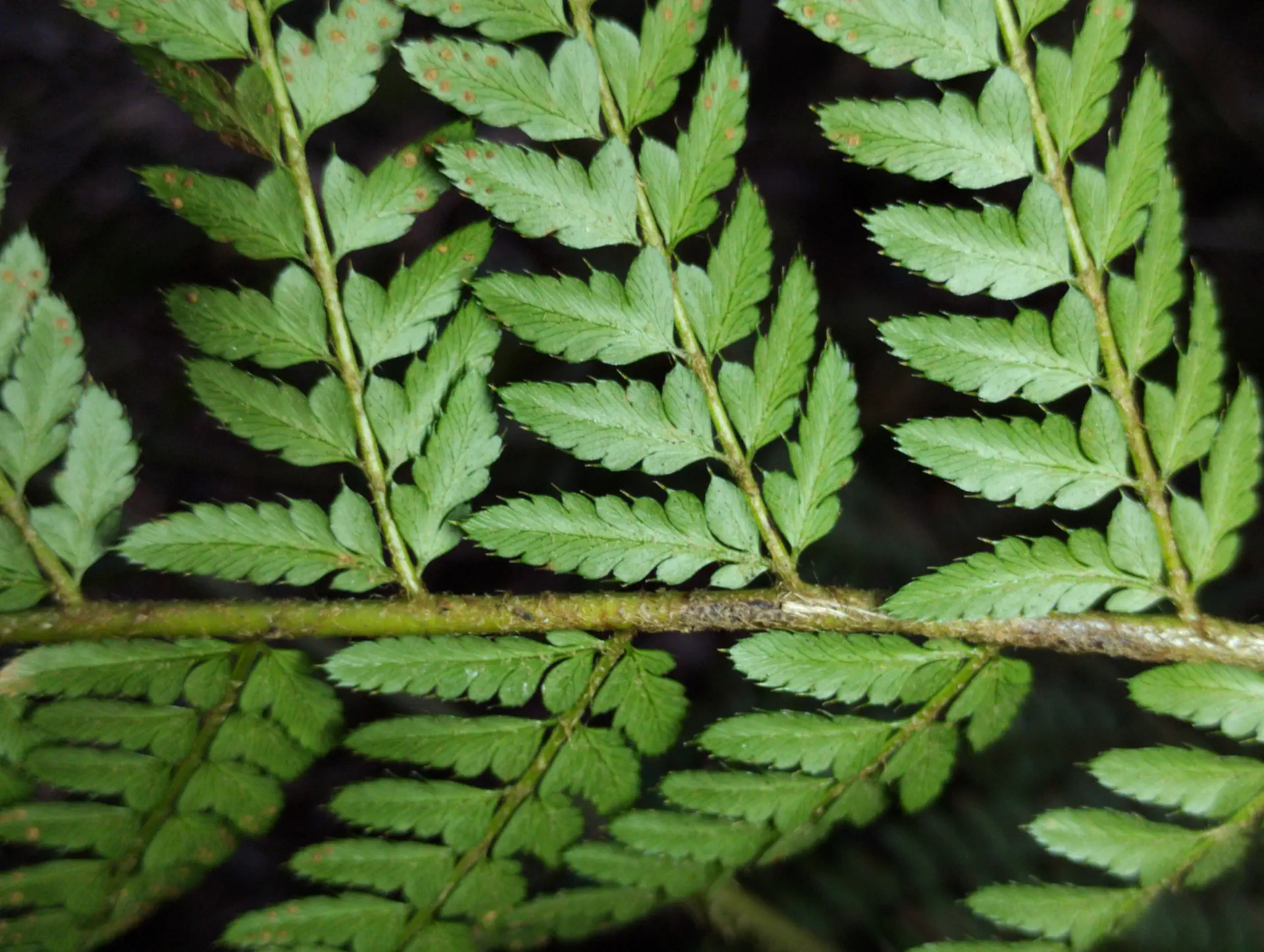
The two individuals below were found in a mixed population in the presence of both parent species nearby. They exhibit an intermediate morphology between P. setiferum - slightly reduced basal pinnae, petiolules and auricles at the base of every pinnule - and P. aculeatum - with pinnules having an acute angle of attachment on the rachilla, the first pinnule of each pinna being longer than the others.
The first individual contained no properly formed sporangia or indusia on any of the fronds, only a few aborted sporangia, indicating total sterility.
The second individual had a few sporangia covered with indusia, but most of them seemed to be aborted.
Although it is impossible to create a typical profile of P. × bicknellii, as this hybrid can be morphologically very variable and very close in appearance to one of its parents (Bizot et al., 2016), there are still some good clues to help identify it in a population of Polystichum: Looking for individuals whose first pinnule of each pinnae is very long (15-18 mm), curved toward the rachis, and have a detached auricle. The presence of aborted sporangia is also a good indicator, as P. × bicknellii is mostly sterile.
Triploid (2n = 123). P. × bicknellii is able, in rare cases, to produce viable spores through irregular meiosis, and viable hexaploid (2n = 246) offspring through autopolyploidy (Pintér, 1995). This offspring is technically a new species within the genus Polystichum.
Named after Clarence Bicknell (1842-1918), a British archaeologist and botanist.
While I am reasonably confident about the hybrid nature of these individuals based on macroscopic criteria, they have not been subjected to cytological examination or spore verification; thus, they remain potential hybrids.
Photographs
Sources
Badré, F., & Deschatres, R. (1979). Les Ptéridophytes de la France : liste commentée des espèces (taxinomie, cytologie, écologie et répartition générale). Candollea, 34(2), 379-457. https://doi.org/10.5169/seals-880127
Bizot, A., Holveck, P., Thomas, J.F., & Viane, R. (2016). Biométrie stomatique dans le genre Polystichum en Europe : résultats, enseignements et intérêts. Bulletin de la Société d’histoire naturelle des Ardennes, 105, 44-63.
Pintér, I. (1995). Progeny Studies of the Fern Hybrid Polystichum × bicknellii (Dryopteridaceae: Pteridophyta). The Fern Gazette, 15(1), 25-40.
Prelli, R., & Boudrie, M. (2024). Les fougères et plantes alliées d’Europe (2nd ed., p. 411). Biotope.
Tison, J.M., & de Foucault, B. (2014). Flora Gallica : Flore de France (p. 13). Biotope.