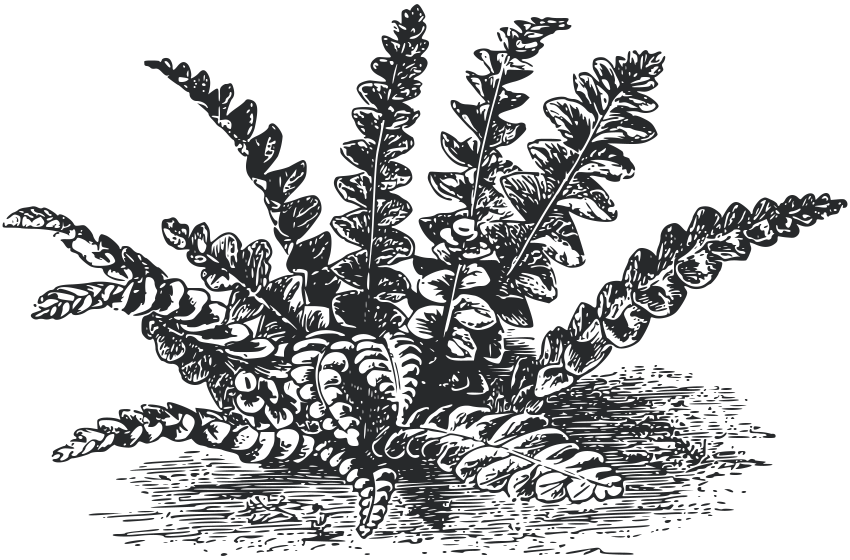
Polypodium vulgare L., 1753
Common names
- 🇬🇧 Polypody
- 🇫🇷 Polypode commun, Réglisse des bois, Polypode vulgaire
Taxonomy
- Kingdom: Plantae
- Clade: Tracheophytes
- Clade: Monilophytes
- Class: Polypodiopsida
- Subclass: Polypodiidae
- Order: Polypodiales
- Suborder: Polypodiineae
- Family: Polypodiaceae
- Subfamily: Polypodioideae
- Genus: Polypodium
- Species: Polypodium vulgare
Presence
Present.
Conservation status
- Red List (Metropolitan France): LC Least Concern
- Red List (Europe): LC Least Concern
Notes
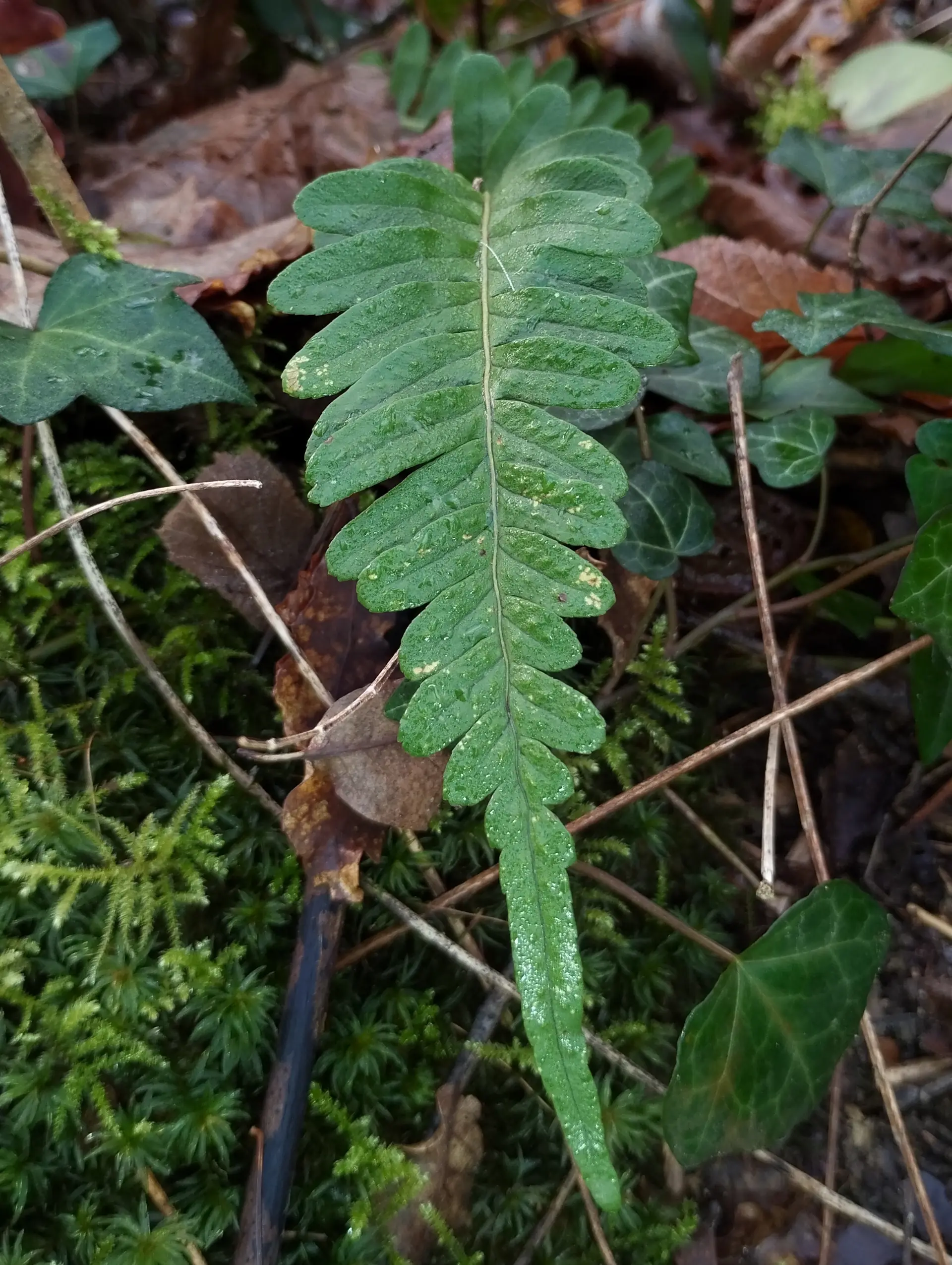
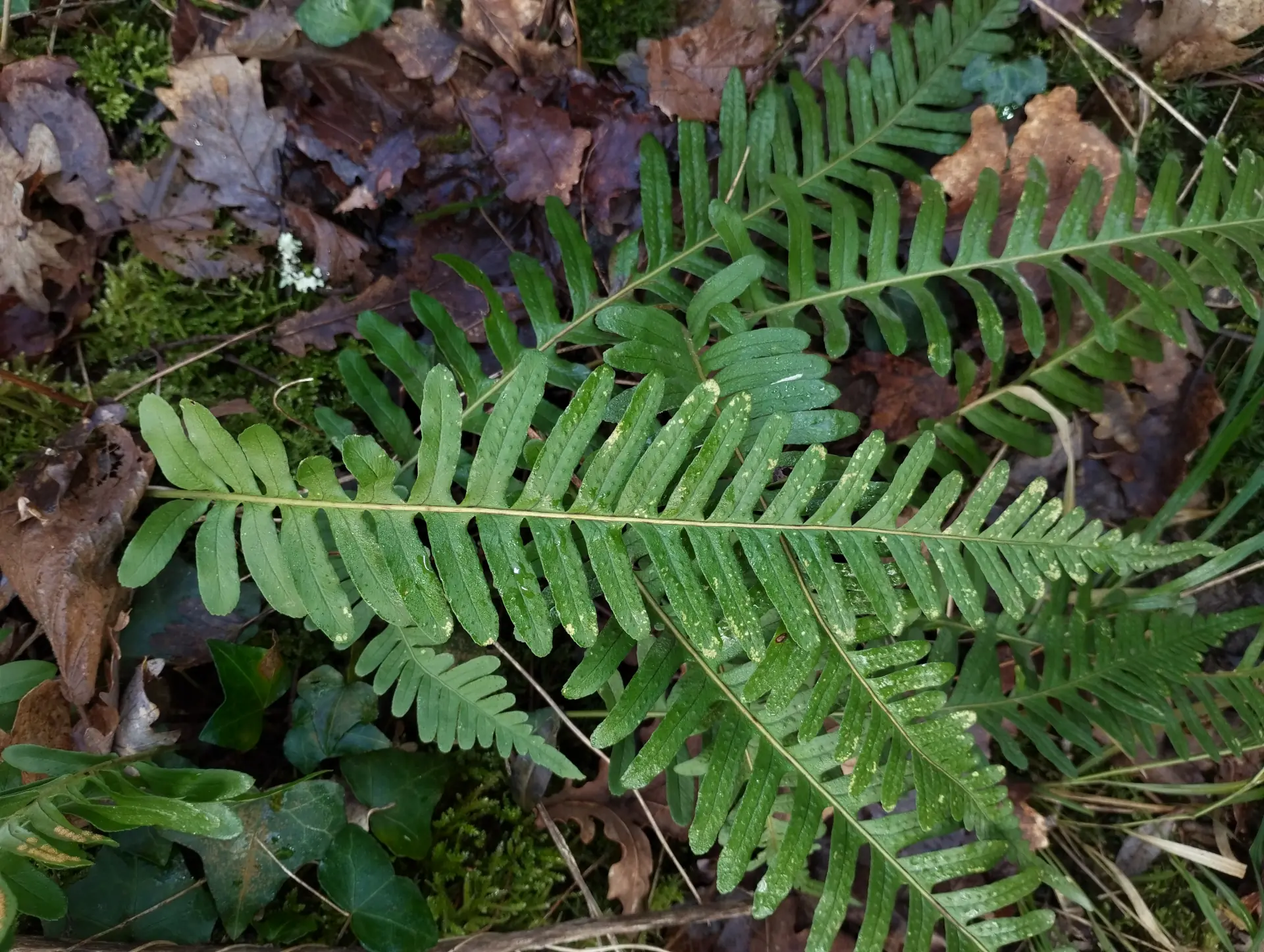
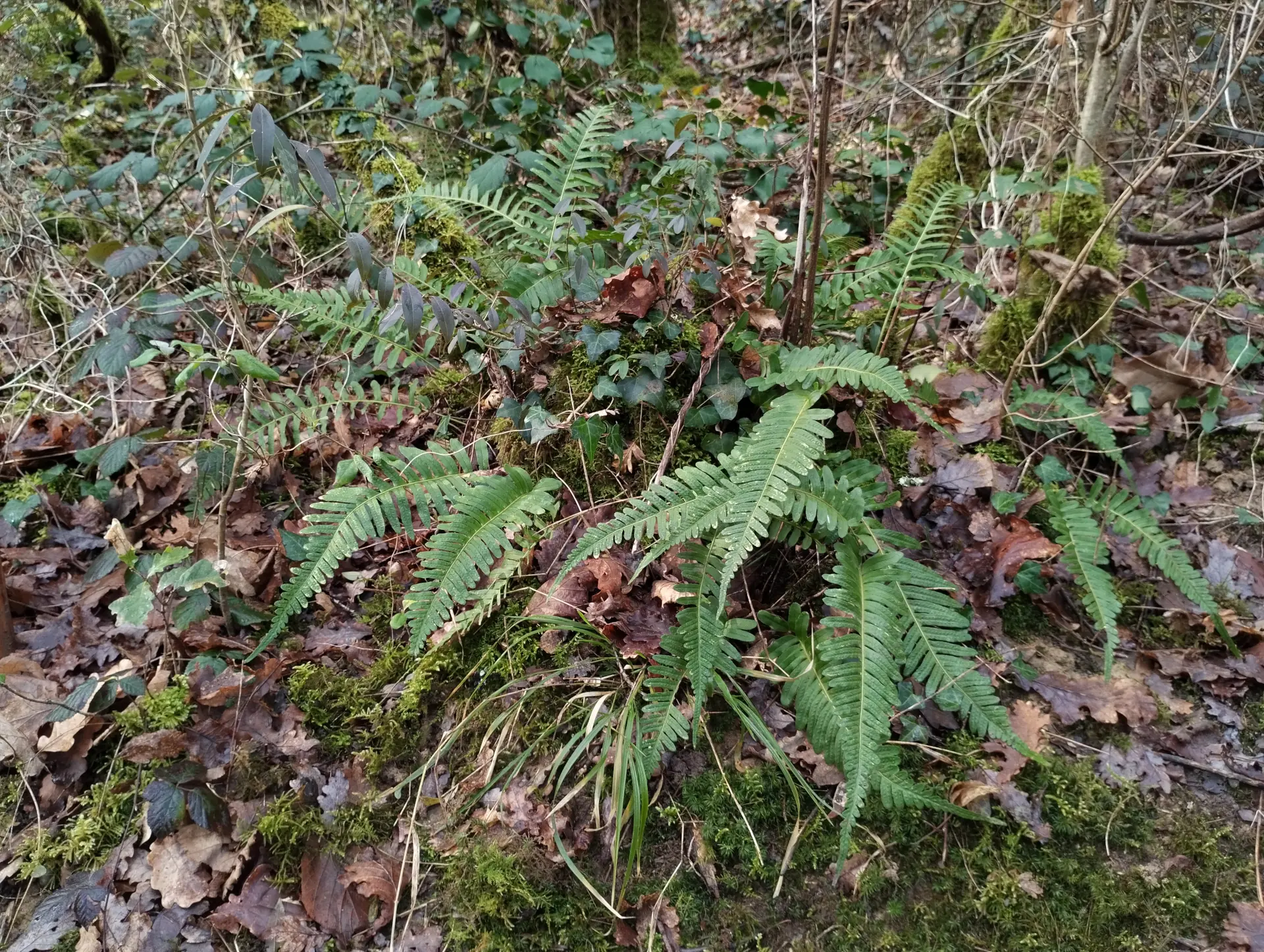
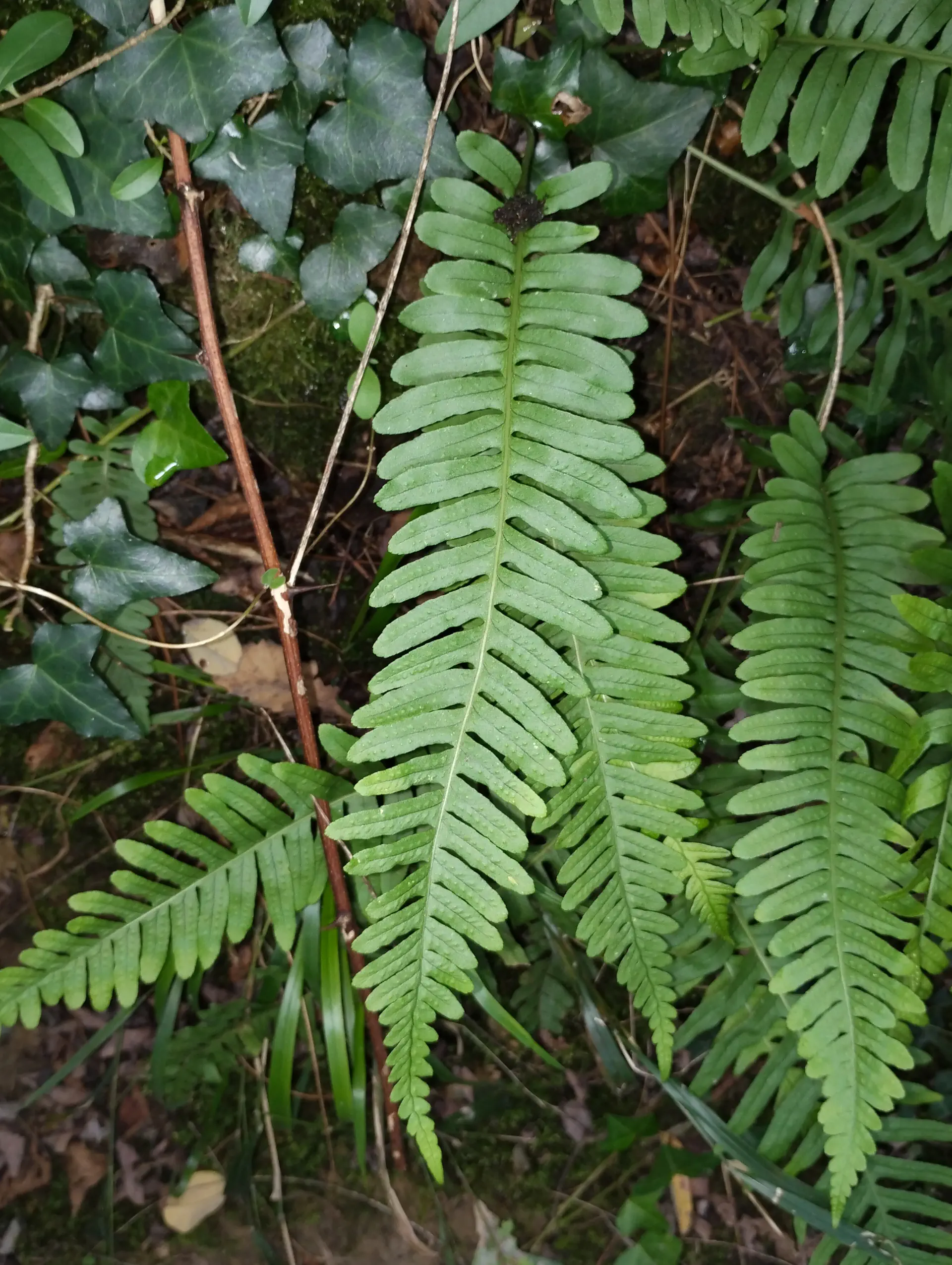
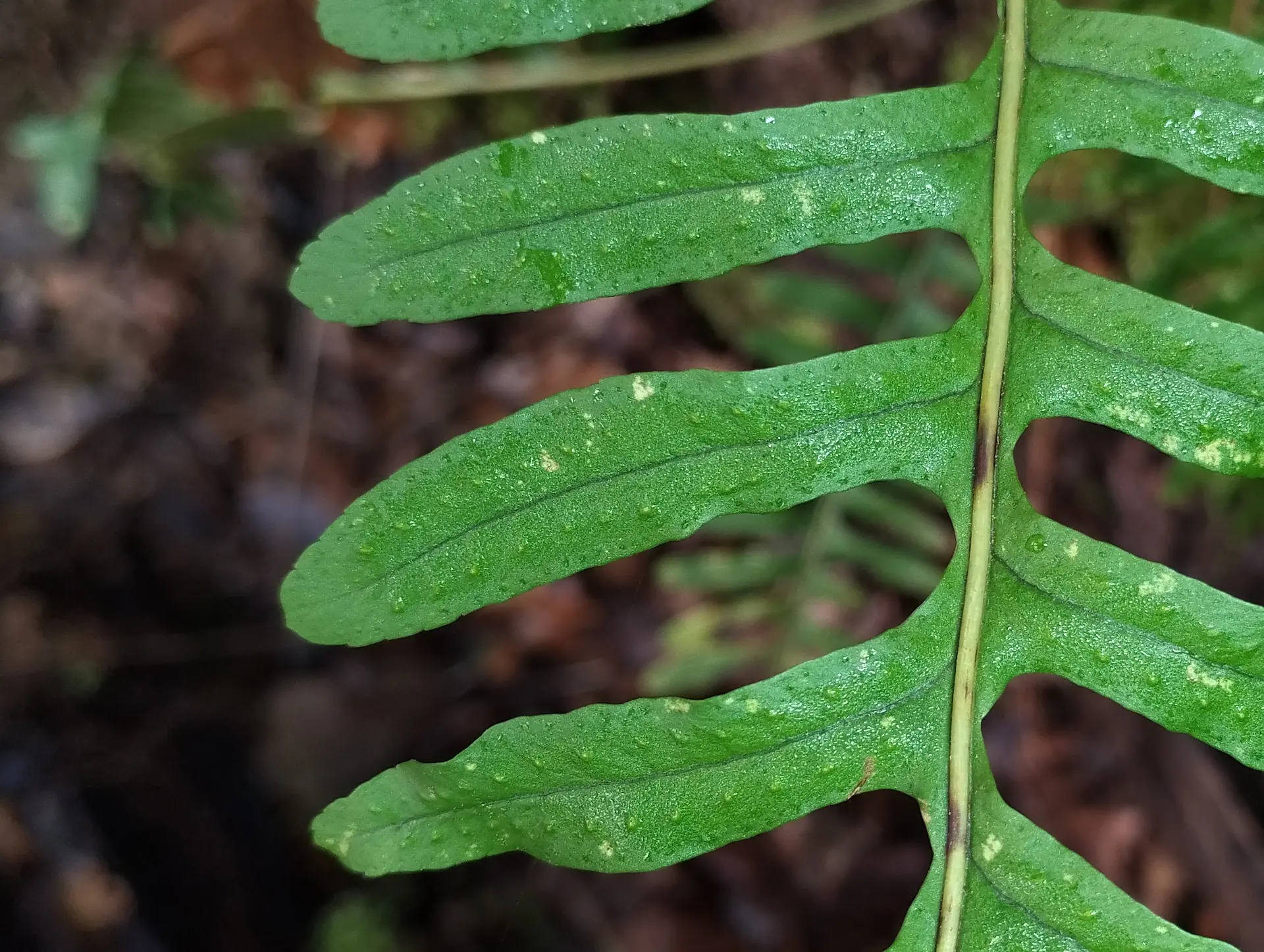
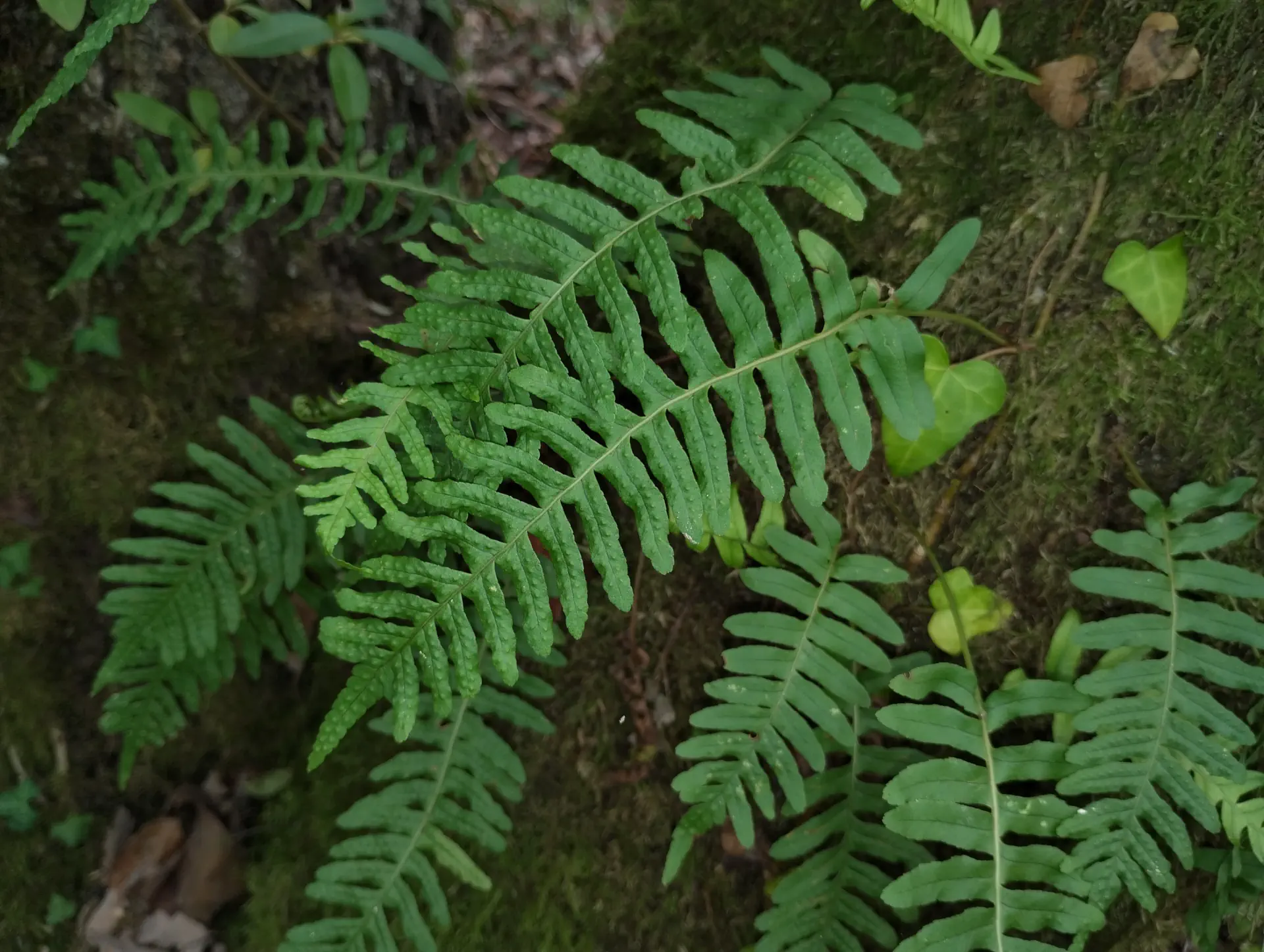
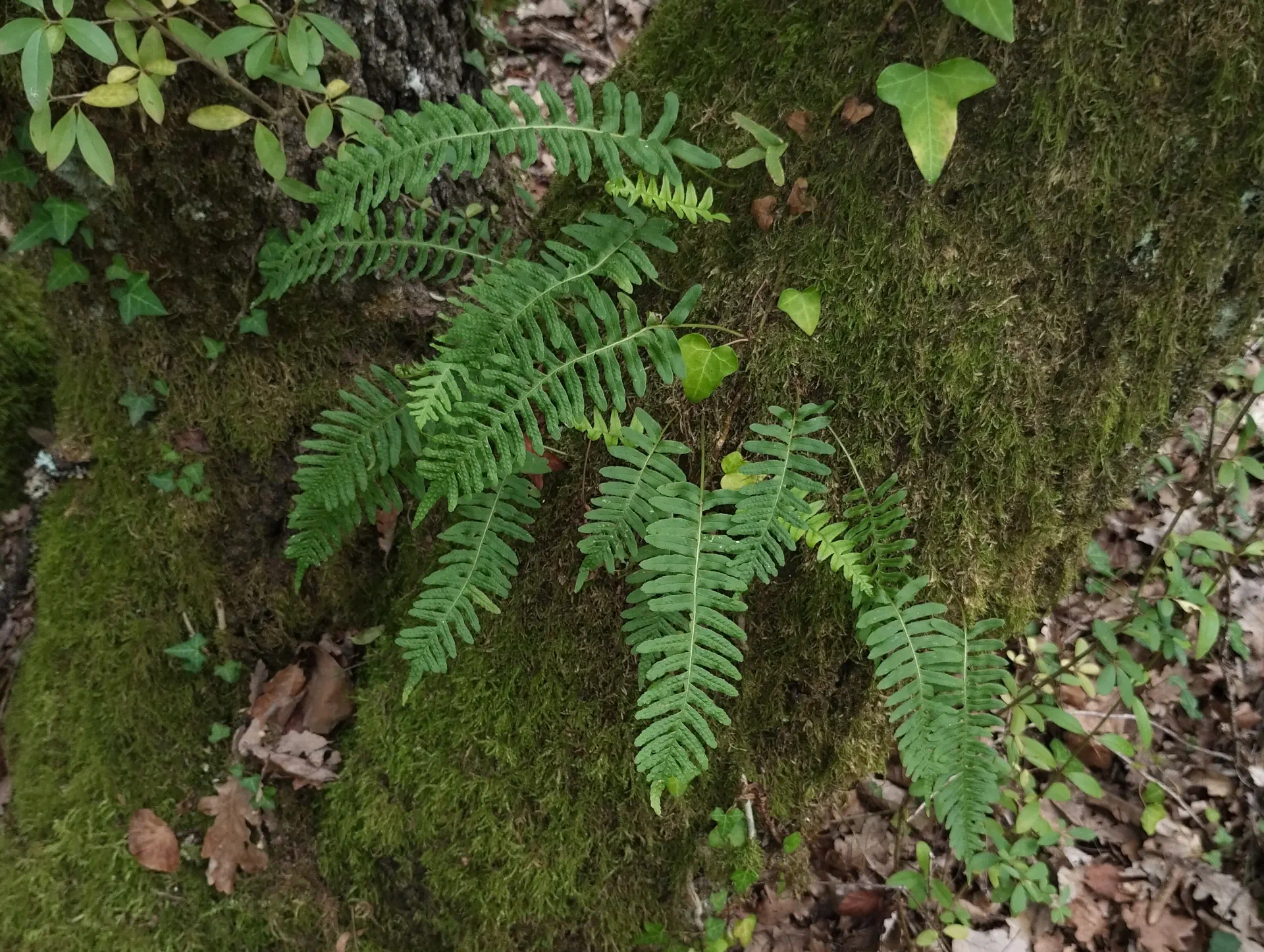
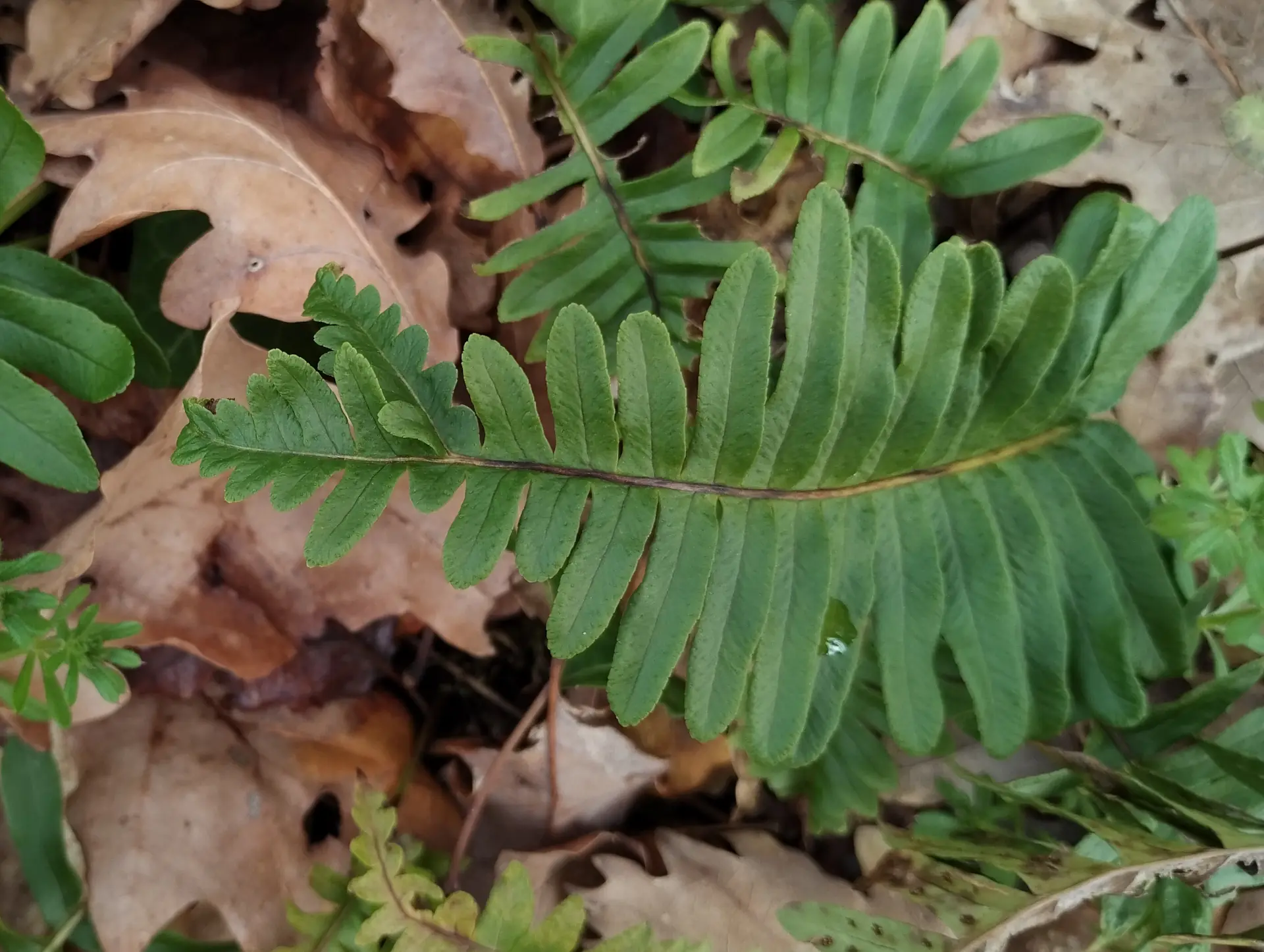
Possible confusion with P. cambricum L., 1753, whose fronds are wider (width/length ratio is usually ≥ ½), becoming narrower abruptly at the tip with a long terminal segment, and whose pinnae are usually pointed.
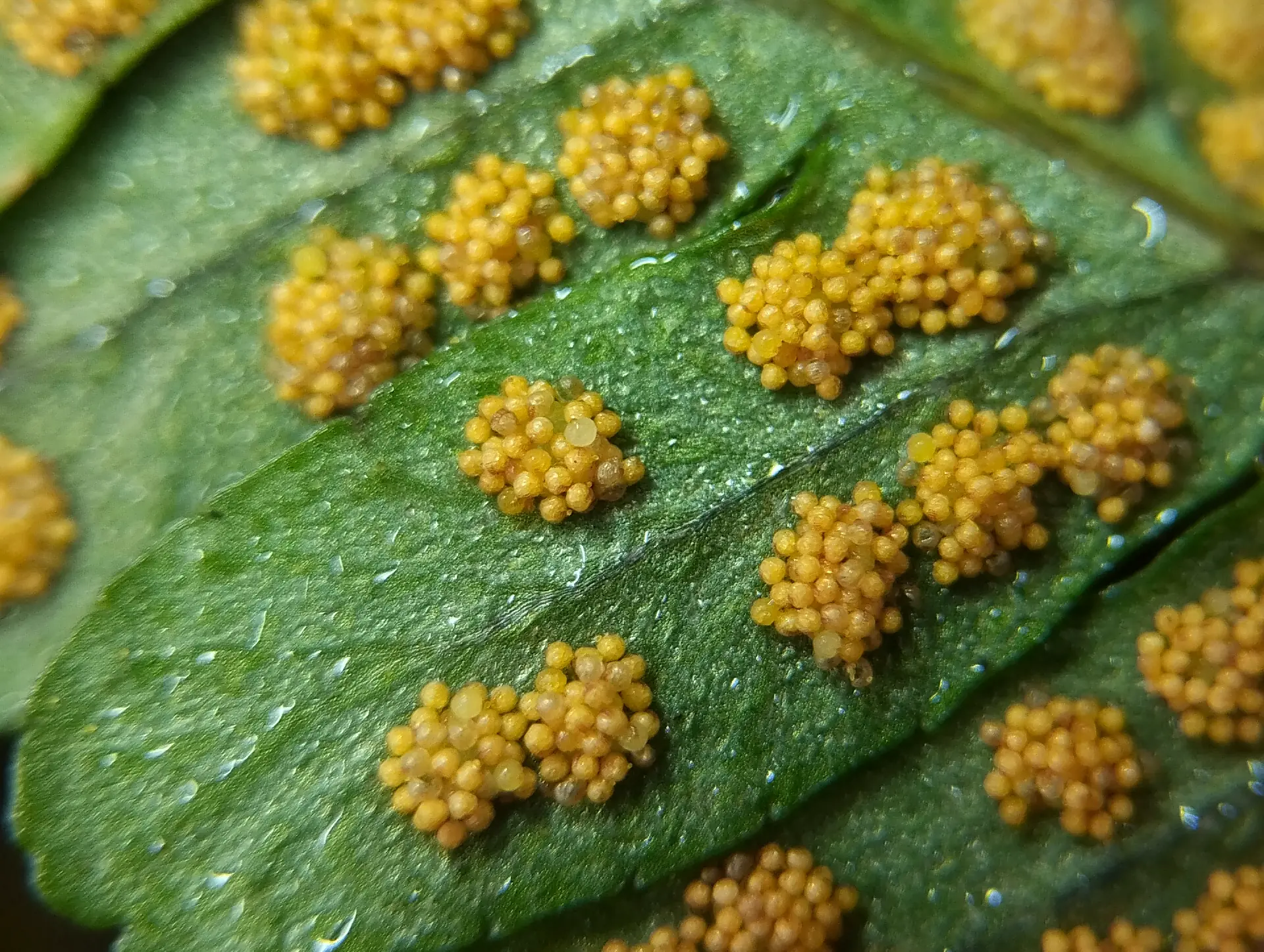
Possible confusion with P. interjectum Shivas, 1961, whose fronds are wider (width/length ratio is usually ≥ ⅓ and ≤ ½), becoming narrower gradually at the tip, and whose pinnae are usually pointed. P. interjectum sori are orange when mature, while those of P. vulgare are brown.
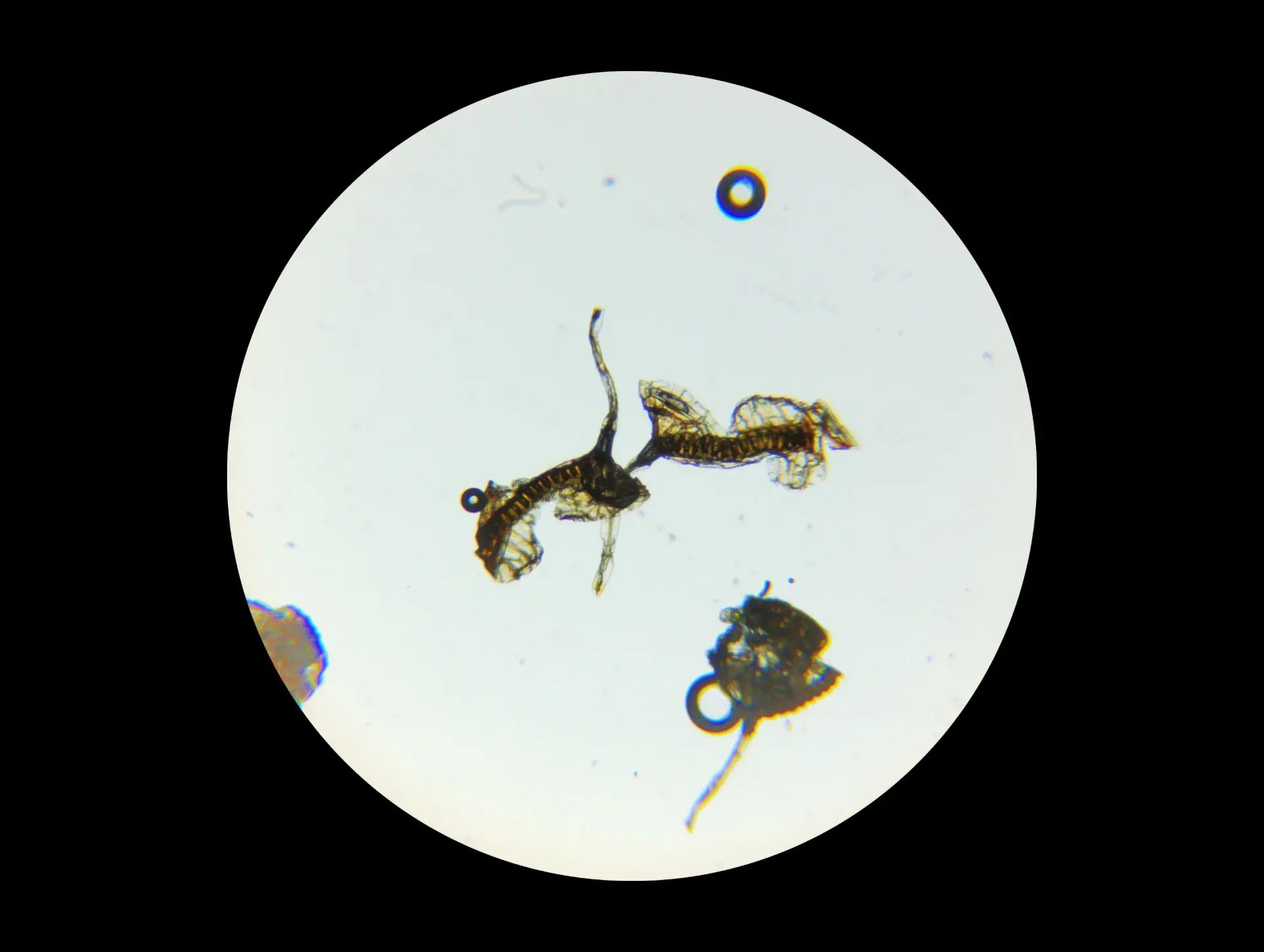
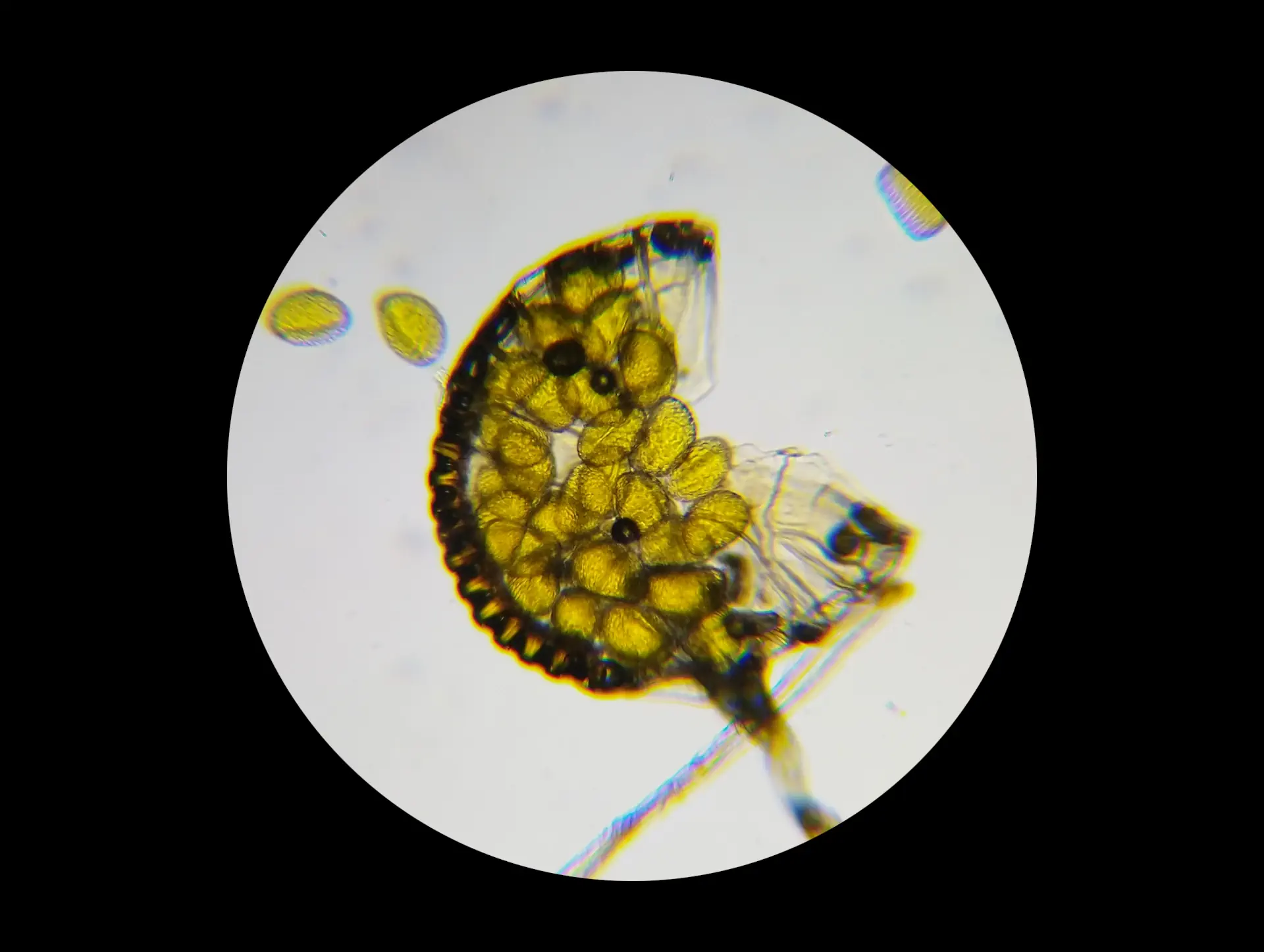
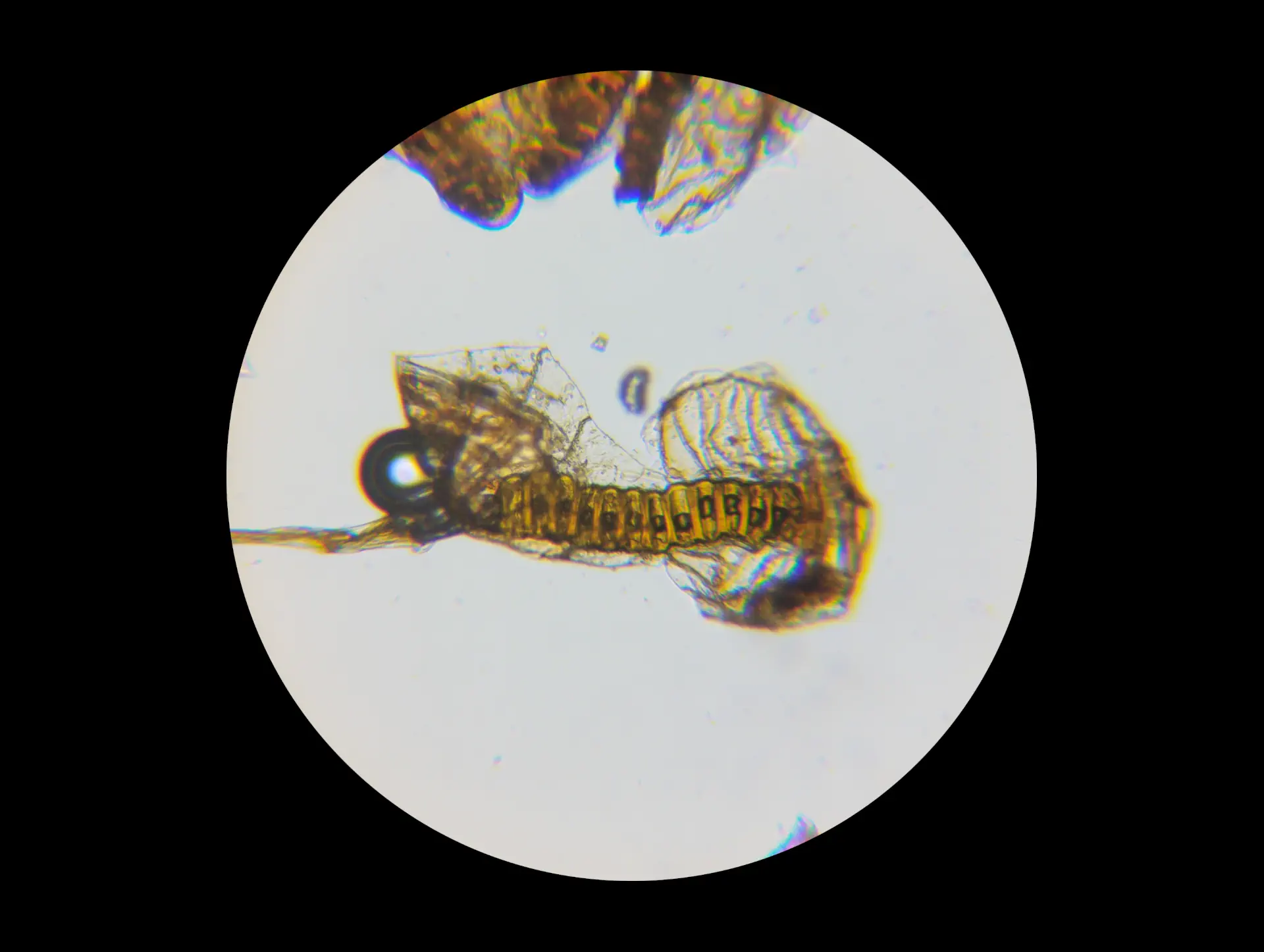
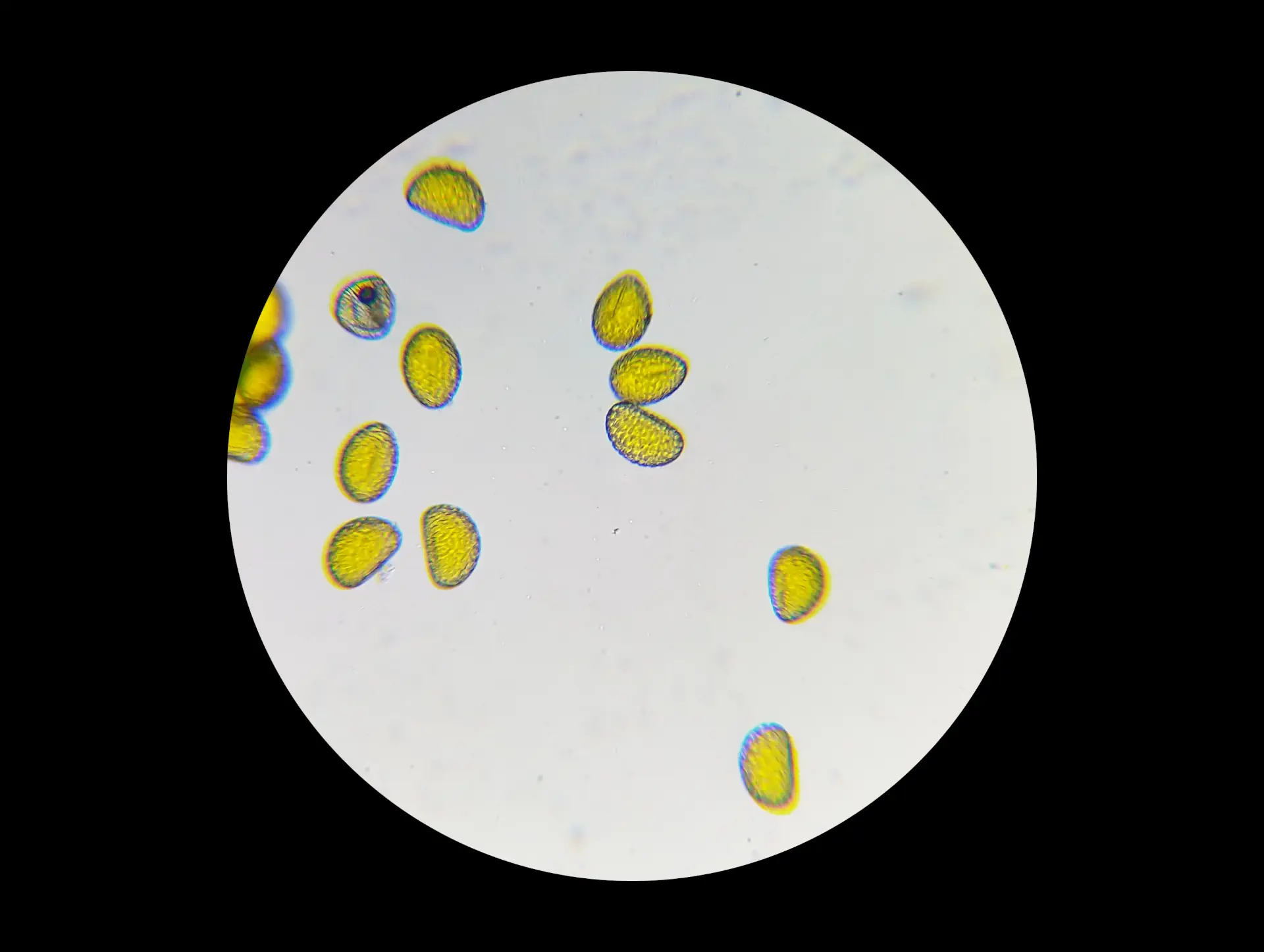
Due to the variability of characteristics between different individuals, differentiation of P. interjectum and P. vulgare on a macroscopic scale remains difficult and is often not reliable. Observing sporangia under a loupe or a microscope is the only reliable way to identify the species. P. vulgare has sporangia with a clearly visible, dark brown annulus made of 11-14 cells, while P. interjectum has sporangia with a less visible, light brown annulus made of 7-9 cells.
Allotetraploid (2n = 148).
The following infraspecific taxa are accepted:
- P. vulgare var. eatonii Baker, 1879;
- P. vulgare var. vulgare L., 1753, P.
Hybridizes with:
- P. cambricum L., 1753 to produce P. × font-queri Rothm., 1937, P;
- P. interjectum Shivas, 1961 to produce P. × mantoniae Rothm., 1962, P.
Rhizomes are edible and have a slight licorice taste. Another species, P. glycyrrhiza D.C.Eaton, 1856, which is native to Northwestern North America, is known for its strong licorice taste.
Photographs





Anomalies
Sources
Badré, F., & Deschatres, R. (1979). Les Ptéridophytes de la France : liste commentée des espèces (taxinomie, cytologie, écologie et répartition générale). Candollea, 34(2), 379-457. https://doi.org/10.5169/seals-880127
Christenhusz, M., Bento Elias, R., Dyer, R., Ivanenko, Y., Rouhan, G., Rumsey, F., & Väre, H. (2017). Polypodium vulgare (Europe assessment). The IUCN Red List of Threatened Species, 2017. https://www.iucnredlist.org/species/203397/85447699
Prelli, R., & Boudrie, M. (2024). Les fougères et plantes alliées d’Europe (2nd ed., p. 422). Biotope.
Tison, J.M., & de Foucault, B. (2014). Flora Gallica : Flore de France (p. 23). Biotope.