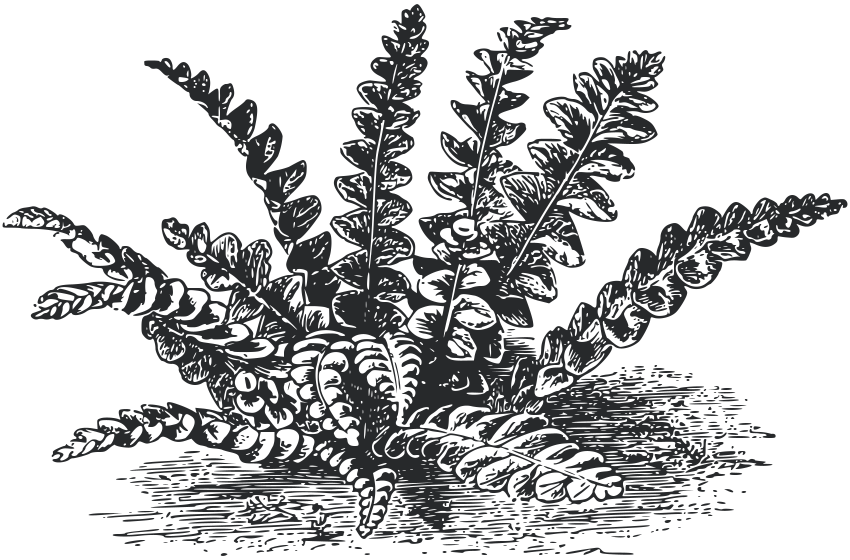
Asplenium adiantum-nigrum L., 1753
- 🇬🇧 Black Spleenwort
- 🇫🇷 Asplénie noire
Taxonomy
- Kingdom: Plantae
- Clade: Tracheophytes
- Clade: Monilophytes
- Class: Polypodiopsida
- Subclass: Polypodiidae
- Order: Polypodiales
- Suborder: Aspleniineae
- Family: Aspleniaceae
- Genus: Asplenium
- Species: Asplenium adiantum-nigrum
Presence
Present.
Conservation status
- Red List (Metropolitan France): LC Least Concern
- Red List (Europe): LC Least Concern
Notes
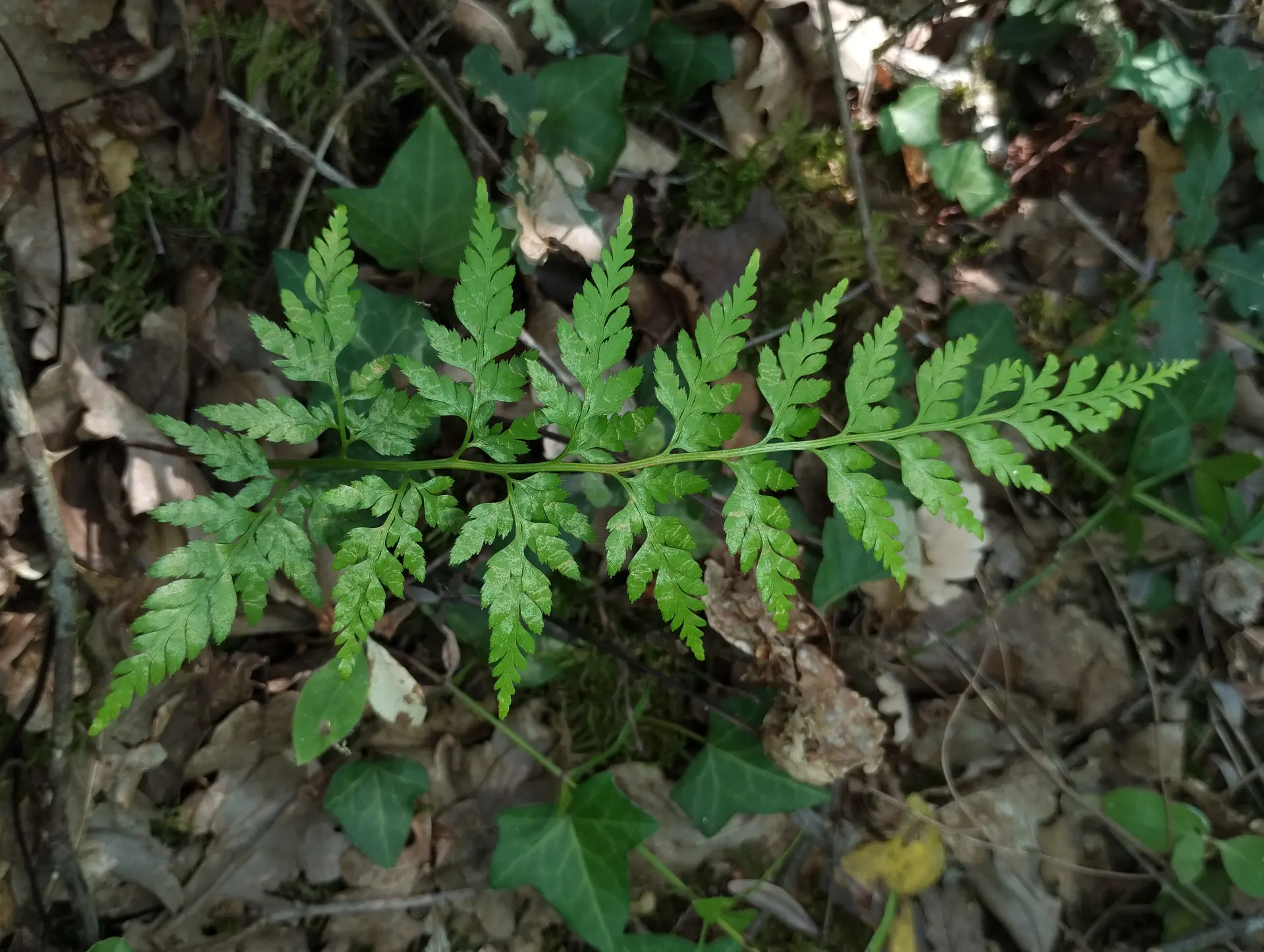
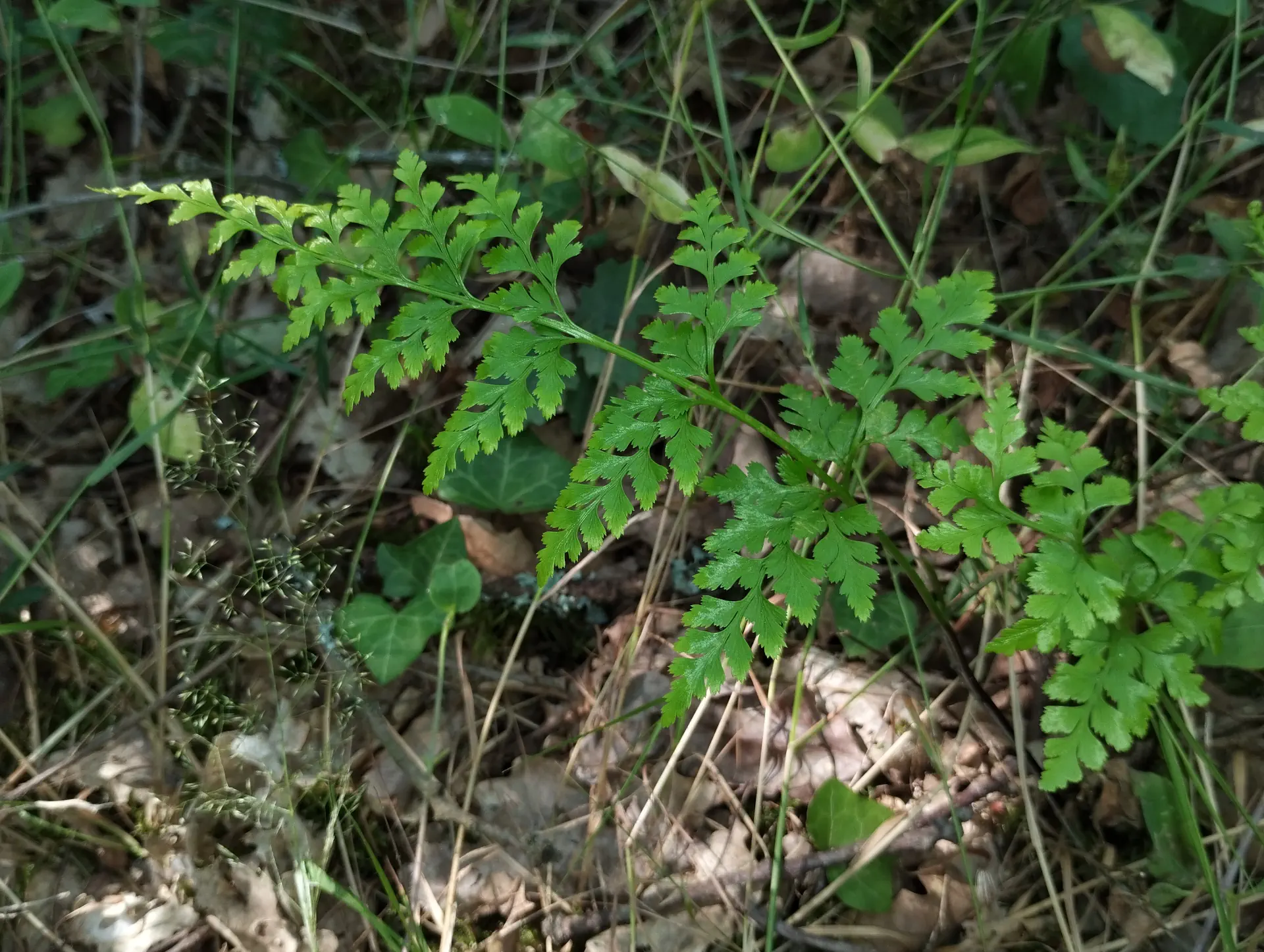
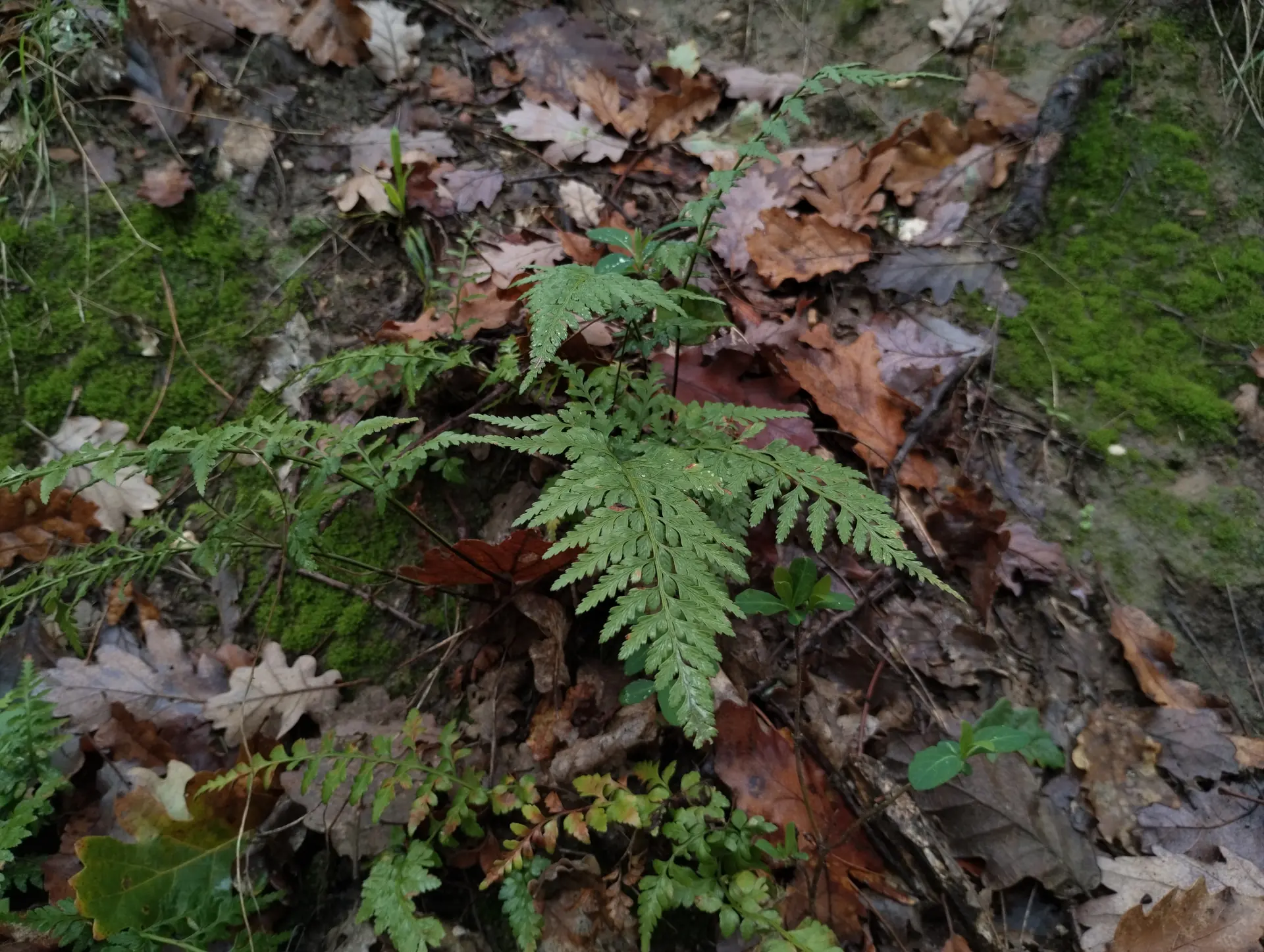
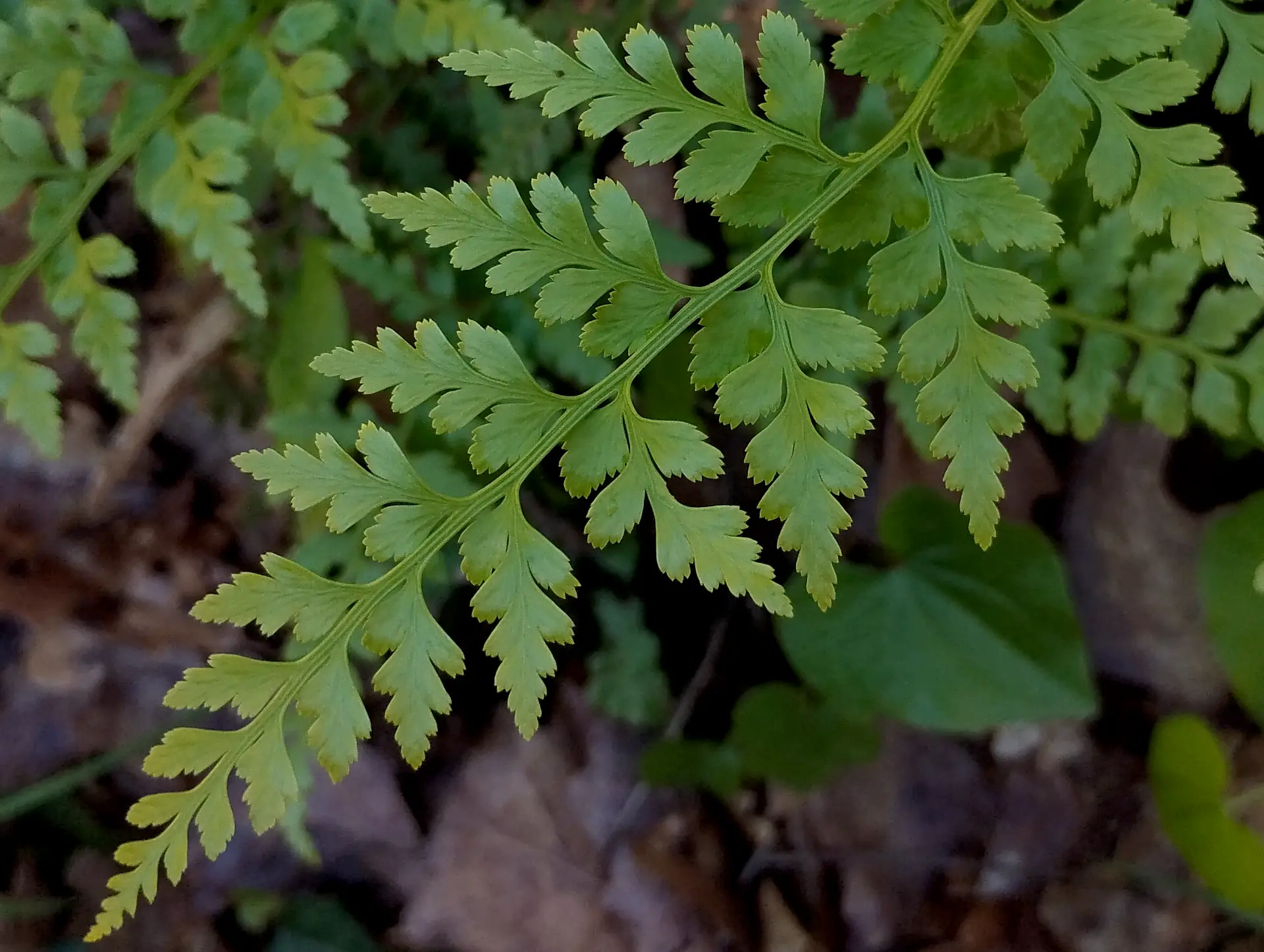
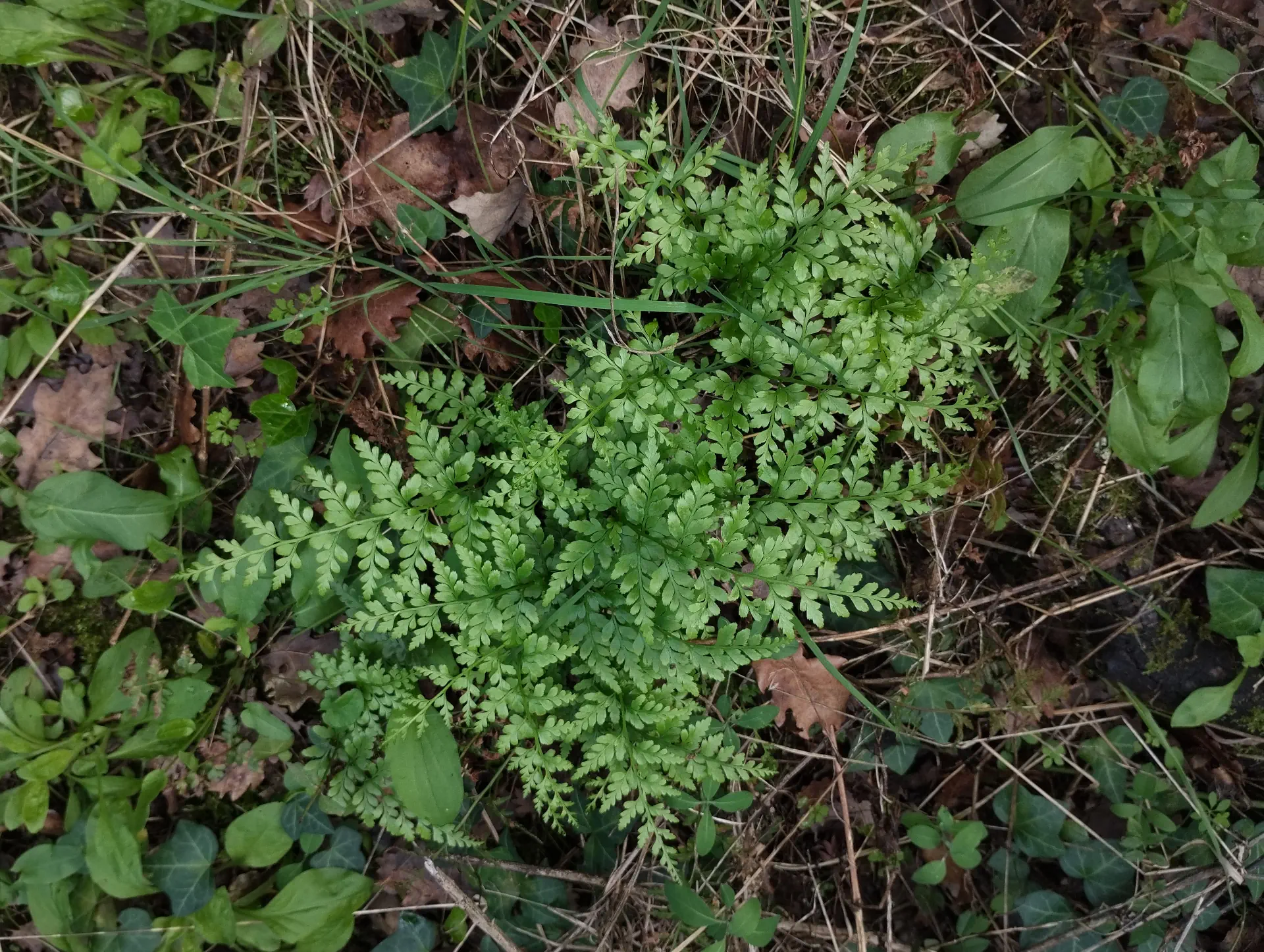
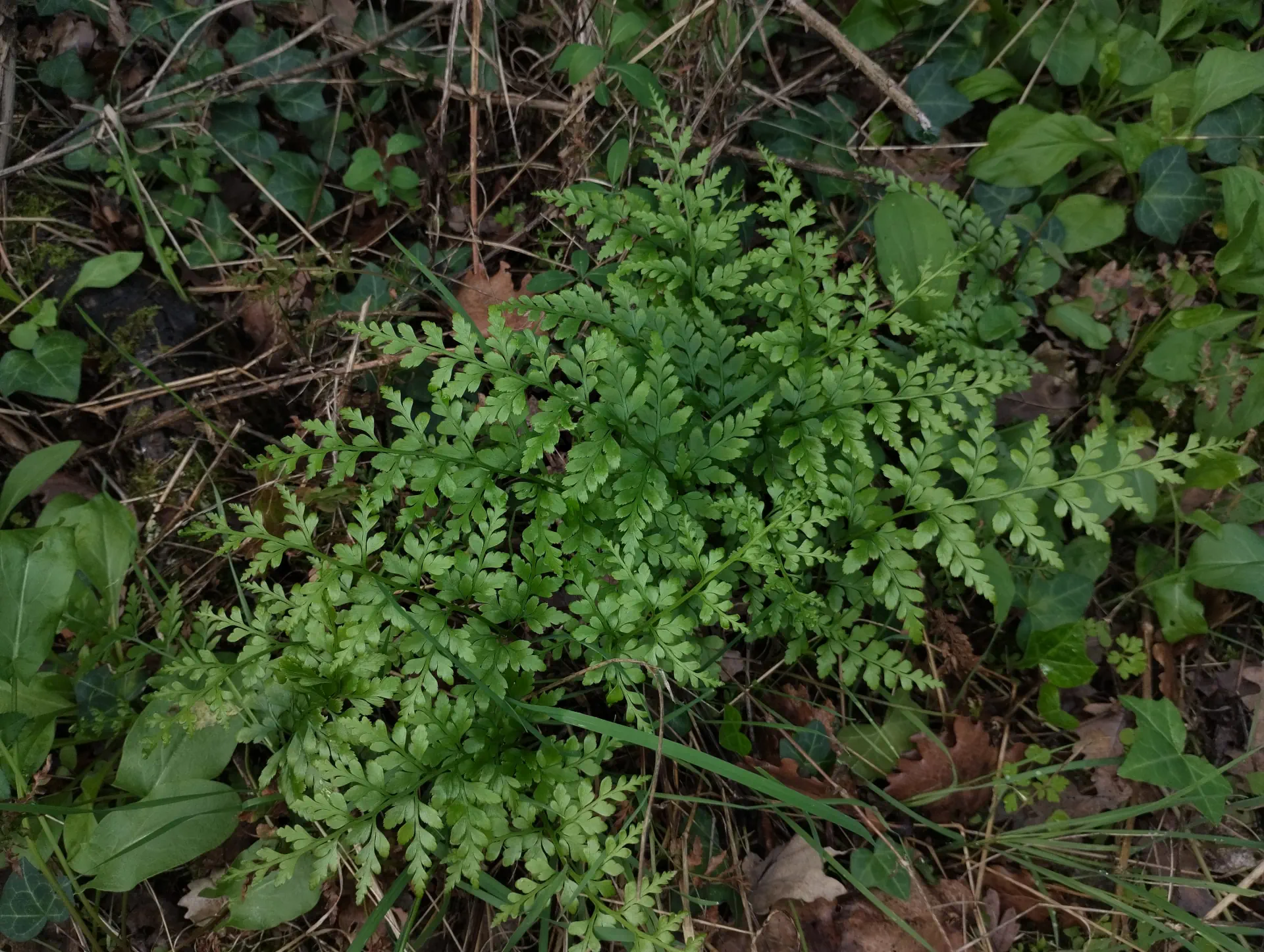
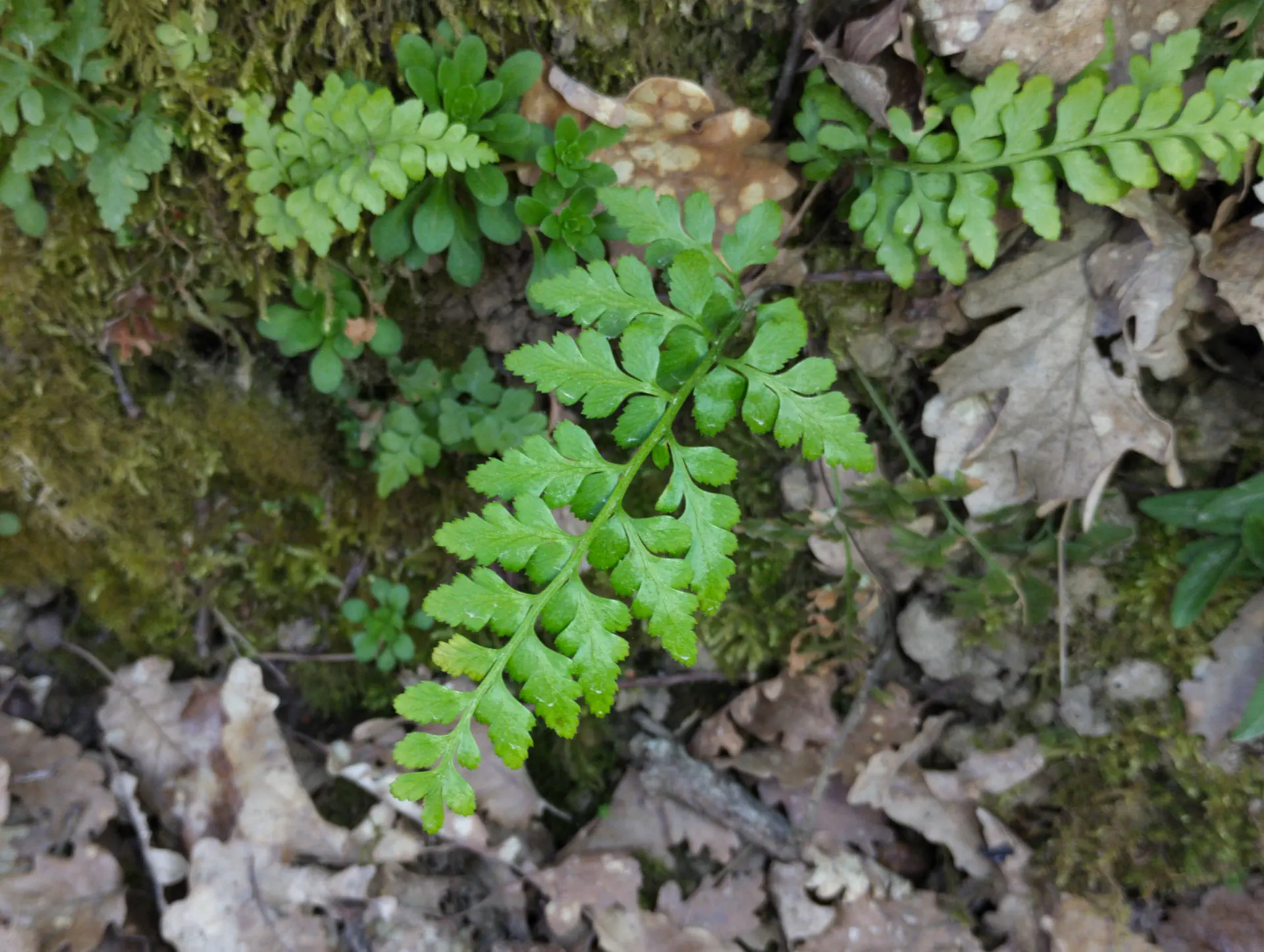
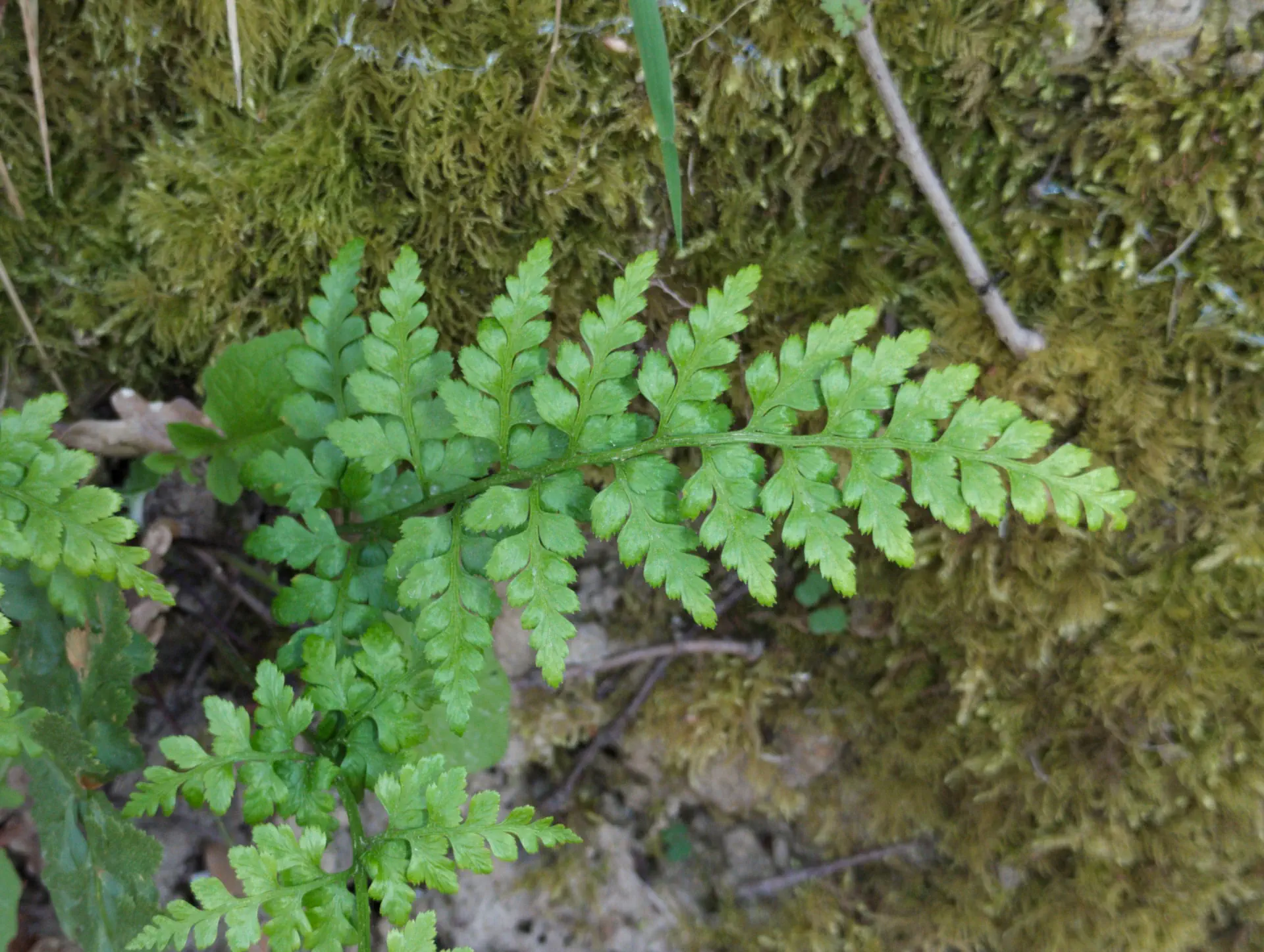
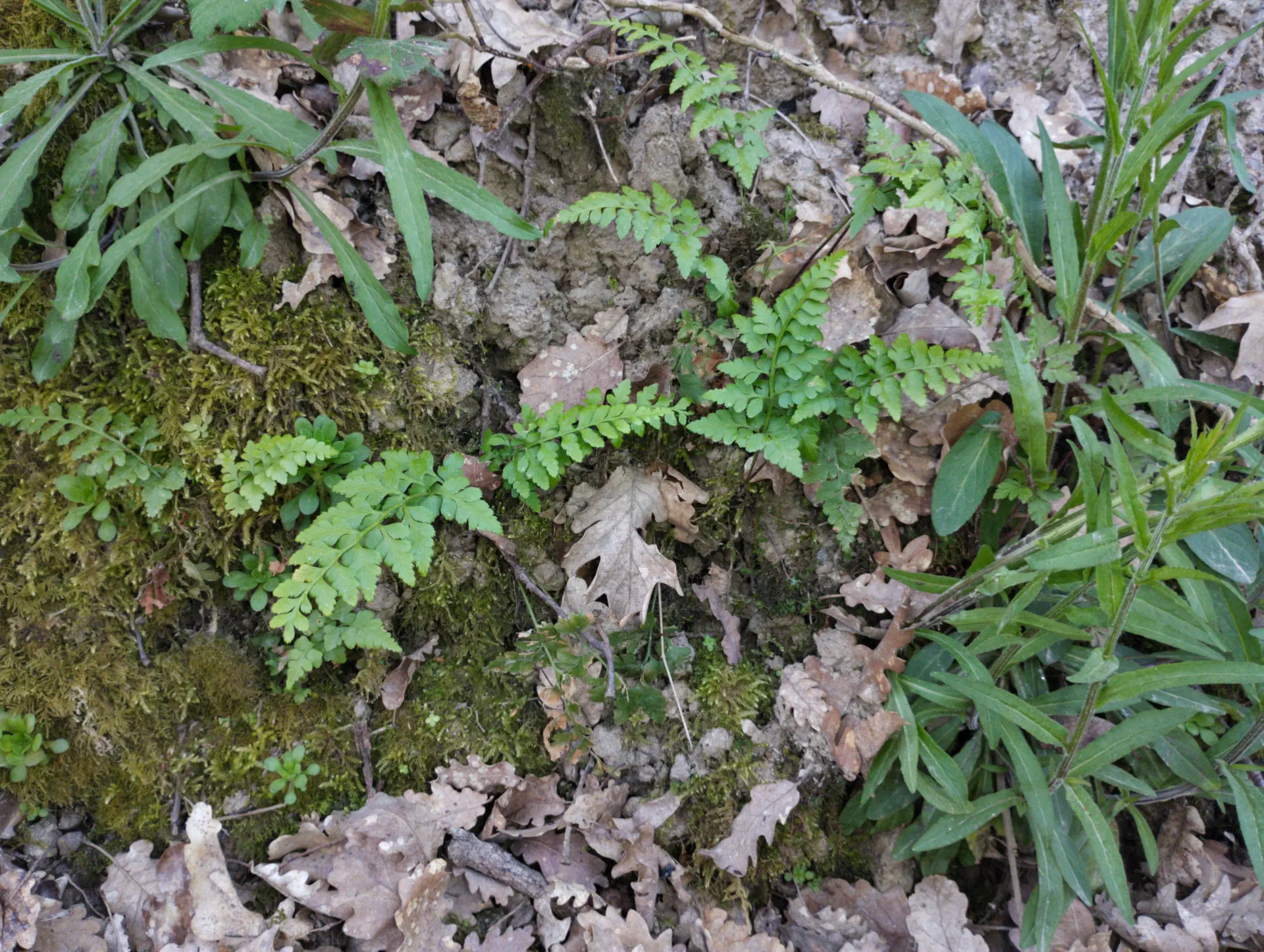
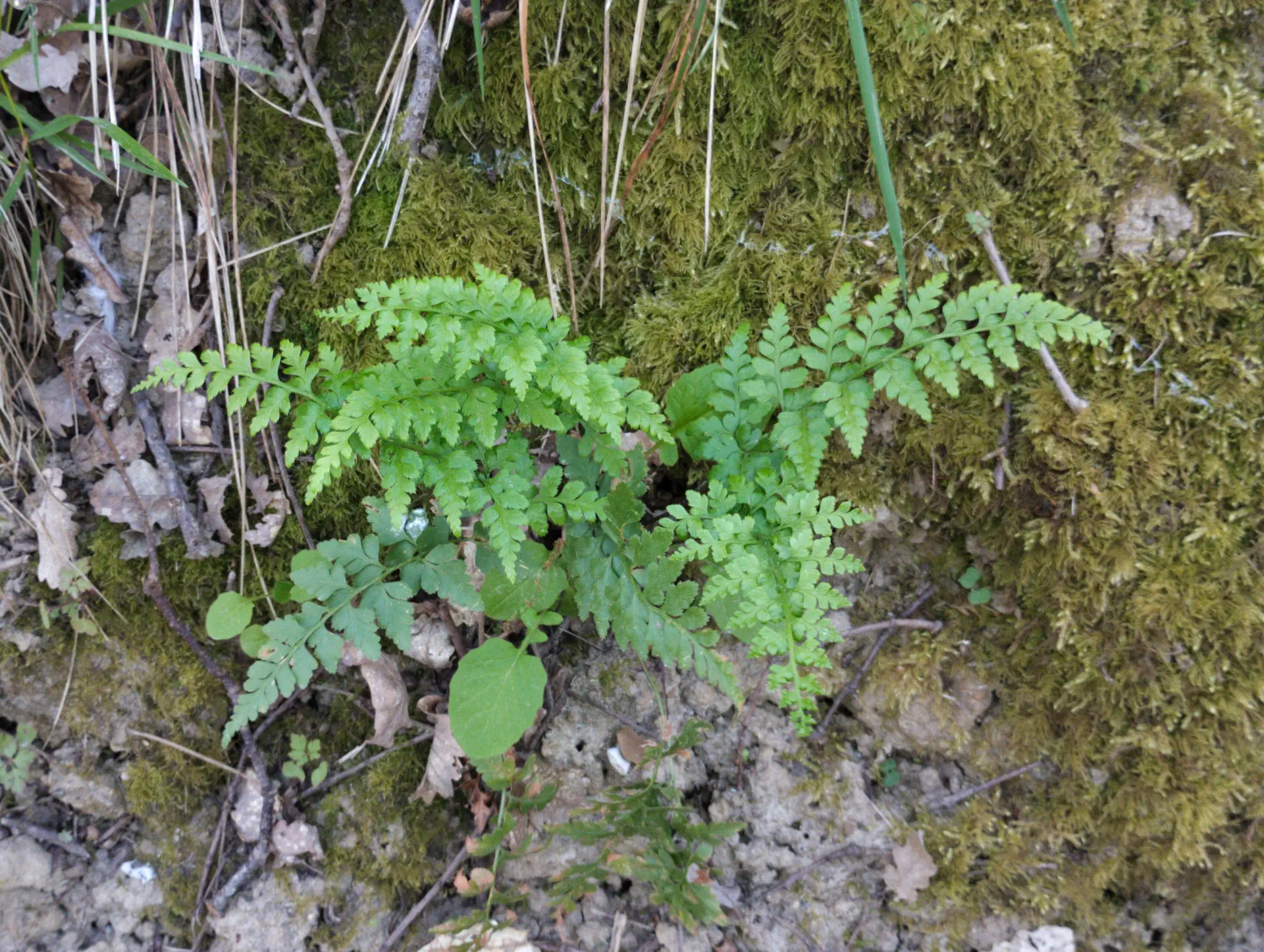
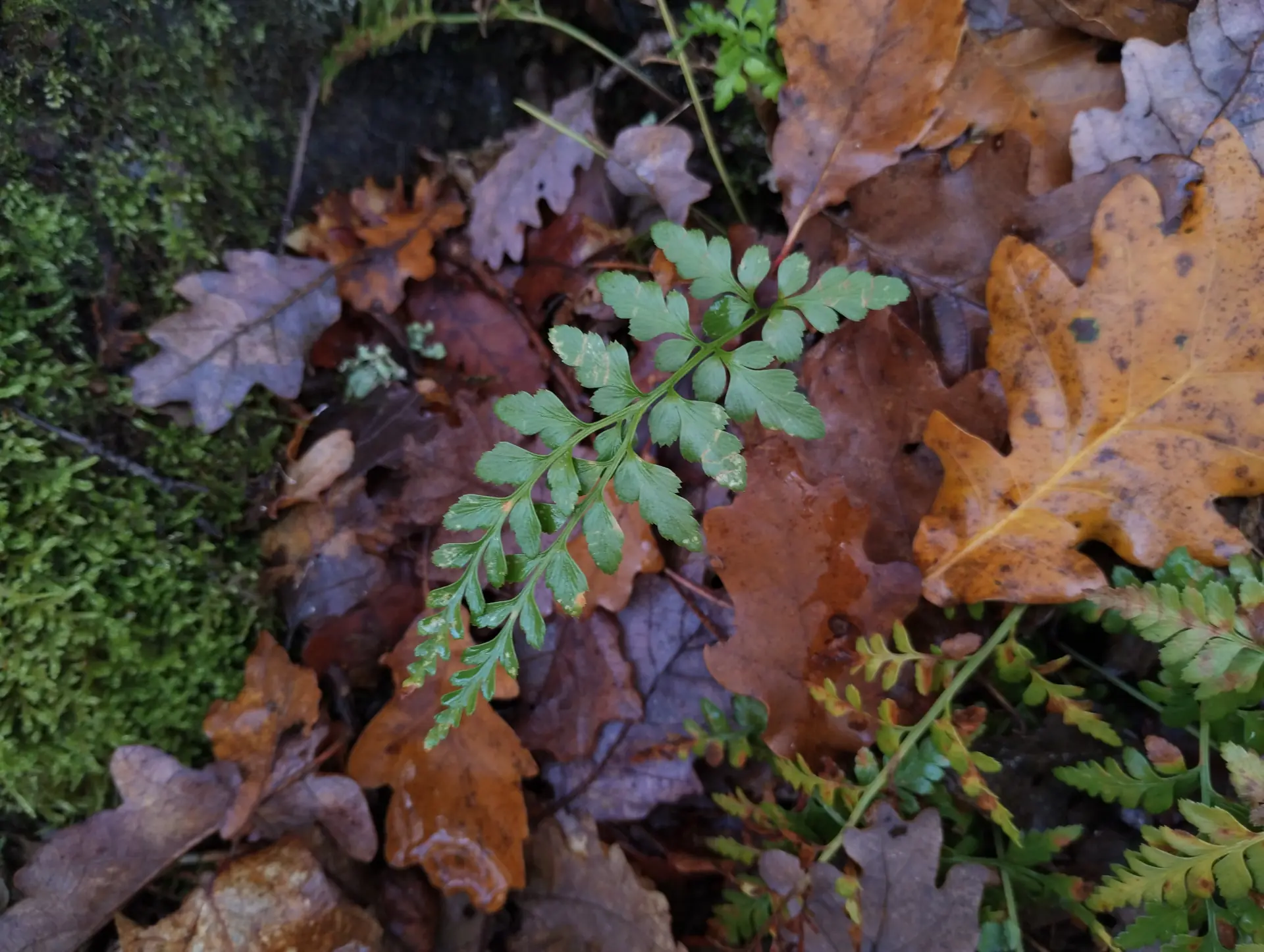
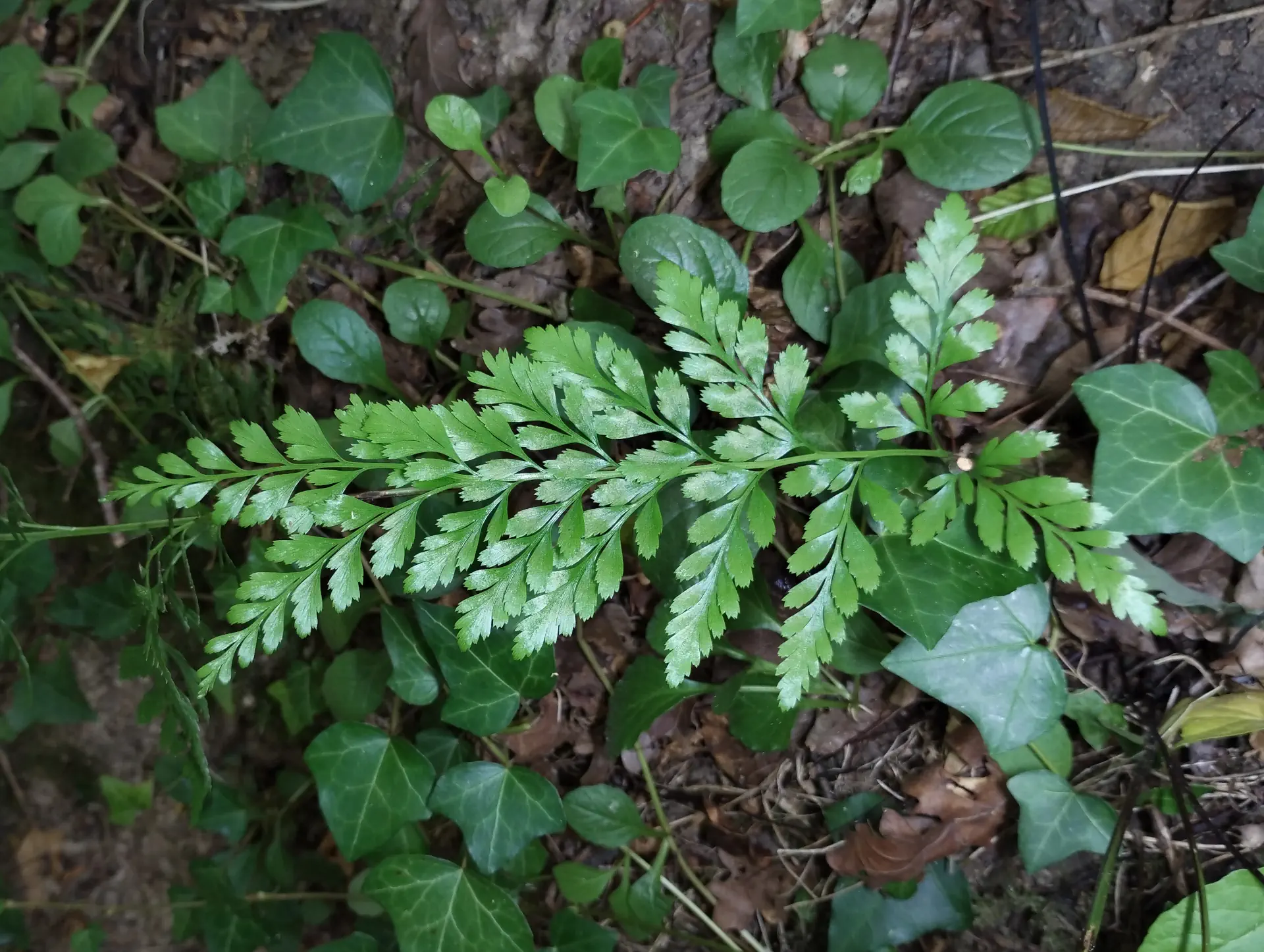
Possible confusion with A. onopteris L., 1753, which has larger fronds (20-40 cm), usually caudate pinnae, and mucronate pinnule teeth, while A. adiantum-nigrum has smaller fronds (10-30 cm), non-caudate pinnae, and non-mucronate pinnule teeth.
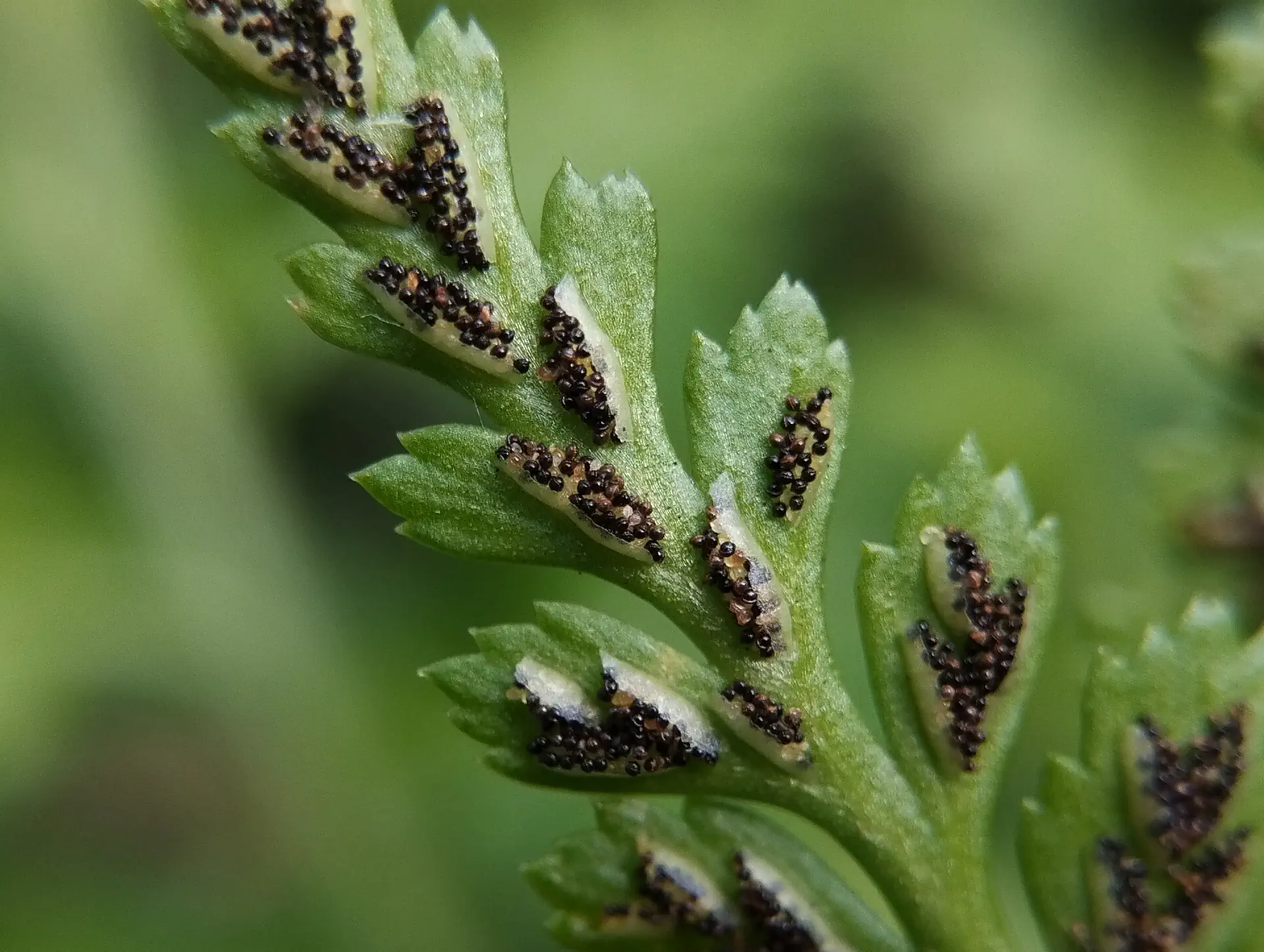
The differentiation between A. onopteris and large individuals of A. adiantum-nigrum can be complicated, if not impossible, in the field. In this case, measuring the size of the spores remains the only reliable solution to differentiate the two species.
The following infraspecific taxa are accepted:
- A. adiantum-nigrum subsp. adiantum-nigrum
- var. adiantum-nigrum L., 1753, P;
- var. solidum (Kunze) J.P.Roux, 1979;
- var. silesiacum (Milde) Milde, 1865, P; 1
- A. adiantum-nigrum subsp. corunnense (Christ) Rivas Mart., 1986.
Allotetraploid (2n = 144; CuCuOnOn). Resulting from the cross of A. cuneifolium Viv., 1806 × A. onopteris L., 1753 (= A. × ligusticum R.Bernardello, Marchetti, Van den heede & Viane, 2012), followed by a doubling of the chromosome number.
Hybridizes with:
- A. billotii F.W.Schultz, 1845 to produce A. × sarniense Sleep, 1971: tetraploid (2n = 144; CuOnObObʹ), P;
- A. cuneifolium to produce A. × centovallense
- nothosubsp. centovallense D.E.Mey., 1968: subsp. adiantum-nigrum × A. cuneifolium subsp. cuneifolium Viv., 1806: triploid (2n = 108; CuCuOn), P;
- nothosubsp. demirizii Viane, Rasbach, Schneller, Reichst. & D.E.Mey., 1994: subsp. adiantum-nigrum × A. cuneifolium subsp. woronowii (Christ) Viane, Rasbach, Reichst. & Schneller, 1994;
- A. foreziense Le Grand ex Magnier, 1884 to produce A. × brissaginense D.E.Mey., 1961: tetraploid (2n = 144; CuOnFoOb), P;
- A. onopteris L., 1753 to produce A. × ticinense D.E.Mey., 1961: triploid (2n = 108; CuOnOn), P;
- A. ruta-muraria L., 1753 to produce A. × lingelsheimii Seymann, 1910, Q; 2
- A. septentrionale subsp. septentrionale (L.) Hoffm., 1796 to produce A. × contrei Callé, Lovis & Reichst., 1975: tetraploid (2n = 144; CuOnSpSp), P;
- A. trichomanes L., 1753 to produce A. × dolosum Milde, 1864: triploid (2n = 108; CuOnTr), P.
Photographs
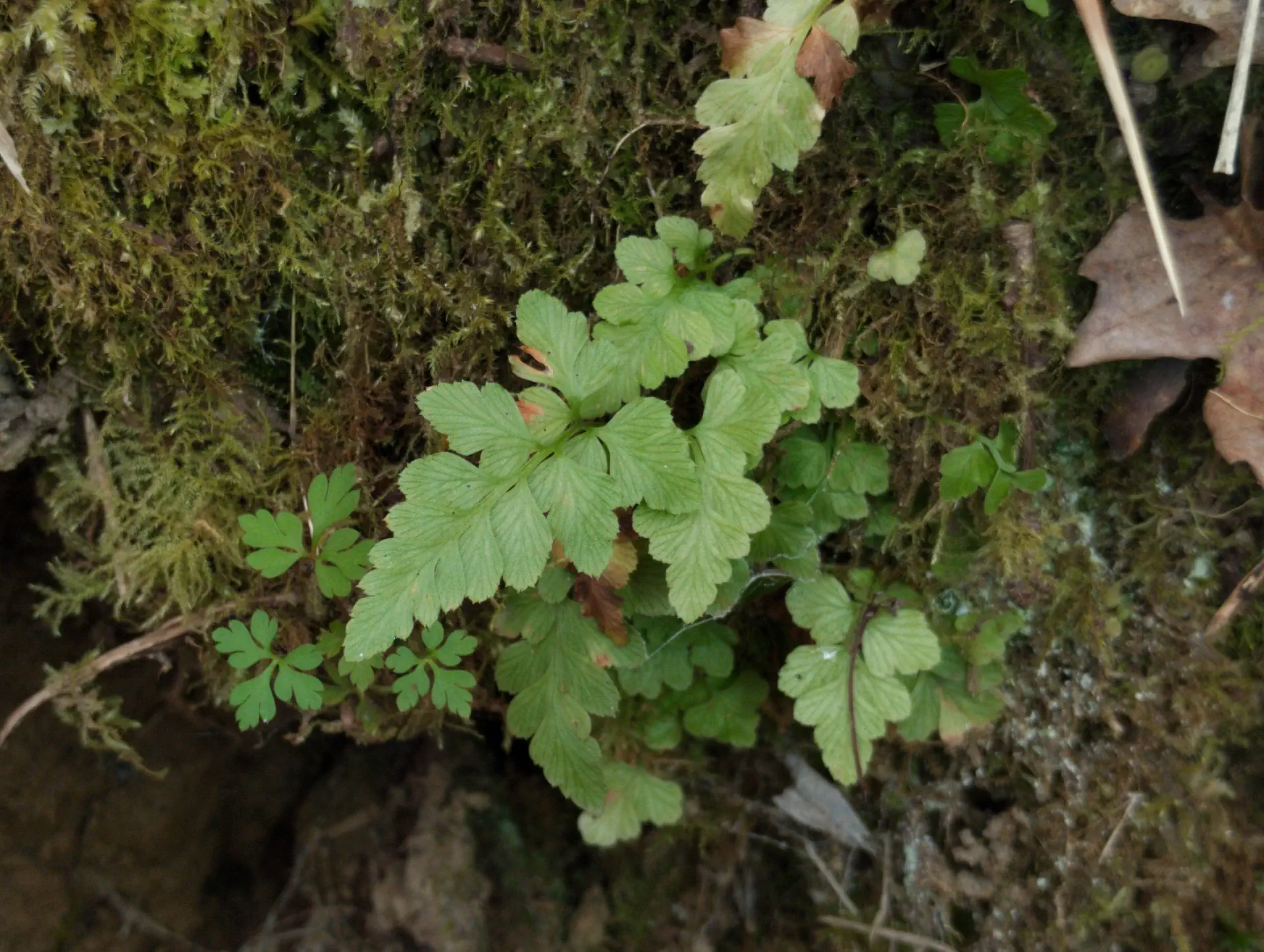
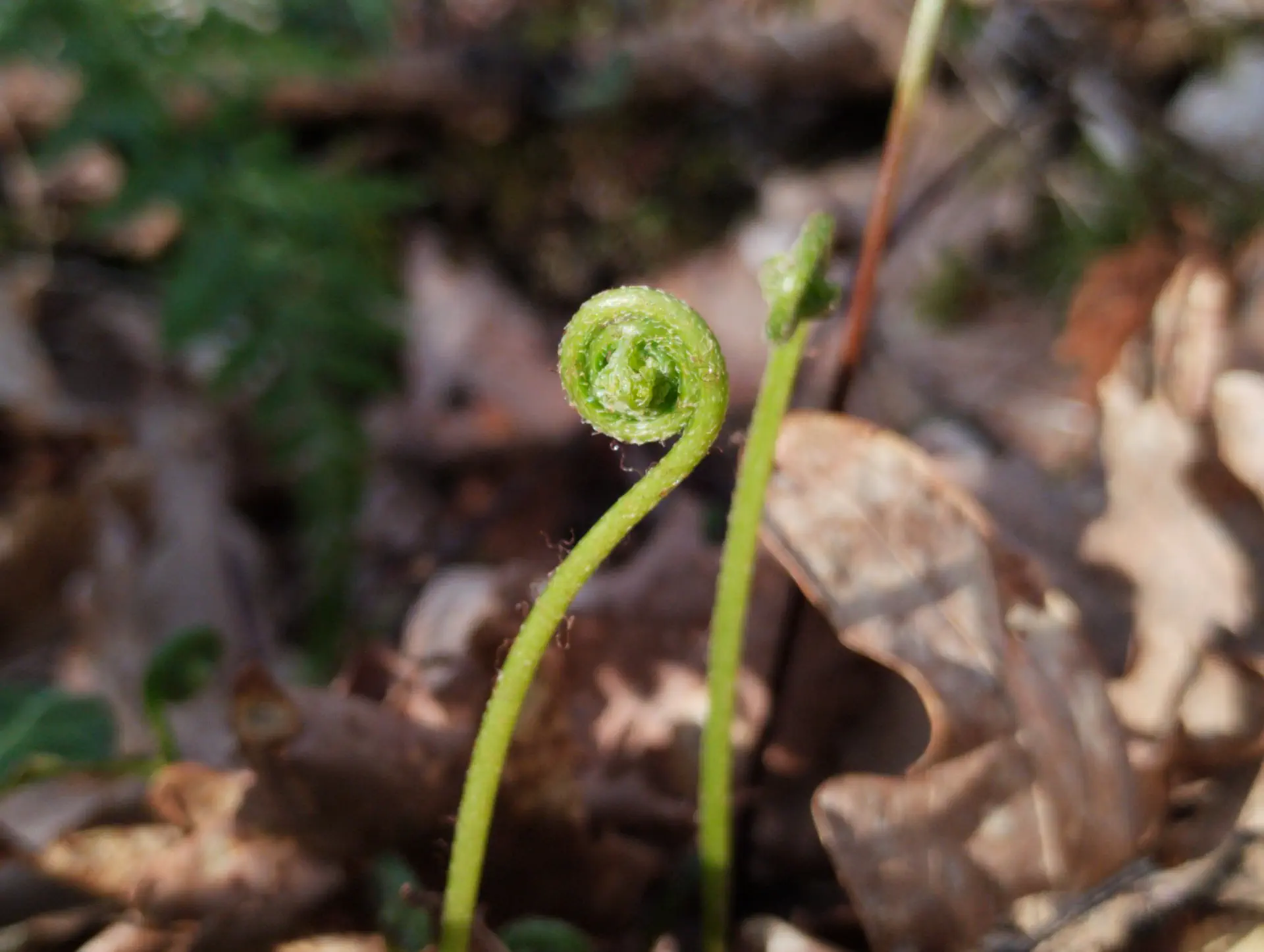
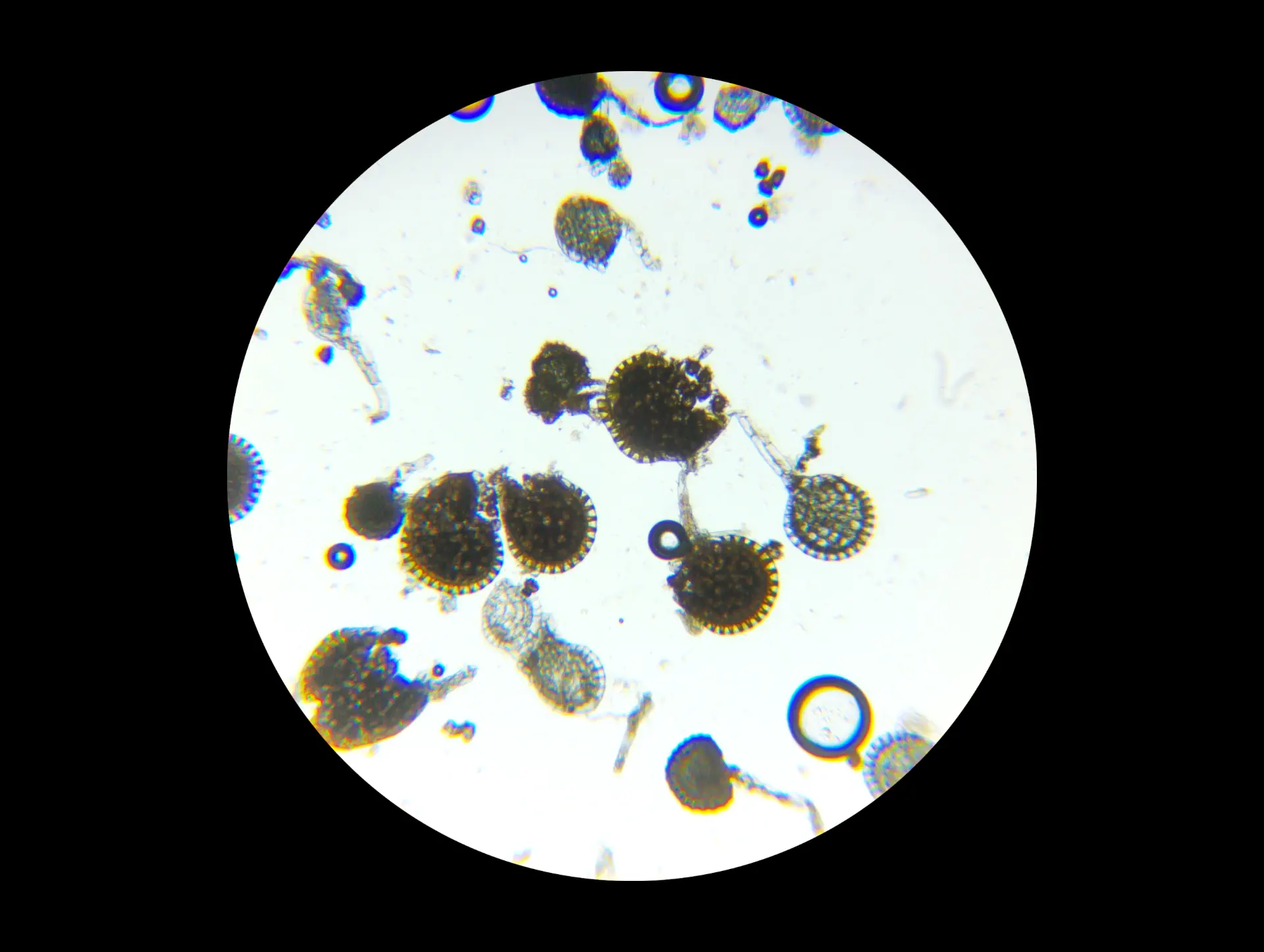
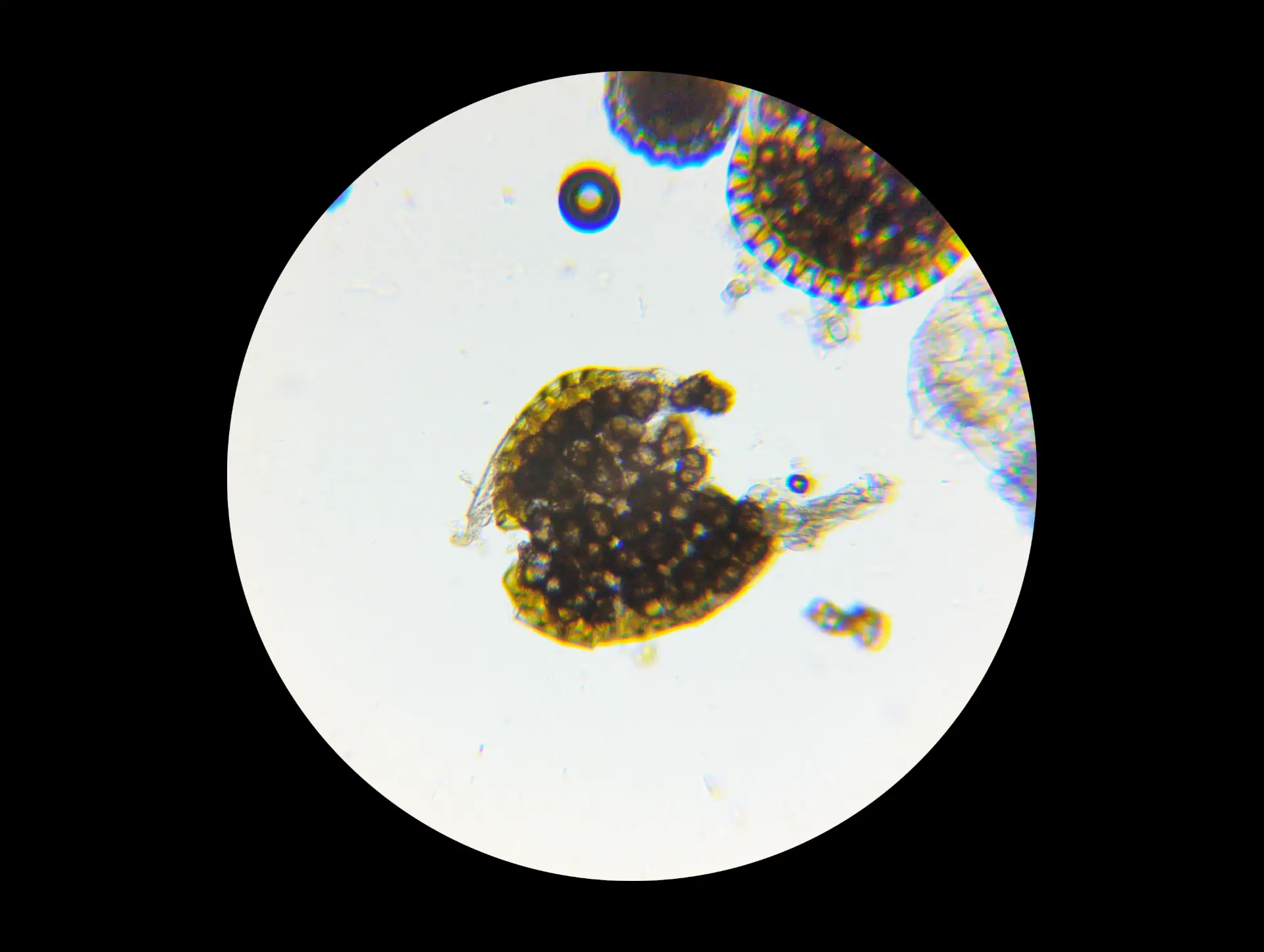
Anomalies
Sources
Badré, F., & Deschatres, R. (1979). Les Ptéridophytes de la France : liste commentée des espèces (taxinomie, cytologie, écologie et répartition générale). Candollea, 34(2), 379-457. https://doi.org/10.5169/seals-880127
Callé, J., Lovis, J.D., & Reichstein, T. (1975). Asplenium × contrei (A. adiantum-nigrum × A. septentrionale) hybr. nova et la vrai ascendance de l’Asplenium × souchei Litard. Candollea, 30(1), 189-201. https://doi.org/10.5169/seals-880247
Christenhusz, M., Bento Elias, R., Dyer, R., Ivanenko, Y., Rouhan, G., Rumsey, F., & Väre, H. (2017). Asplenium adiantum-nigrum (Europe assessment). The IUCN Red List of Threatened Species, 2017. https://www.iucnredlist.org/species/83466958/83467491
Prelli, R. (1991). Les hybrides, leur importance dans l’évolution et la connaissance des Filicales. Bulletin de La Société Botanique de France. Actualités Botaniques, 138(2), 117-125. https://doi.org/10.1080/01811789.1991.10827056
Prelli, R., & Boudrie, M. (2024). Les fougères et plantes alliées d’Europe (2nd ed., p. 246). Biotope.
Reichstein, T. (1981). Hybrids in European Aspleniaceae (Pteridophyta) : significance, recognition, genome analysis, and fertility; checklist of species and hybrids; description of some new hybrids and cytology of several already known hybrids. Botanica Helvetica, 91, 89-139. https://doi.org/10.5169/seals-64305
Tison, J.M., & de Foucault, B. (2014). Flora Gallica : Flore de France (p. 8). Biotope.