
Asplenium quadrivalens (D.E.Mey.) Landolt, 2010
- 🇫🇷 Asplénie rouge commune
Taxonomy
- Kingdom: Plantae
- Clade: Tracheophytes
- Clade: Monilophytes
- Class: Polypodiopsida
- Subclass: Polypodiidae
- Order: Polypodiales
- Suborder: Aspleniineae
- Family: Aspleniaceae
- Genus: Asplenium
- Species: Asplenium quadrivalens
Presence
Present.
Conservation status
- Red List (Metropolitan France): LC Least Concern
Notes
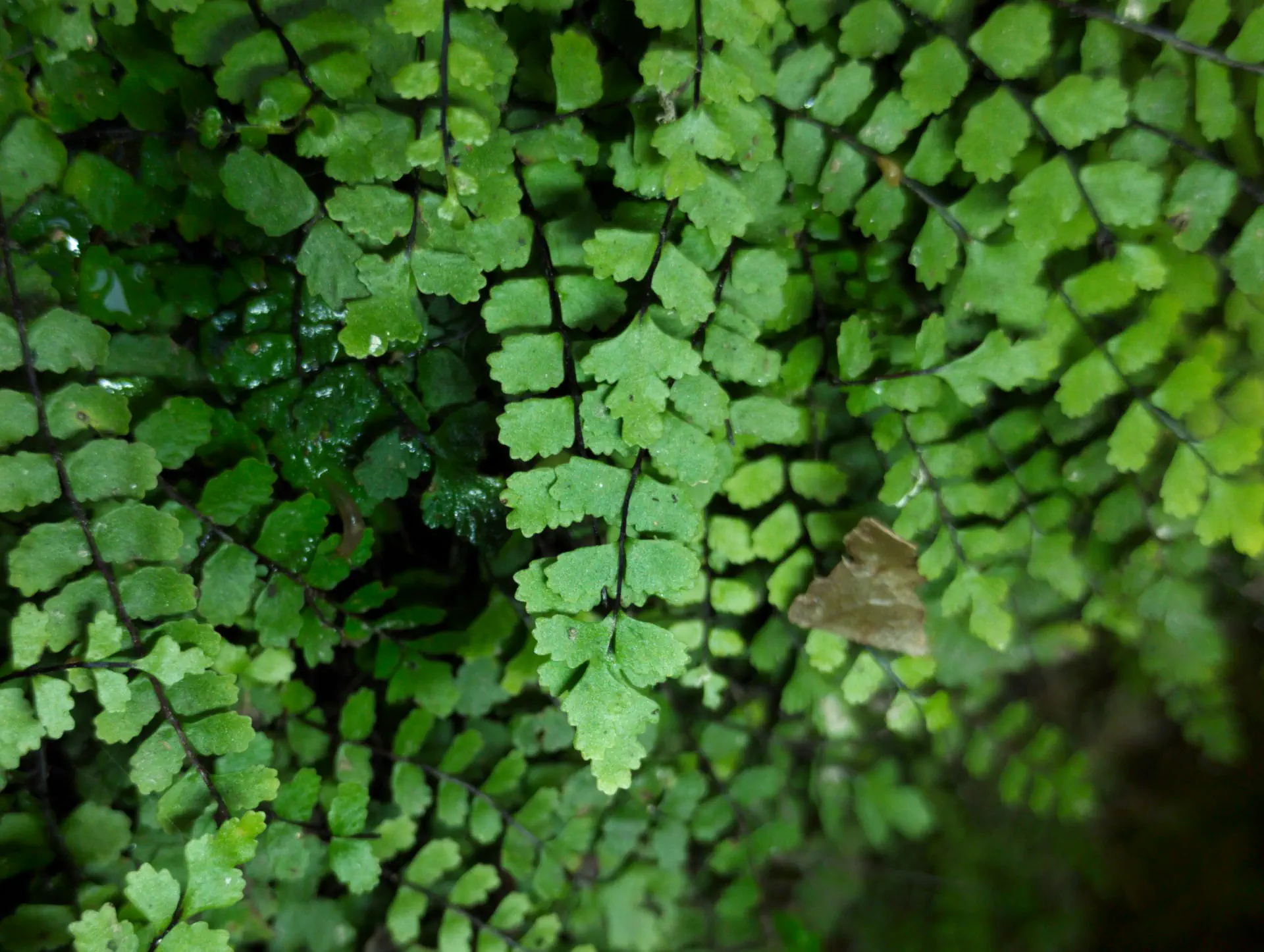
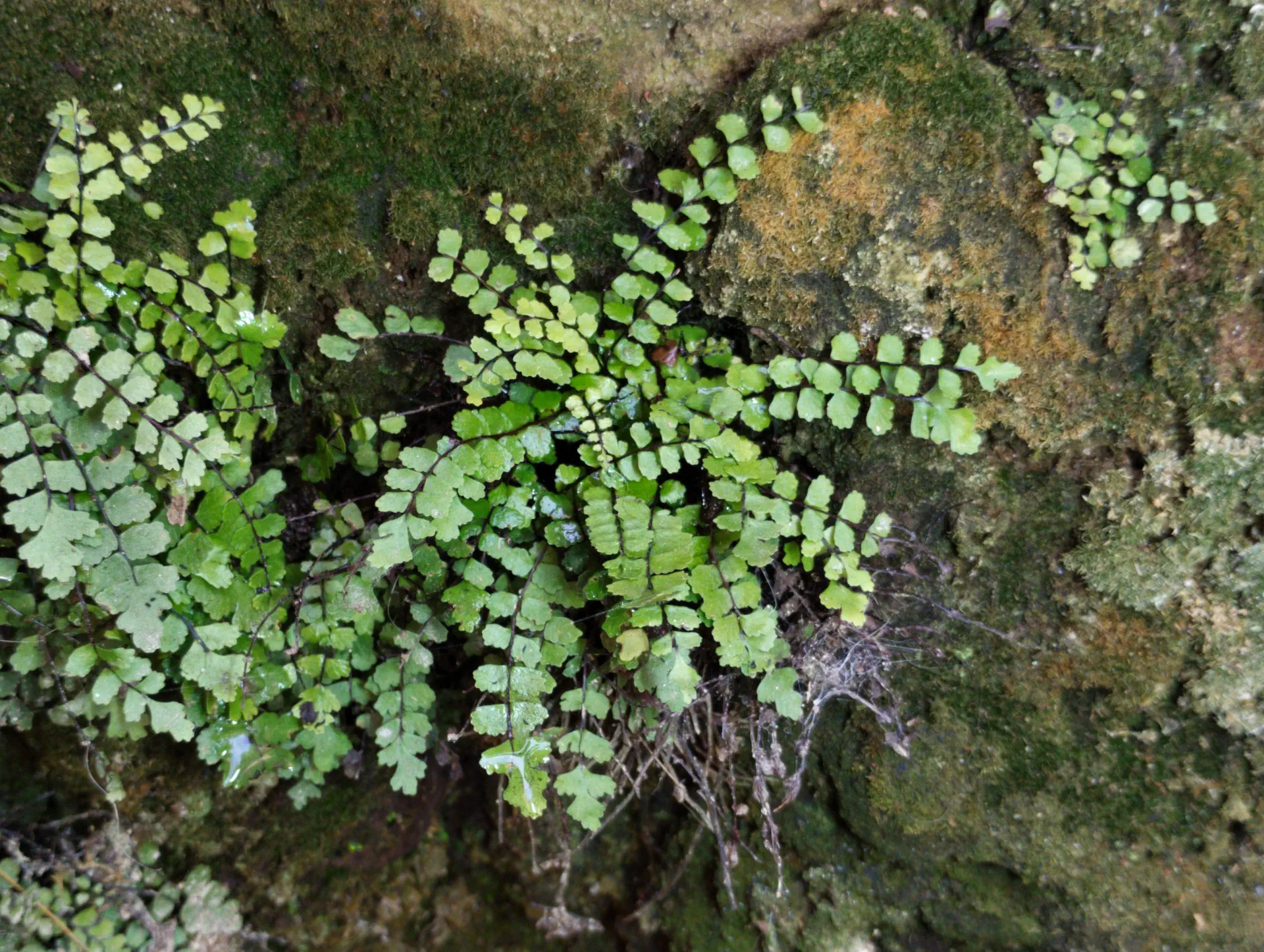
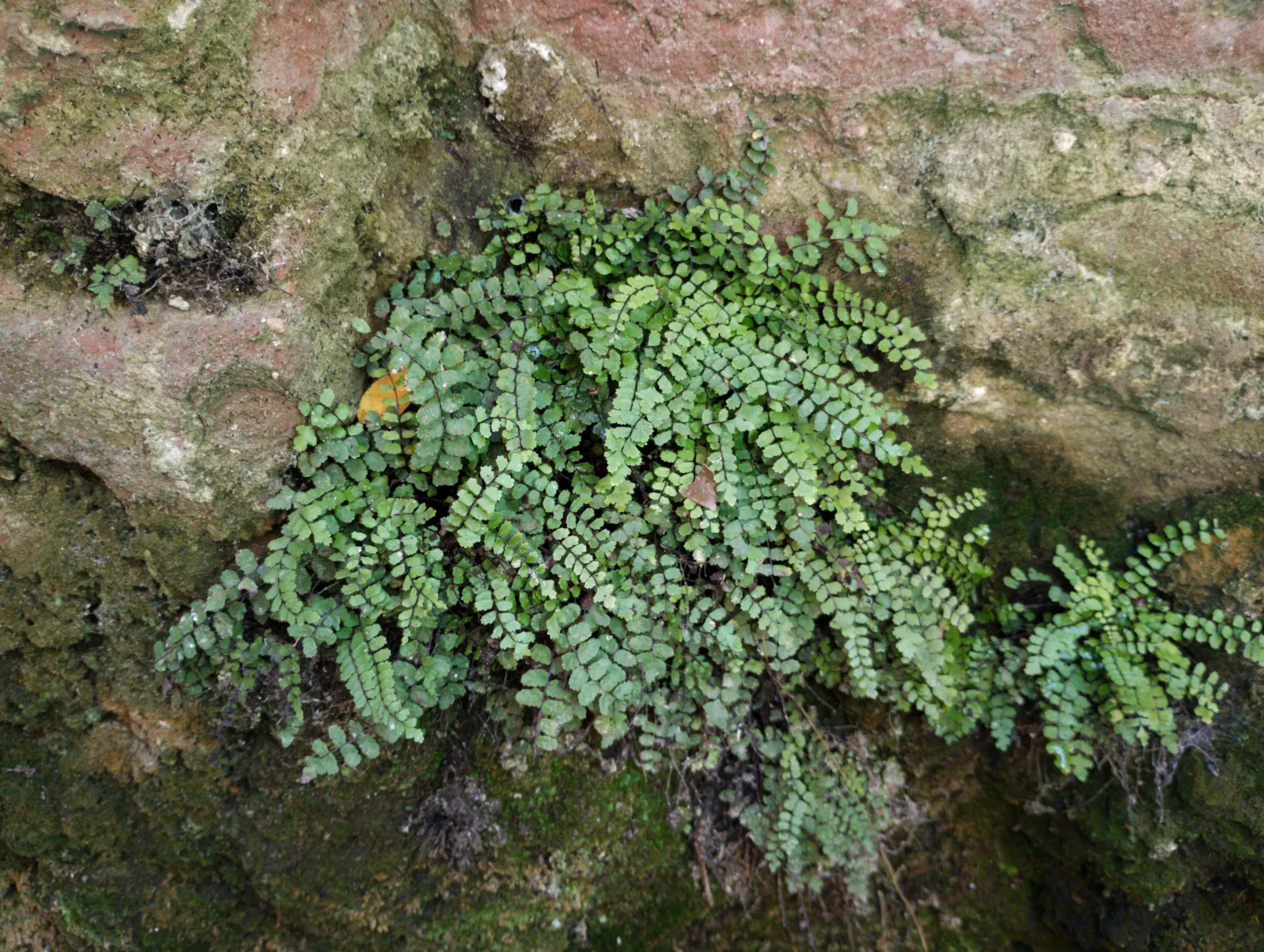
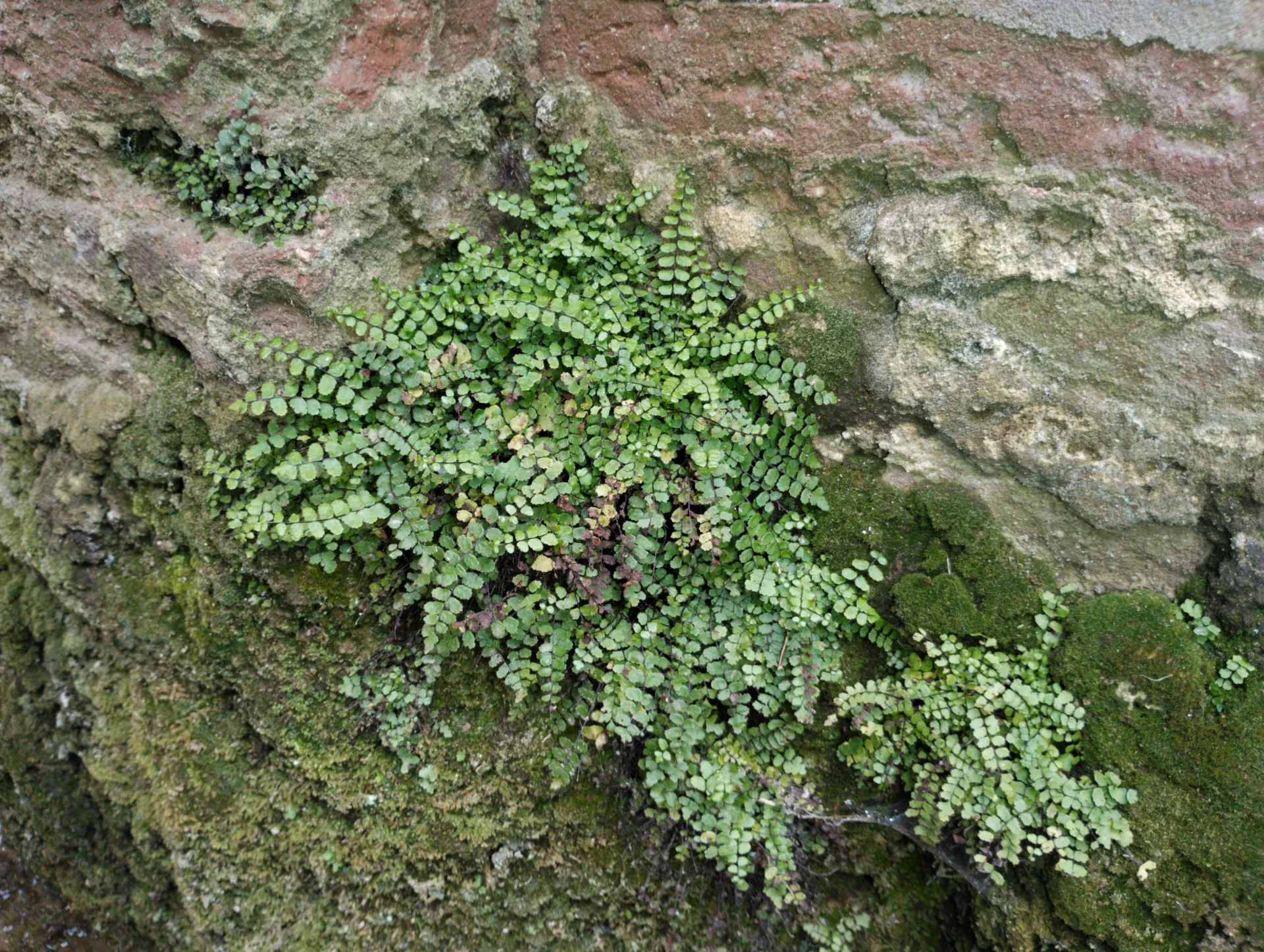
Possible confusion with other species of the A. trichomanes complex. The gradually narrowing fronds, the brown-black rachis, the elongated, perpendicularly inserted, and closely spaced pinnae, and the very reduced terminal segment allow for the identification of A. quadrivalens.
Mostly basiphilous species that grows on various rocks, scree slopes, and old walls. Tetraploid (2n = 144; TrTrTrʹTrʹ). Resulting from a doubling of the chromosome number in A. trichomanes L., 1753.
Previously treated as a subspecies of A. trichomanes L., 1753 under the name A. trichomanes subsp. quadrivalens D.E.Mey., 1962.
Hybridizes with:
- A. azomanes Rosselló, Cubas & Rebassa, 1991 to produce A. × tubalense Rosselló, Cubas & Rebassa, 1991;
- A. billotii F.W.Schultz, 1845 to produce A. × aran-tohanum Alejandre & M.J.Escal., 2005: tetraploid (2n = 144), P;
- A. foreziense Le Grand ex Magnier, 1884 to produce A. × pagesii Litard., 1910: tetraploid (2n = 144; FoObTrTrʹ), P;
- A. harovii Godr., 1842 to produce A. × staufferi (Lovis & Reichst.) L.Sáez & Rosselló, 1997, P (hom. syn. A. trichomanes nothosubsp. staufferi Lovis & Reichst., 1985);
- A. inexpectans (Lovis) Landolt, 2010 to produce A. × lucanum (Cubas, Rosselló & Pangua) ined., P (hom. syn. A. trichomanes nothosubsp. lucanum Cubas, Rosselló & Pangua, 1989);
- A. jessenii Hong M.Liu & H.Schneid., 2018 to produce A. × lovisianum (S.Jess.) ined., P (hom. syn. A. trichomanes nothosubsp. lovisianum S.Jess., 1995);
- A. petrarchae subsp. petrarchae (Guérin) DC., 1815 to produce A. × lainzii (Pérez Carro & Fern.Areces) ined., P (hom. syn. A. × helii nothosubsp. lainzii Pérez Carro & Fern.Areces, 1996);
- A. ruta-muraria L., 1753 to produce A. × clermontiae Syme, 1886: tetraploid (2n = 144; RuRuʹTrTrʹ), P;
- A. septentrionale subsp. septentrionale (L.) Hoffm., 1796 to produce A. × heufleri Reichardt, 1859: tetraploid (2n = 144; SpSpʹTrTrʹ), P (hom. syn. A. × alternifolium nothosubsp. heufleri (Reichardt) Aizpuru, Catalán & Salvo, 1985);
- A. trichomanes L., 1753 to produce A. × lusaticum D.E.Mey., 1958: triploid (2n = 108; TrTrTrʹ), P (hom. syn. A. trichomanes nothosubsp. lusaticum (D.E.Mey.) Lawalrée, 1978).
Photographs


Sources
Badré, F., & Deschatres, R. (1979). Les Ptéridophytes de la France : liste commentée des espèces (taxinomie, cytologie, écologie et répartition générale). Candollea, 34(2), 379-457. https://doi.org/10.5169/seals-880127
Chagneau D., (2009). Un nouvel hybride pour la ptéridoflore française, découvert à Mauves-sur-Loire (Loire-Atlantique). E.R.I.C.A., 22, 33-36. https://www.cbnbrest.fr/site/pdf/erica/erica_22_2009_24230.pdf
Prelli, R., & Boudrie, M. (2024). Les fougères et plantes alliées d’Europe (2nd ed., p. 297). Biotope.
Reichstein, T. (1981). Hybrids in European Aspleniaceae (Pteridophyta) : significance, recognition, genome analysis, and fertility; checklist of species and hybrids; description of some new hybrids and cytology of several already known hybrids. Botanica Helvetica, 91, 89-139. https://doi.org/10.5169/seals-64305
Tison, J.M., & de Foucault, B. (2014). Flora Gallica : Flore de France (p. 6). Biotope.
Xu, K.W., Zhang, L., Rothfels, C.J., Smith, A.R., Viane, R., Lorence, D., Wood, K.R., Chen, C.W., Knapp, R., Zhou, L., Lu, N.T., Zhou, X.M., Wei, H.J., Fan, Q., Chen, S.F., Cicuzza, D., Gao, X.F., Liao, W.B., & Zhang, L.B. (2020), A global plastid phylogeny of the fern genus Asplenium (Aspleniaceae). Cladistics, 36, 22-71. https://doi.org/10.1111/cla.12384