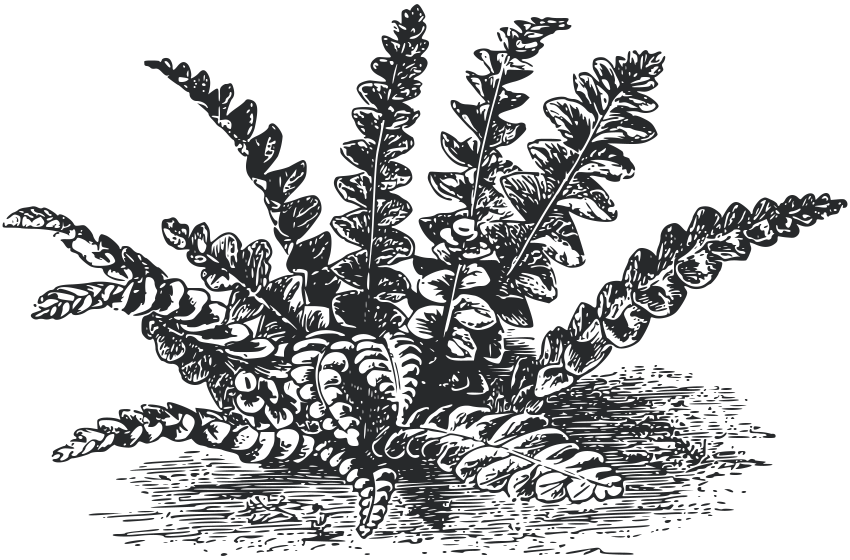
Equisetum palustre L., 1753
🇬🇧 Marsh Horsetail
🇫🇷 Prêle des marais
Taxonomy
- Kingdom: Plantae
- Clade: Tracheophytes
- Clade: Monilophytes
- Class: Polypodiopsida
- Subclass: Equisetidae
- Order: Equisetales
- Family: Equisetaceae
- Genus: Equisetum
- Subgenus: Equisetum
- Species: Equisetum palustre
Presence
Present.
Conservation status
- Red List (Metropolitan France): LC Least Concern
- Red List (Europe): LC Least Concern
Notes
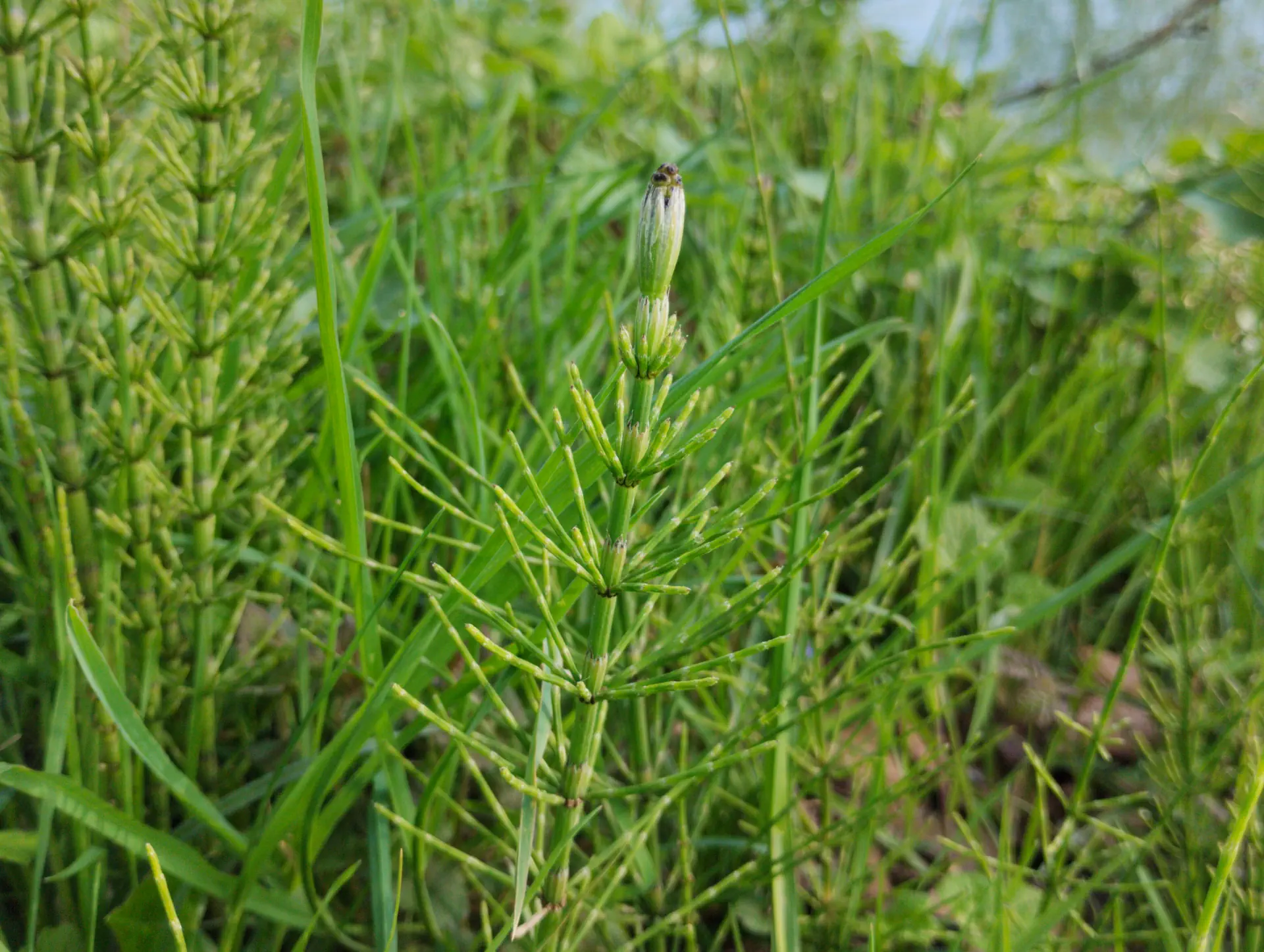
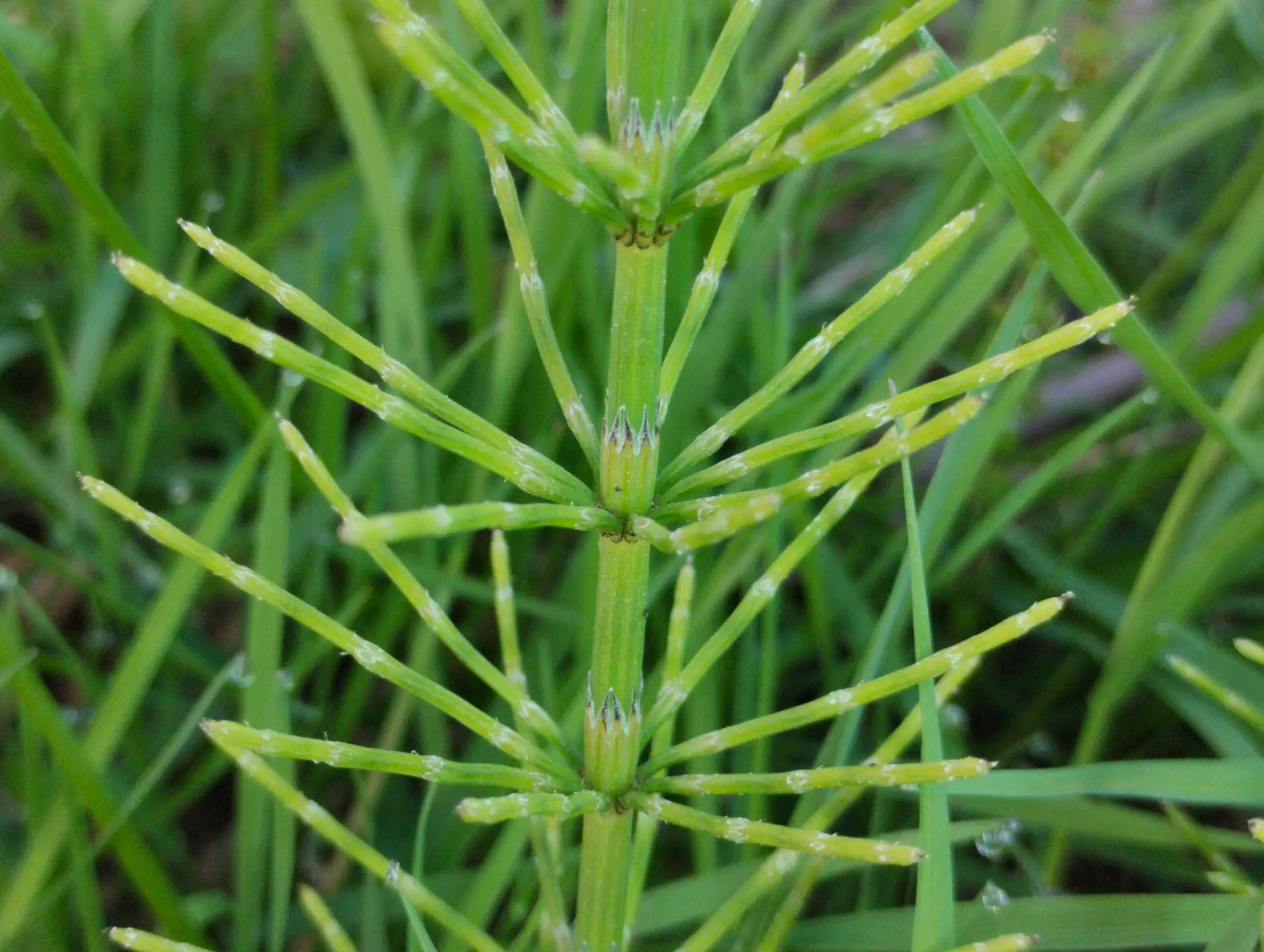
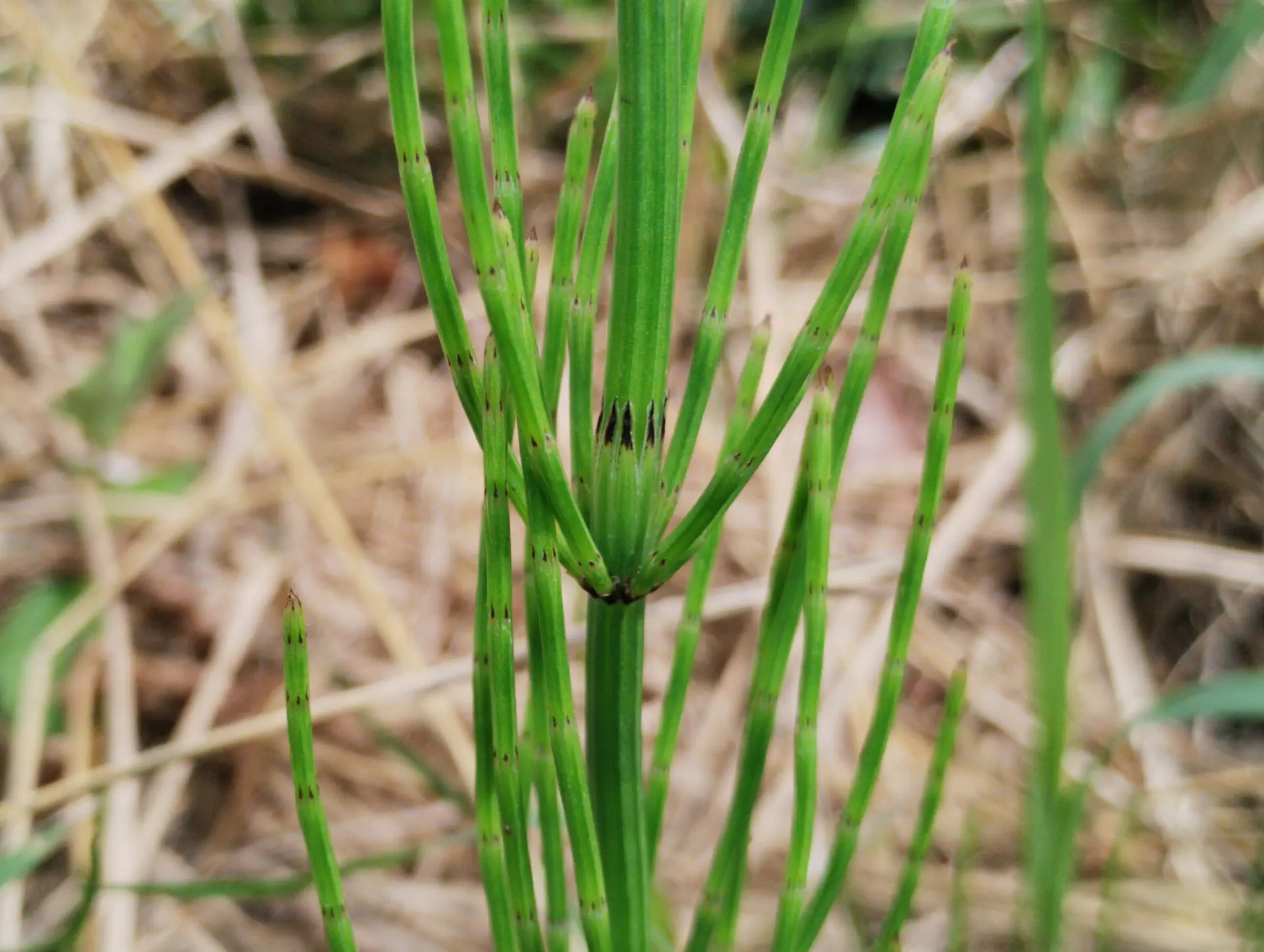
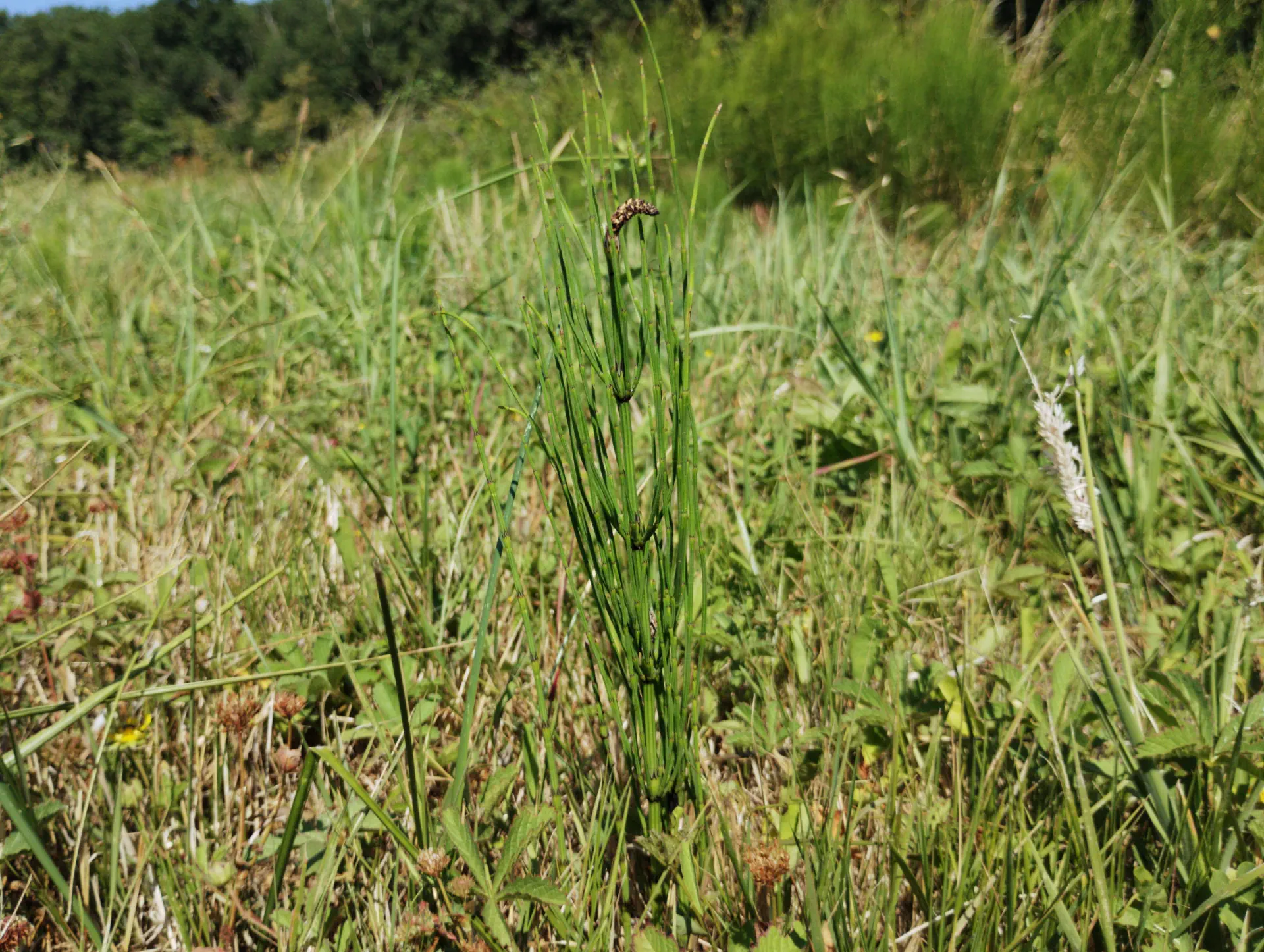
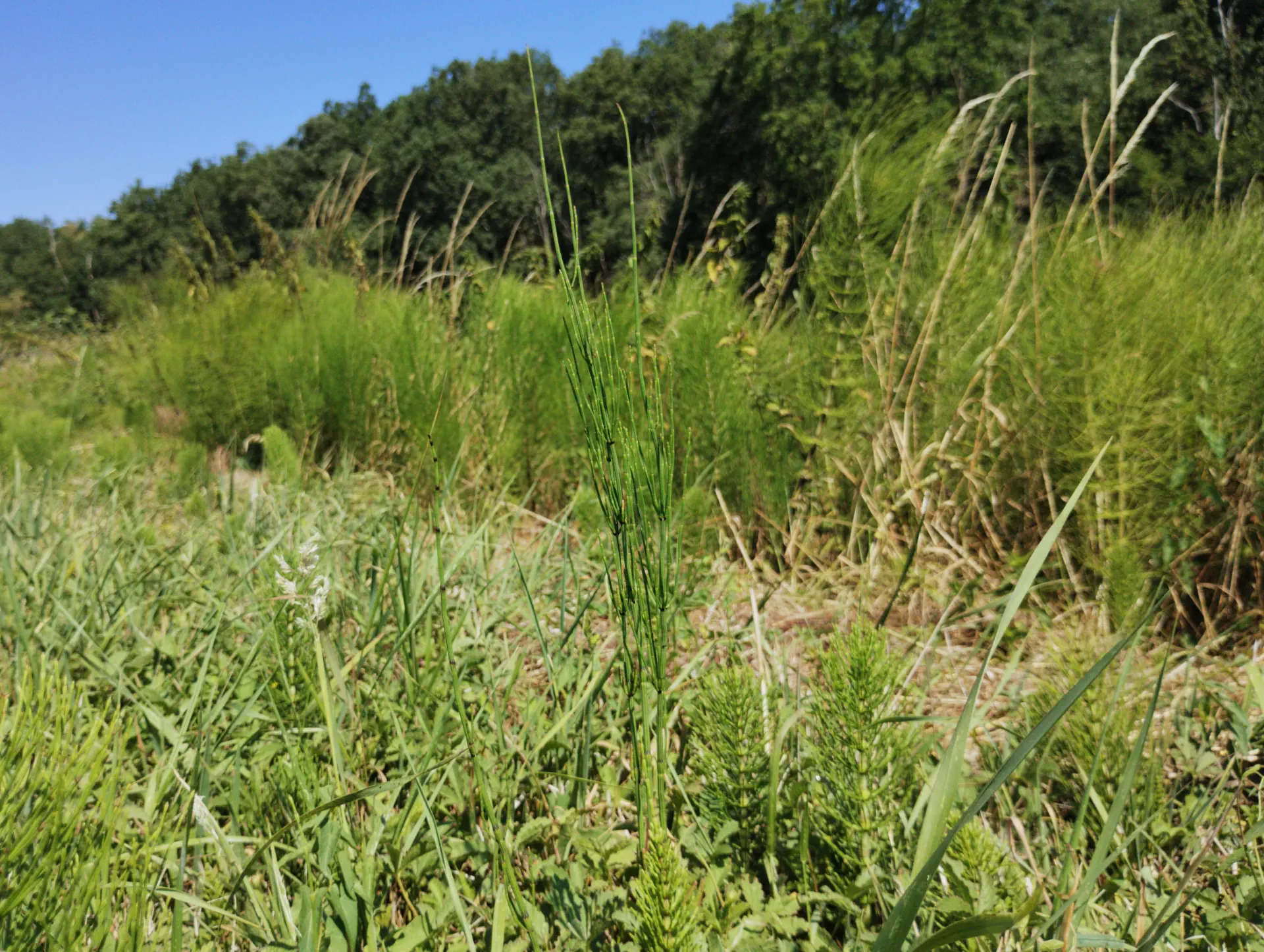
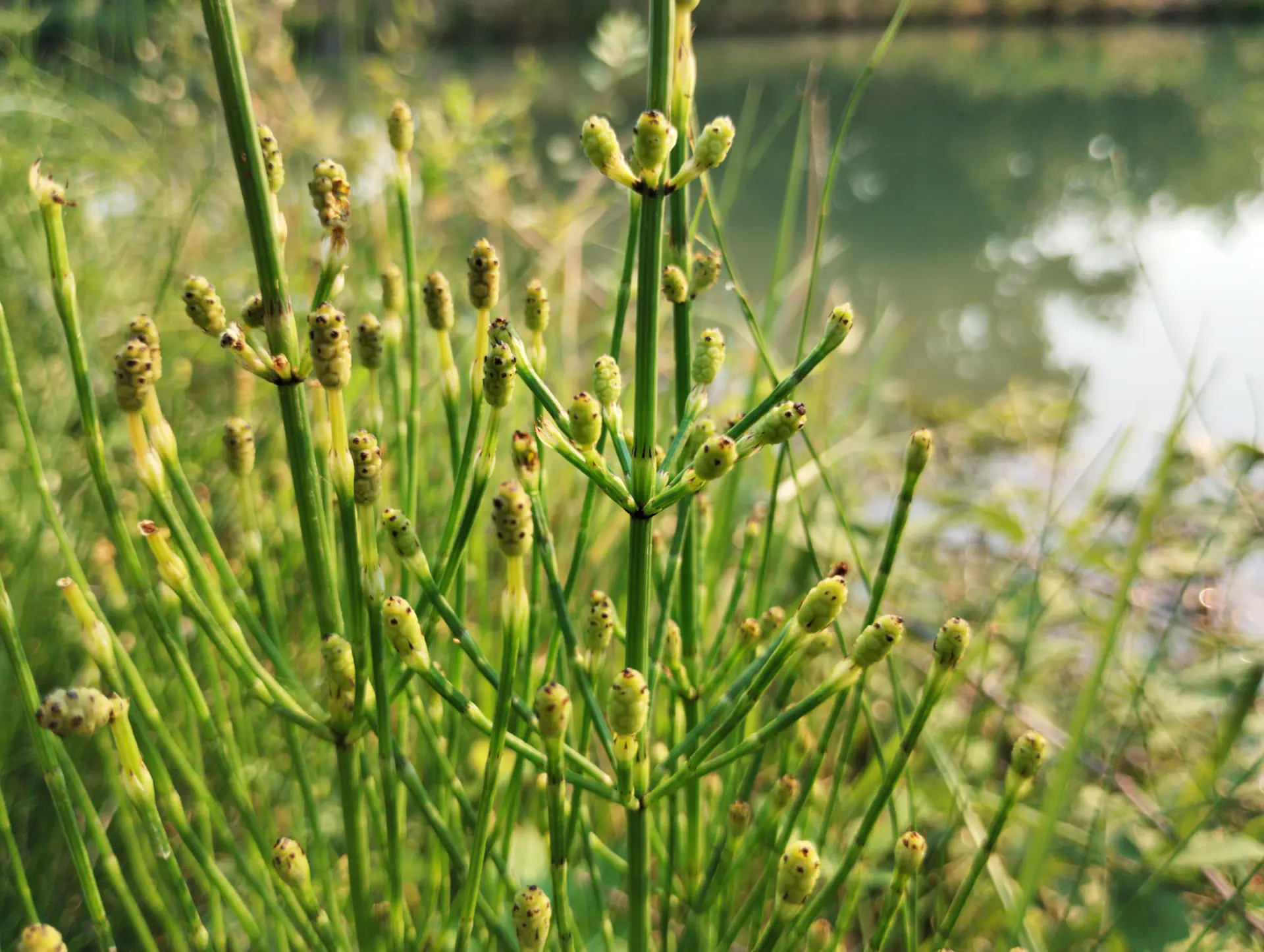
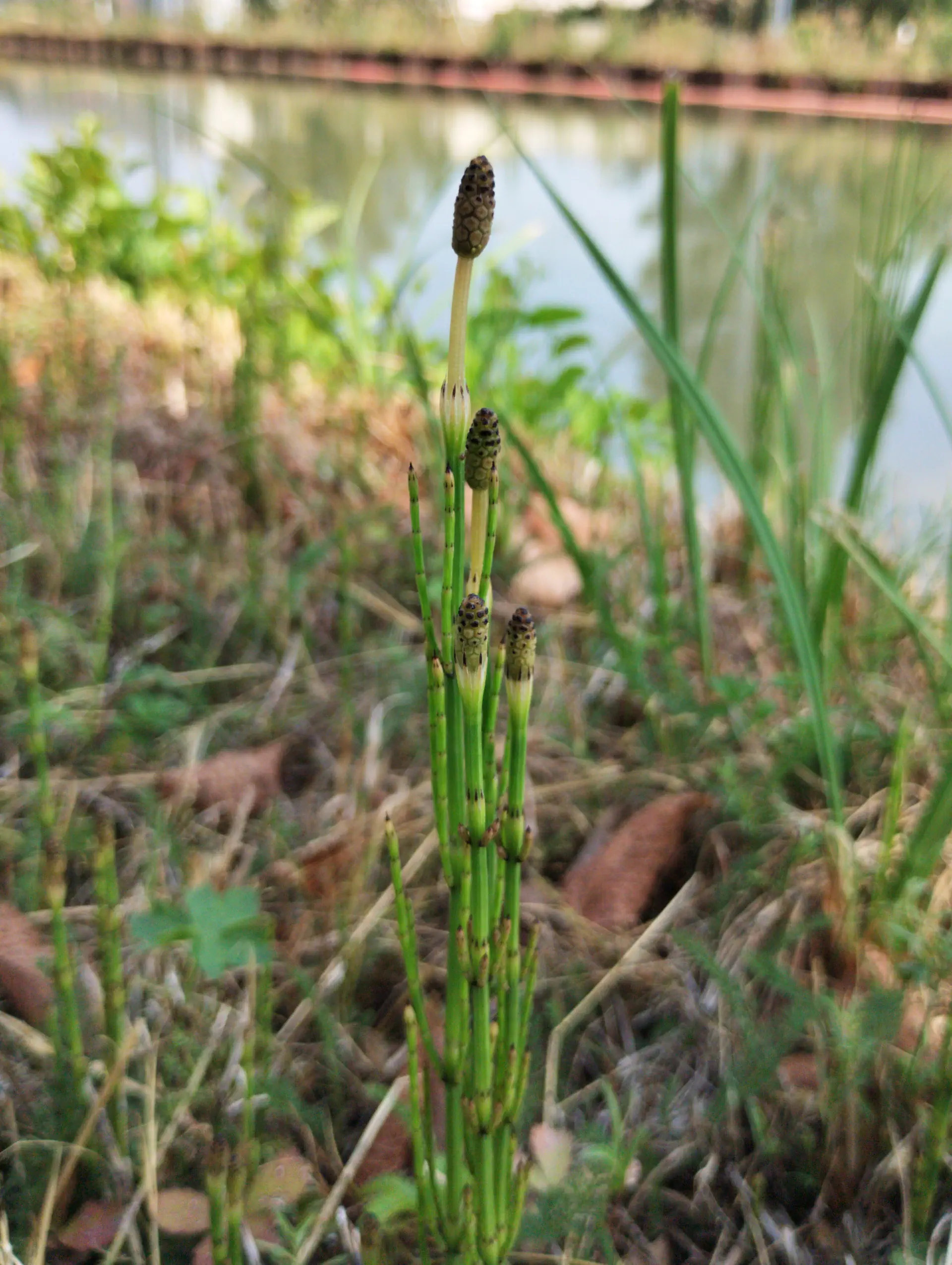
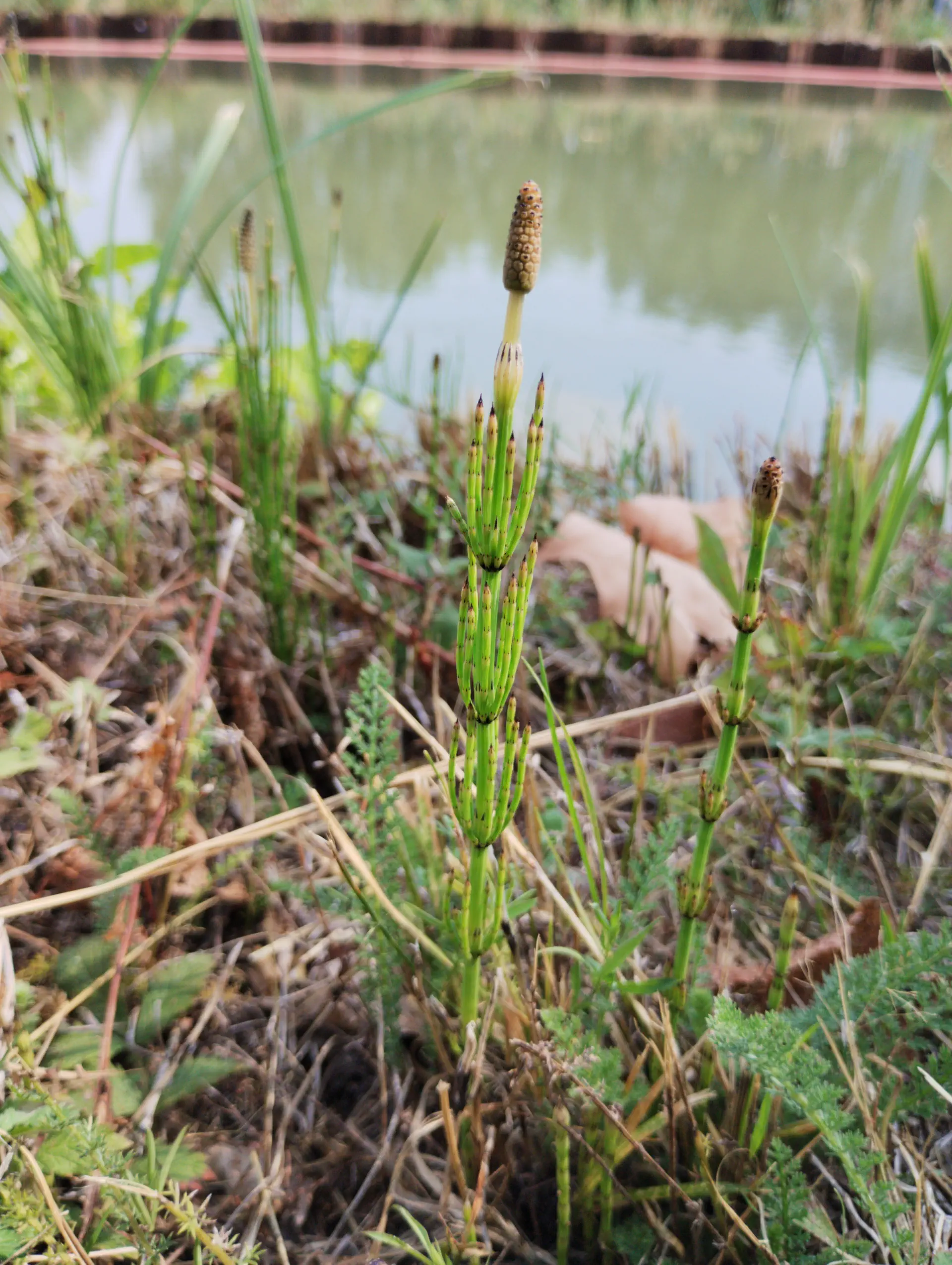
Possible confusion with E. arvense L., 1753, whose first branch internode is longer than the corresponding sheath, while that of E. palustre is shorter.
Diploid (2n = 216).
Hybridizes with:
- E. arvense L., 1753 to produce E. × rothmaleri C.N.Page, 1973;
- E. fluviatile L., 1753 to produce E. × dycei C.N.Page, 1981, P;
- E. telmateia Ehrh., 1783 to produce E. × font-queri Rothm., 1944, P.
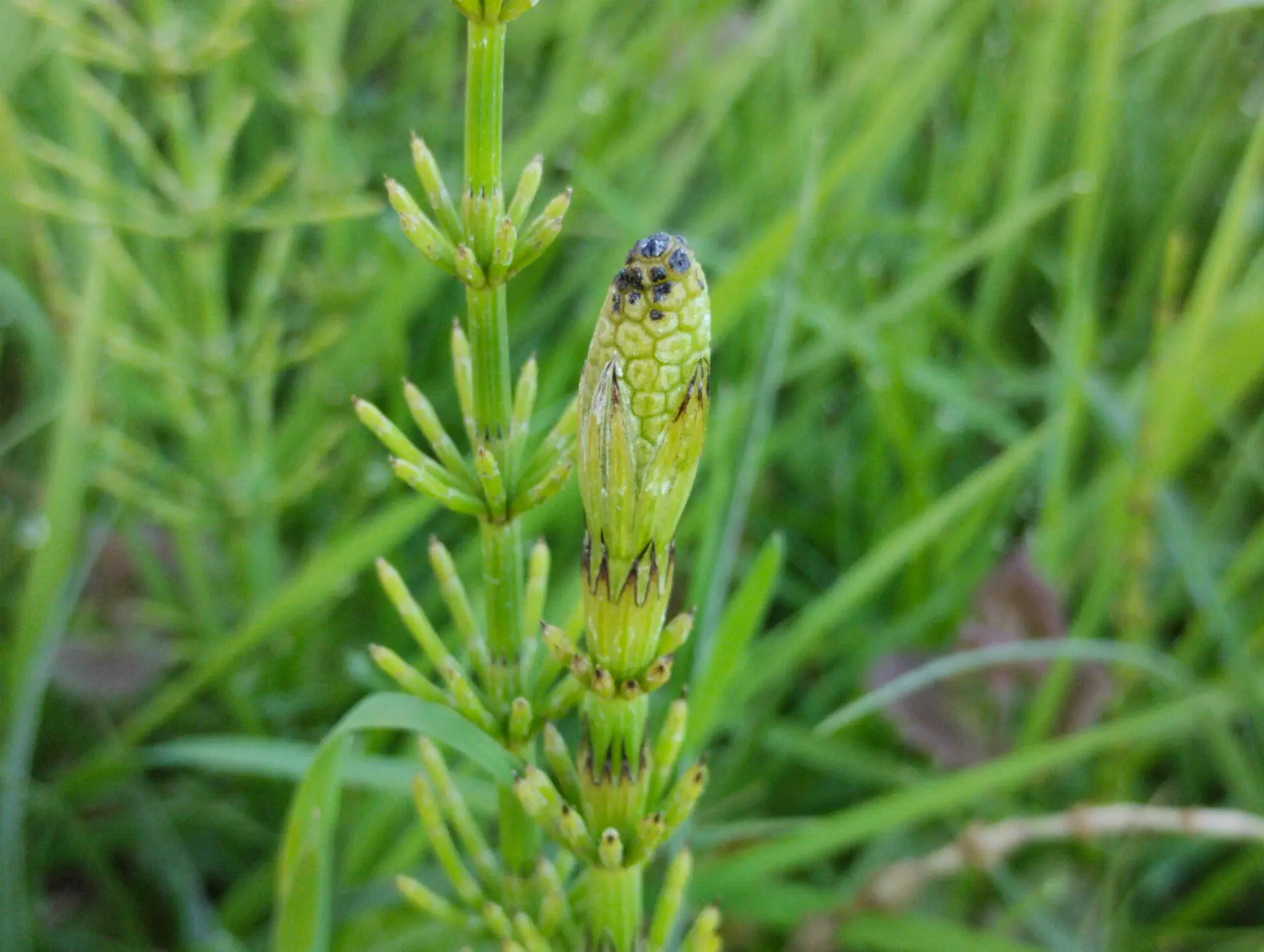
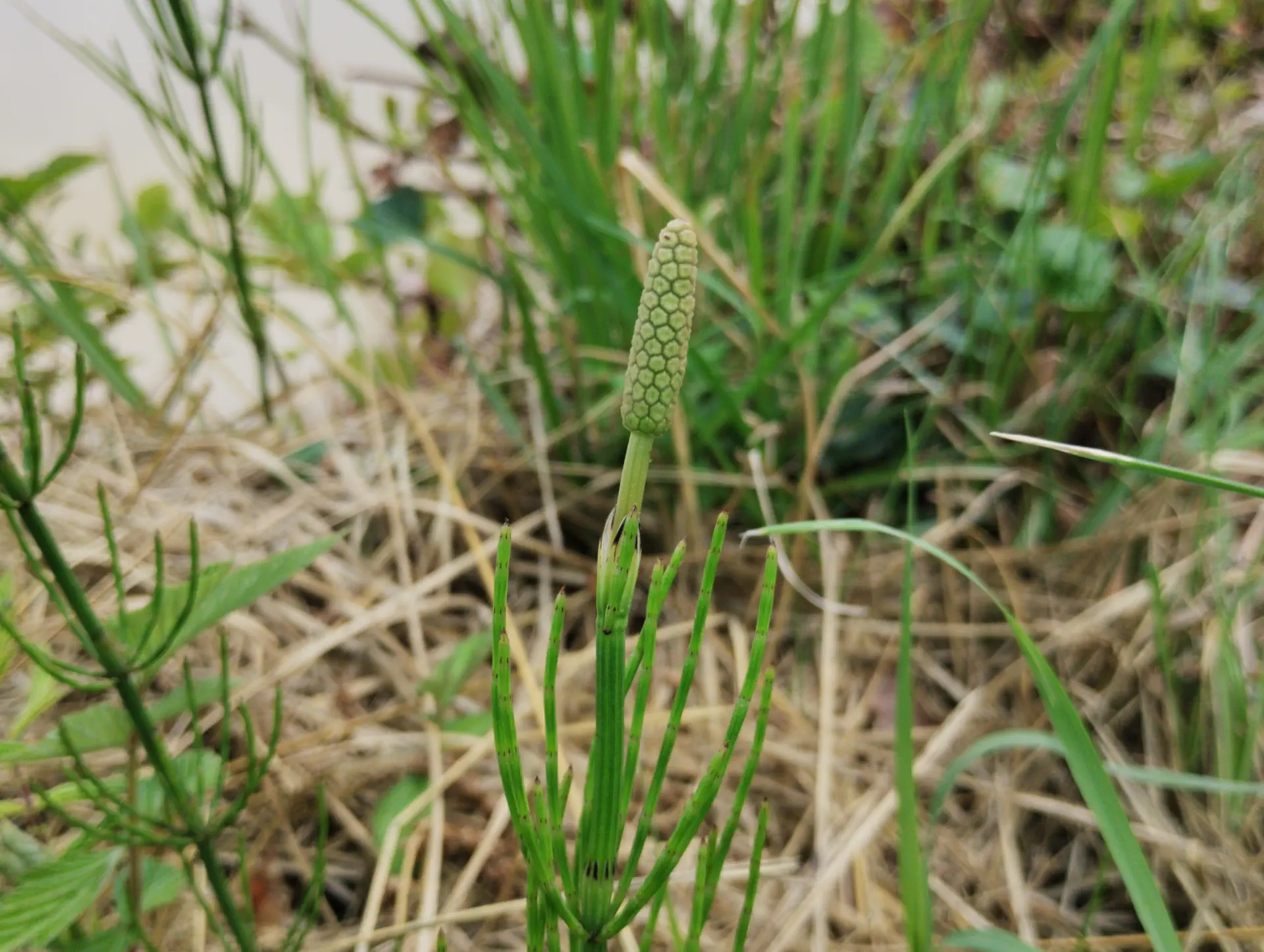
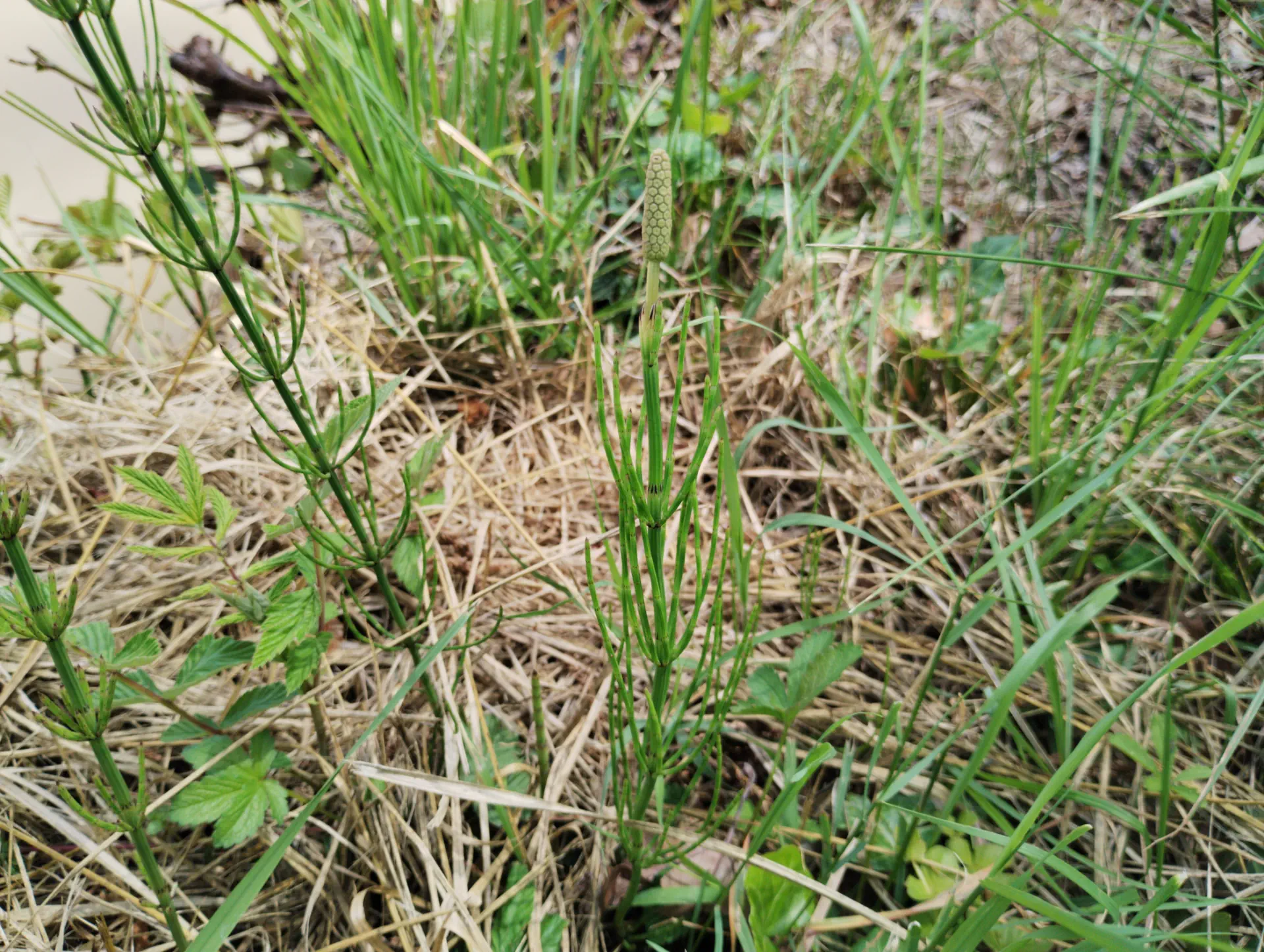
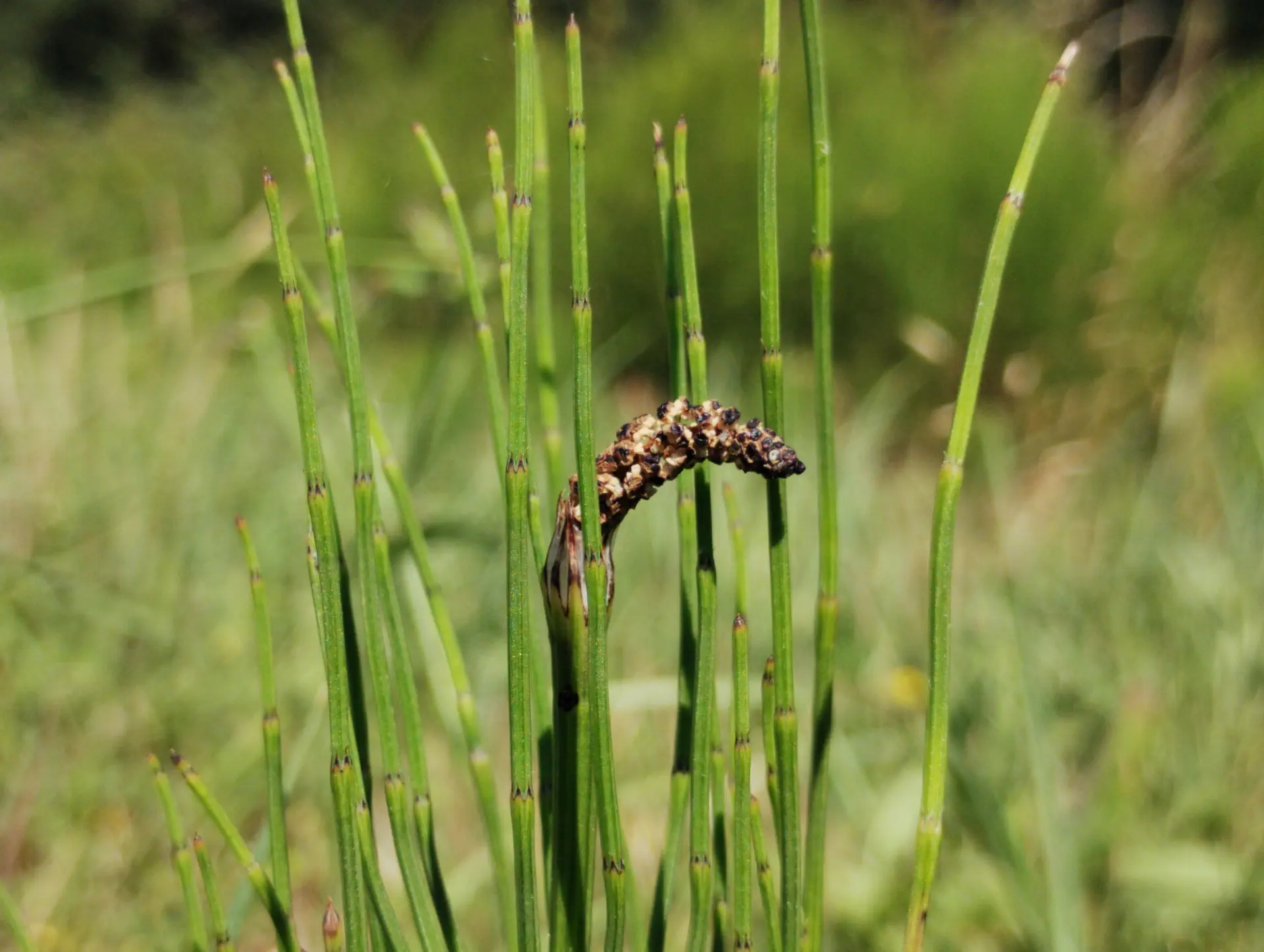
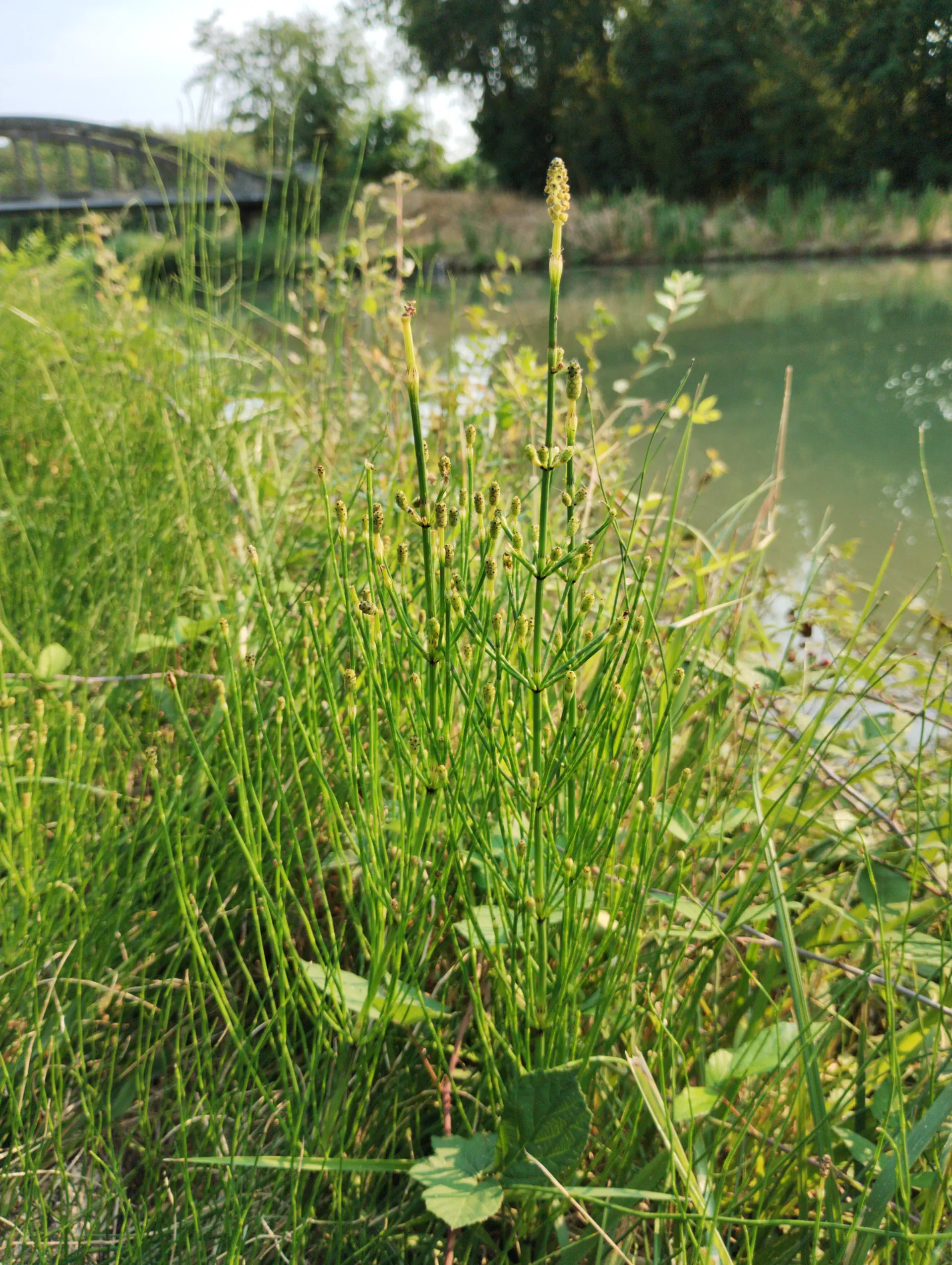
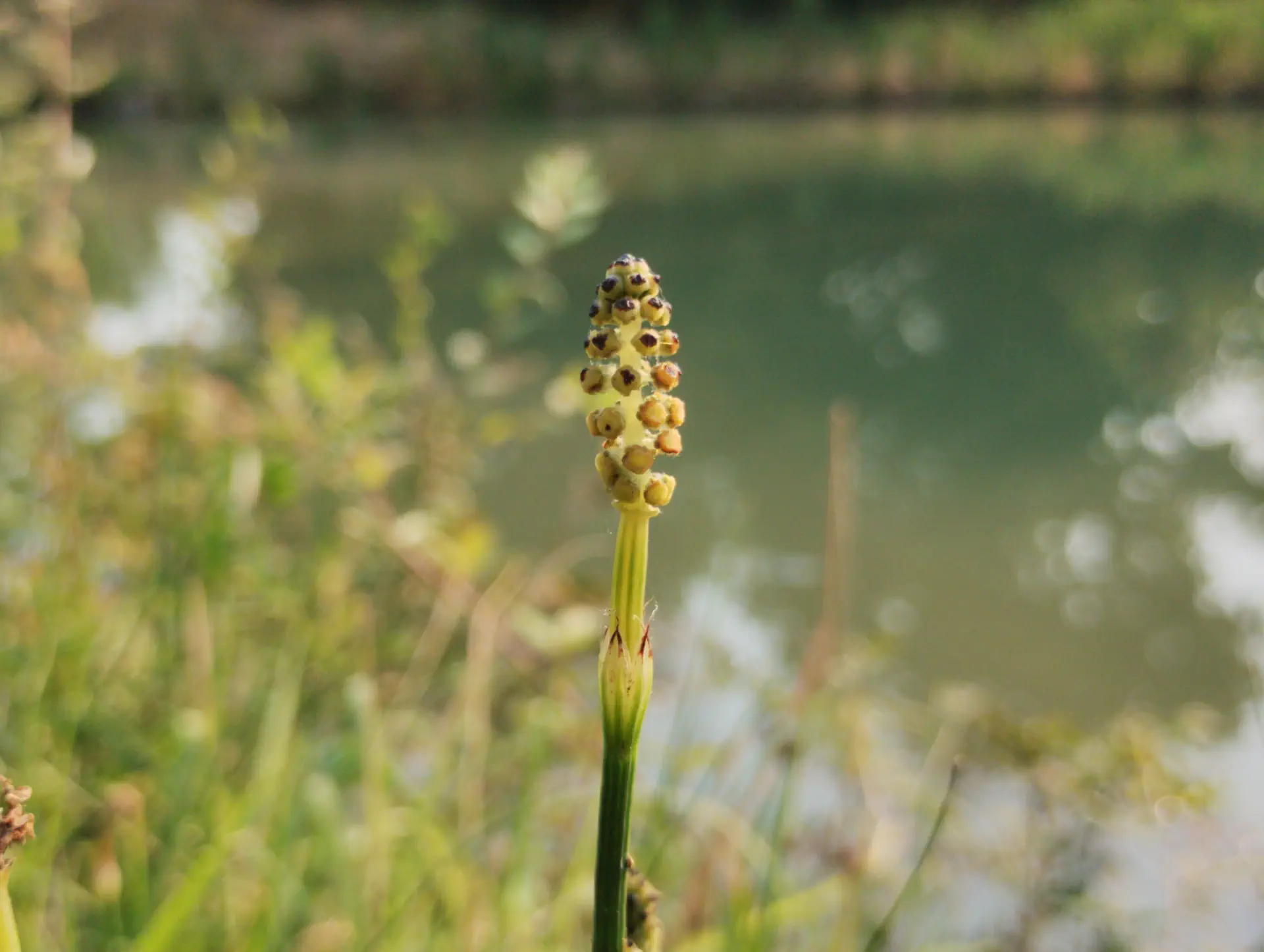
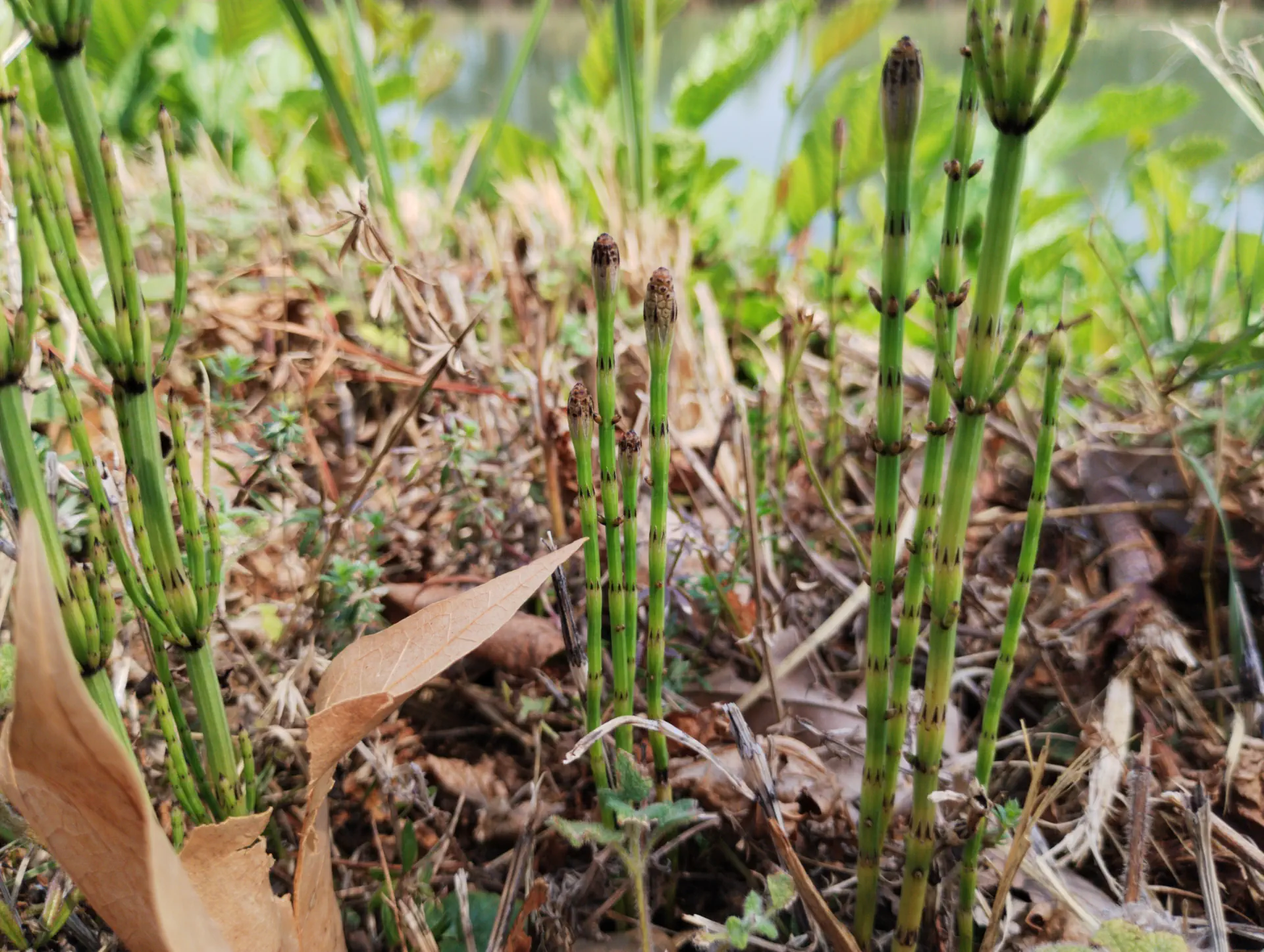
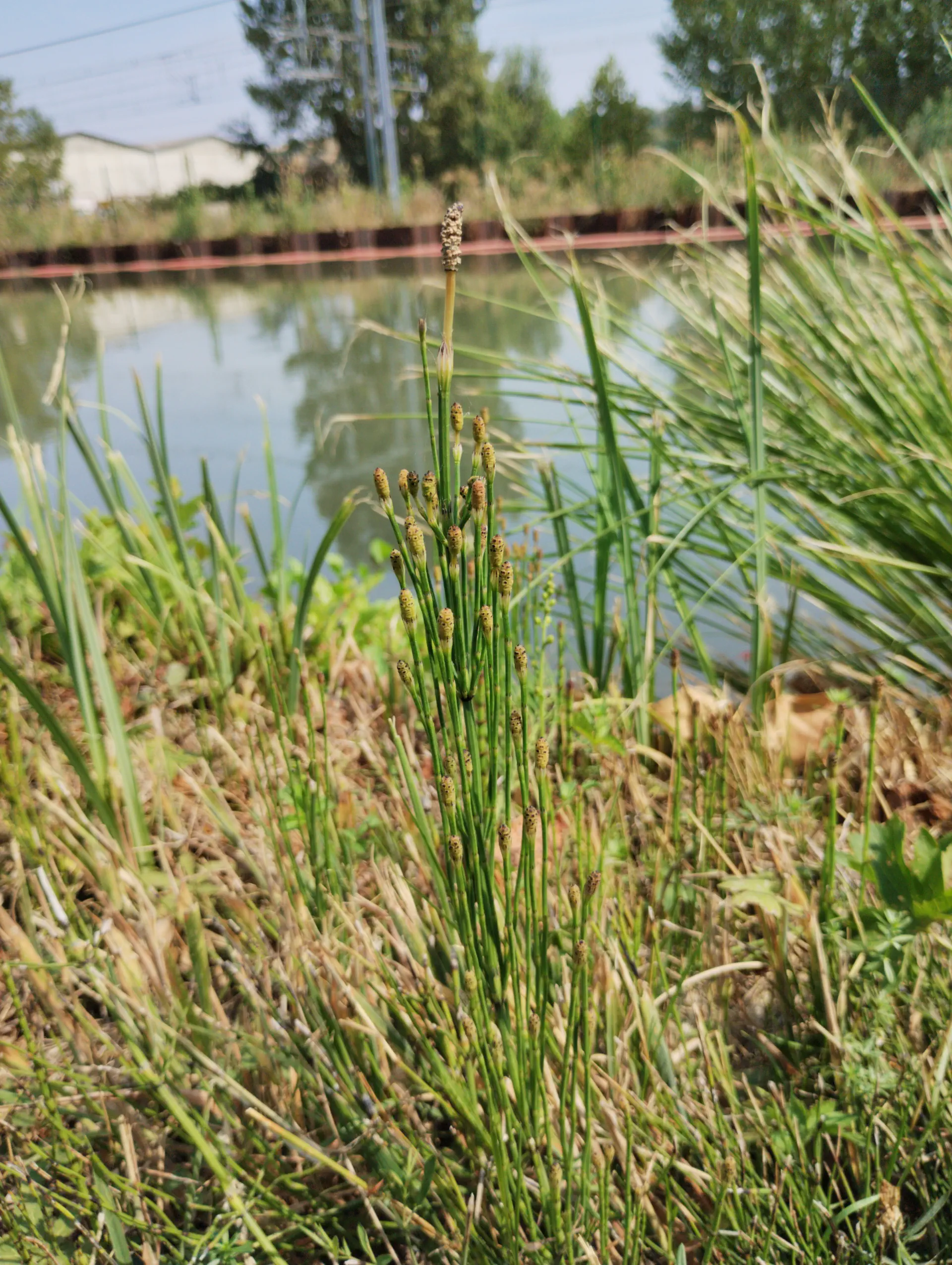
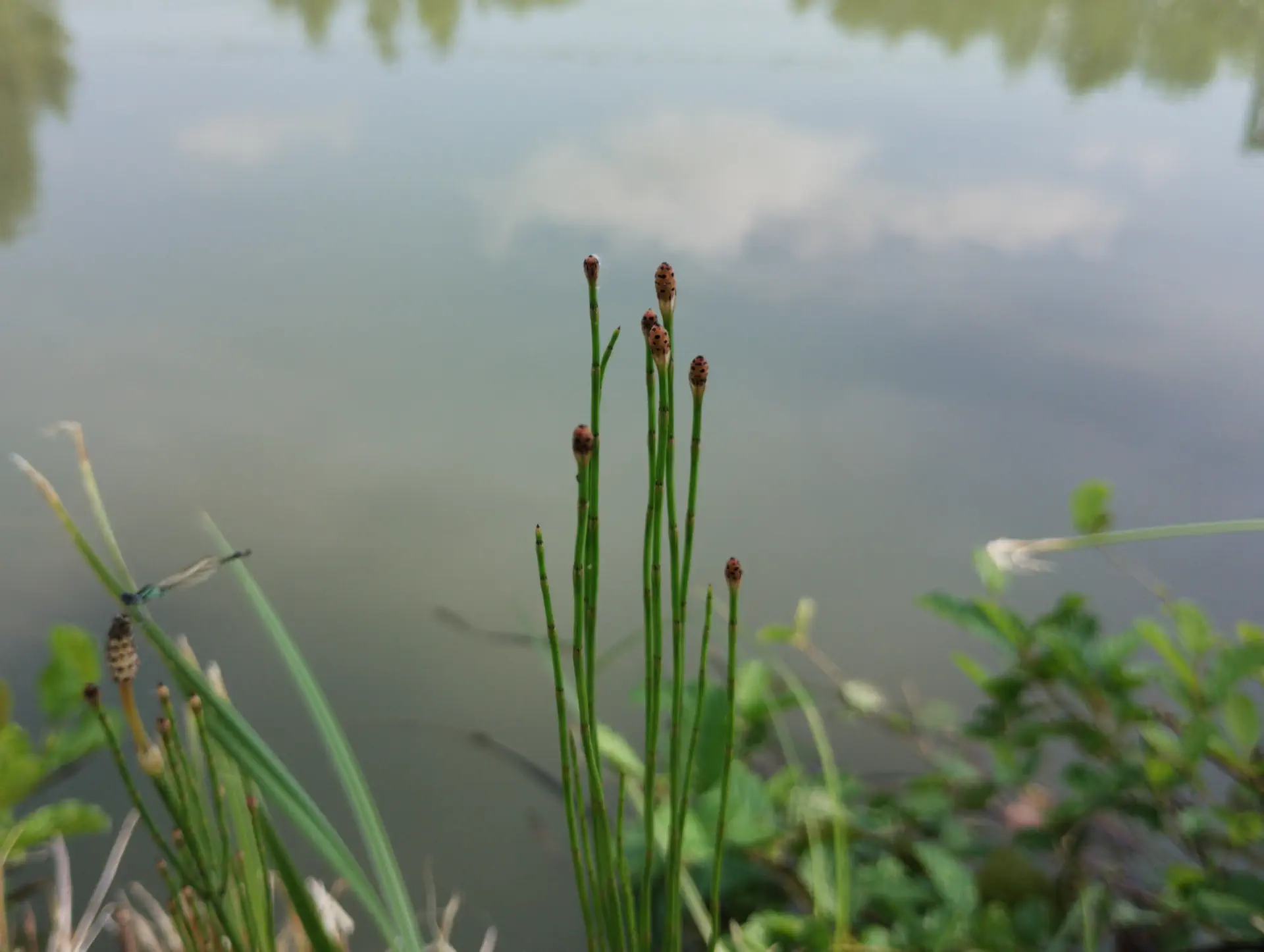
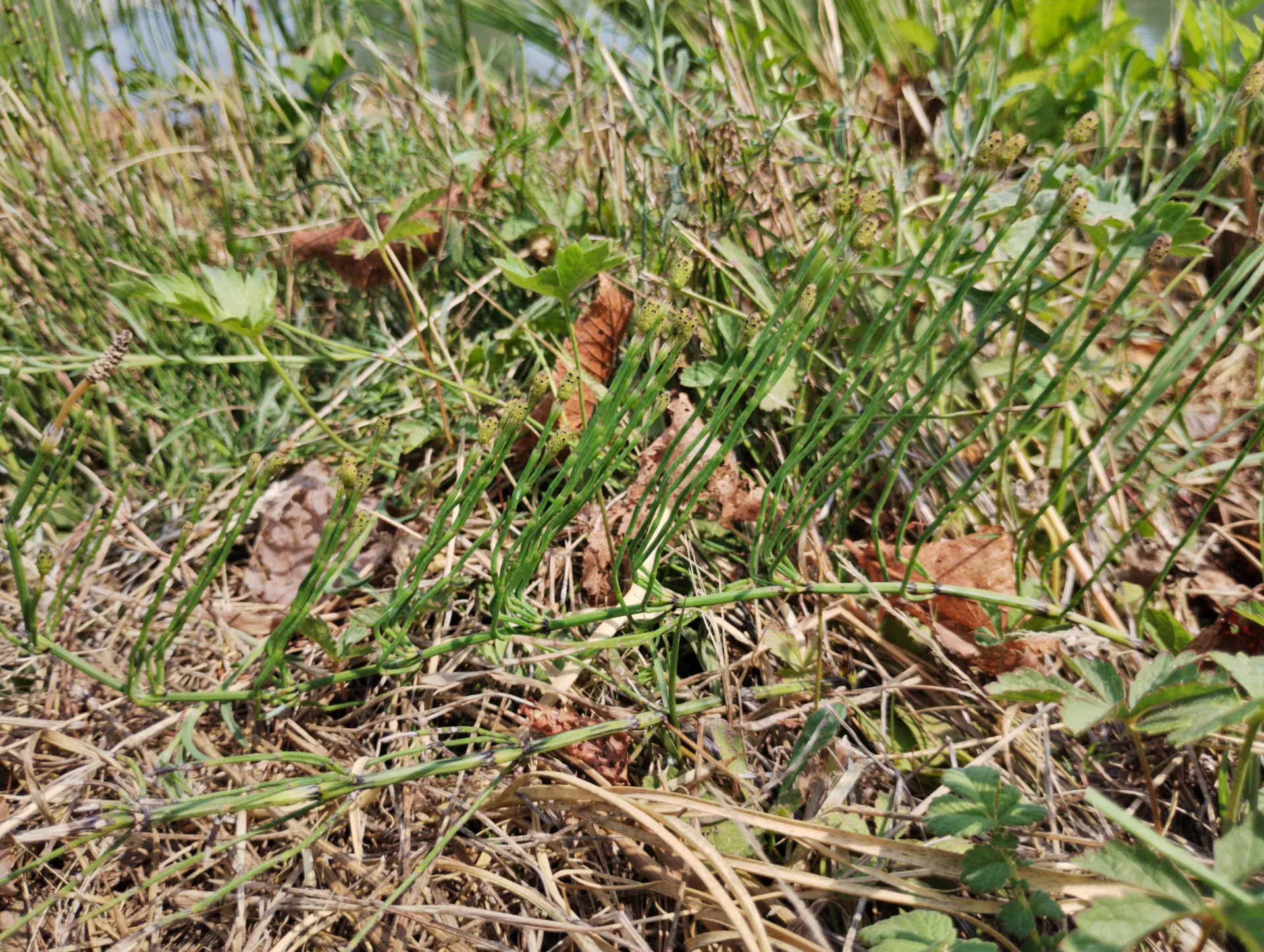
Fertile stems usually bear a single strobilus at the apex, but it is common to find stems with secondary strobili on the branches (sometimes called f. polystachyum). Secondary strobili also develop as a result of stem mutilation leading to the loss of the main strobilus.
Photographs
Sources
Badré, F., & Deschatres, R. (1979). Les Ptéridophytes de la France : liste commentée des espèces (taxinomie, cytologie, écologie et répartition générale). Candollea, 34(2), 379-457. https://doi.org/10.5169/seals-880127
Christenhusz, M., Lansdown, R.V., Bento Elias, R., Dyer, R., Ivanenko, Y., Rouhan, G., Rumsey, F., & Väre, H. (2017). Equisetum palustre (Europe assessment). The IUCN Red List of Threatened Species, 2017. https://www.iucnredlist.org/species/167859/85451475
Prelli, R., & Boudrie, M. (2024). Les fougères et plantes alliées d’Europe (2nd ed., p. 106). Biotope.
Tison, J.M., & de Foucault, B. (2014). Flora Gallica : Flore de France (p. 15). Biotope.