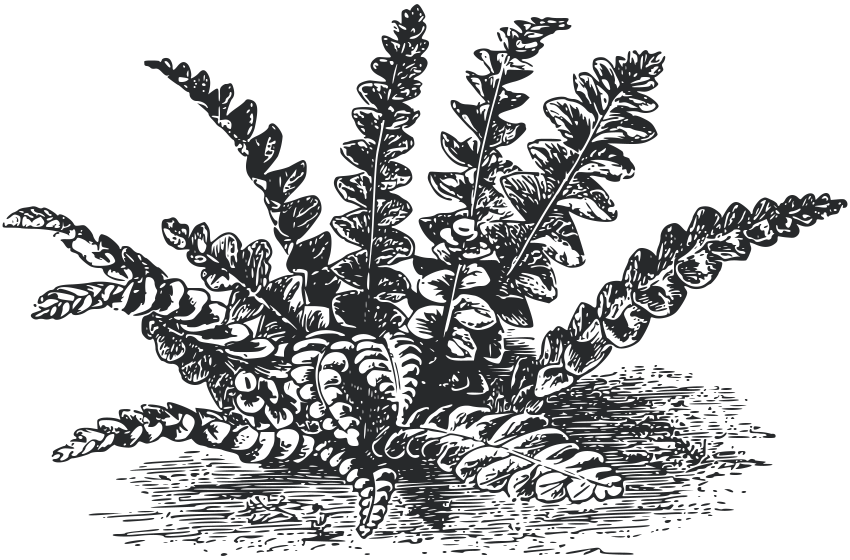
Equisetum telmateia Ehrh., 1783
🇬🇧 Great Horsetail
🇫🇷 Grande prêle, Prêle d'ivoire
Taxonomy
- Kingdom: Plantae
- Clade: Tracheophytes
- Clade: Monilophytes
- Class: Polypodiopsida
- Subclass: Equisetidae
- Order: Equisetales
- Family: Equisetaceae
- Genus: Equisetum
- Subgenus: Equisetum
- Species: Equisetum telmateia
Presence
Present.
Conservation status
- Red List (Metropolitan France): LC Least Concern
- Red List (Europe): LC Least Concern
Notes
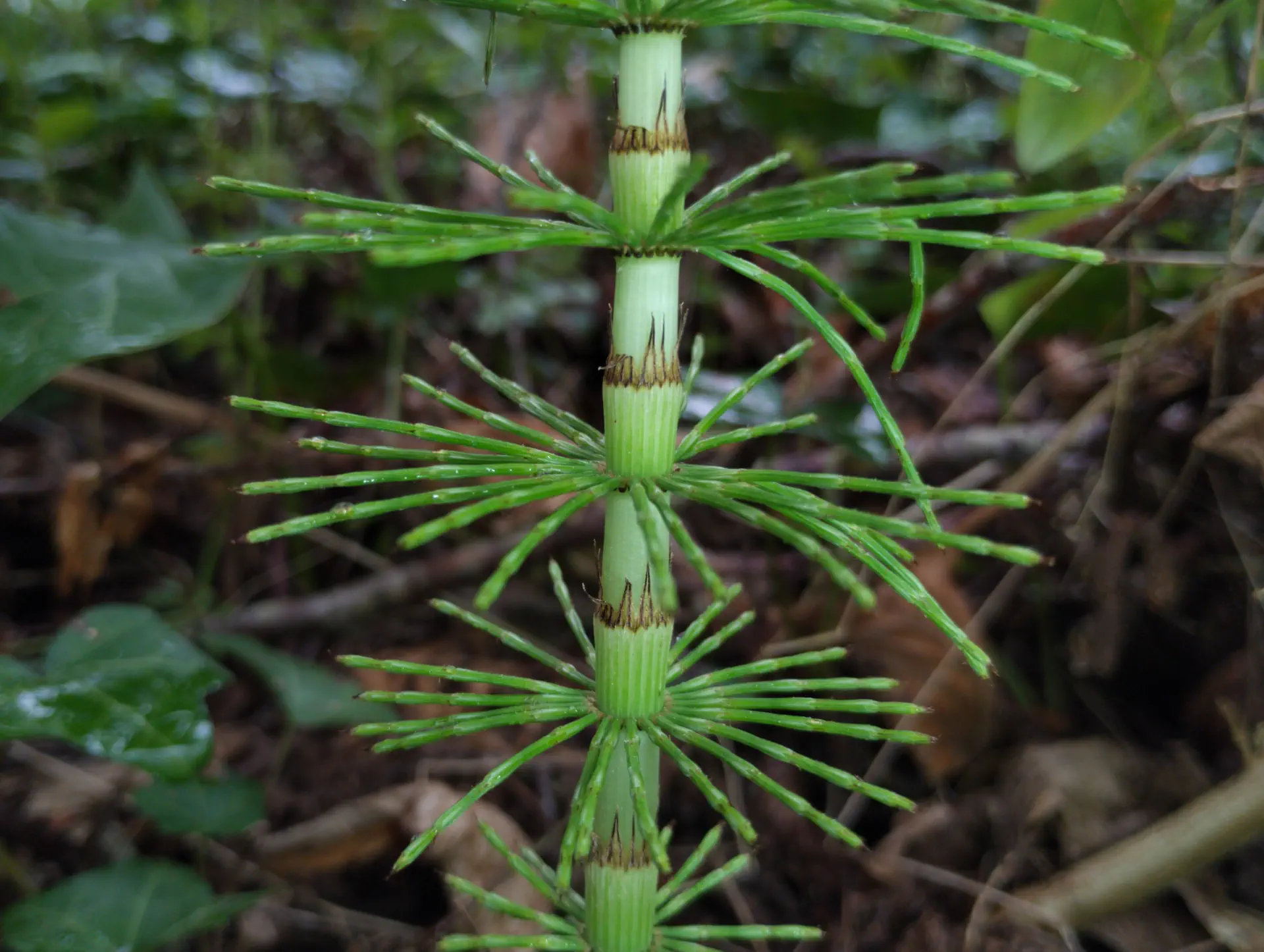
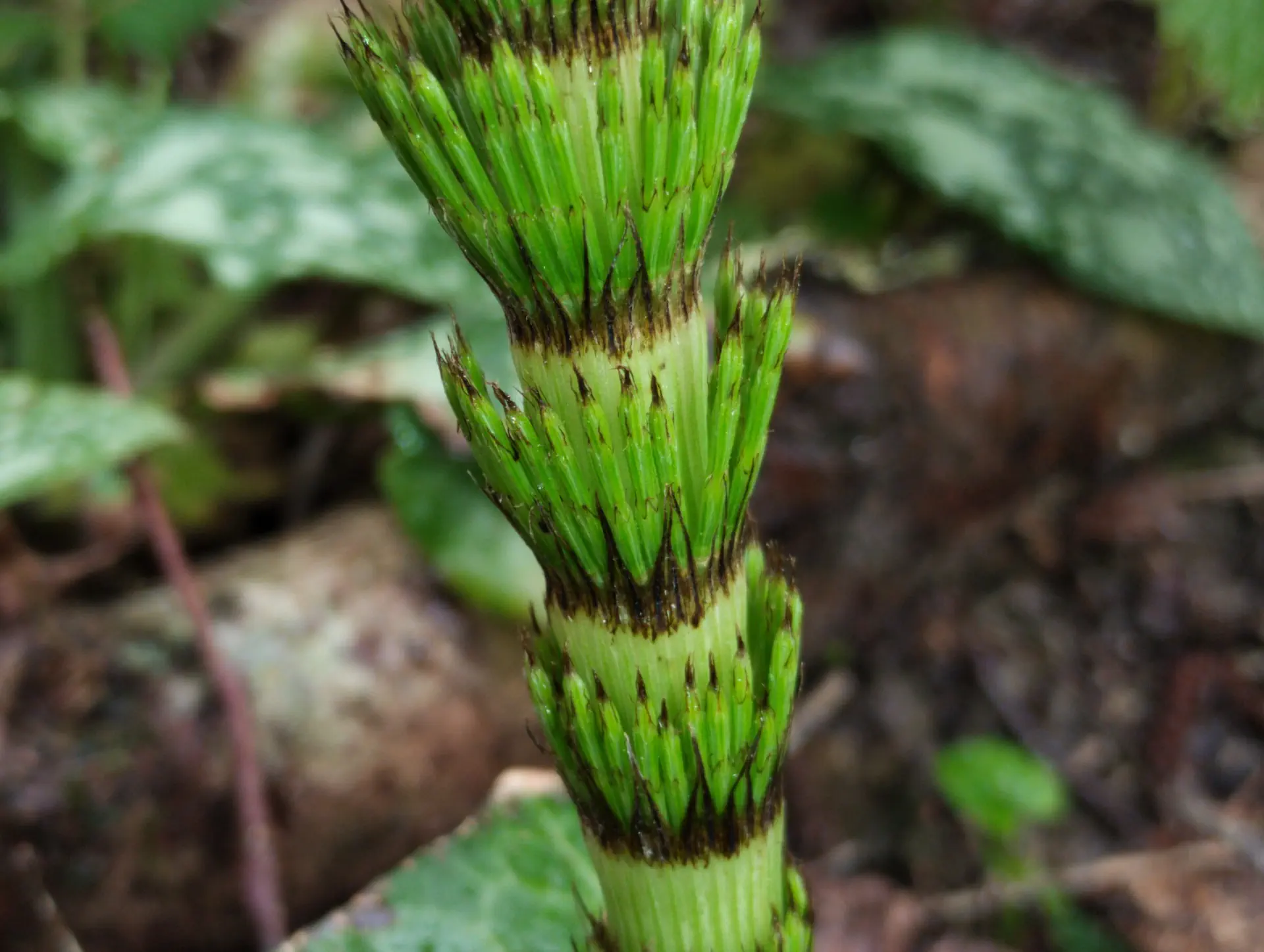
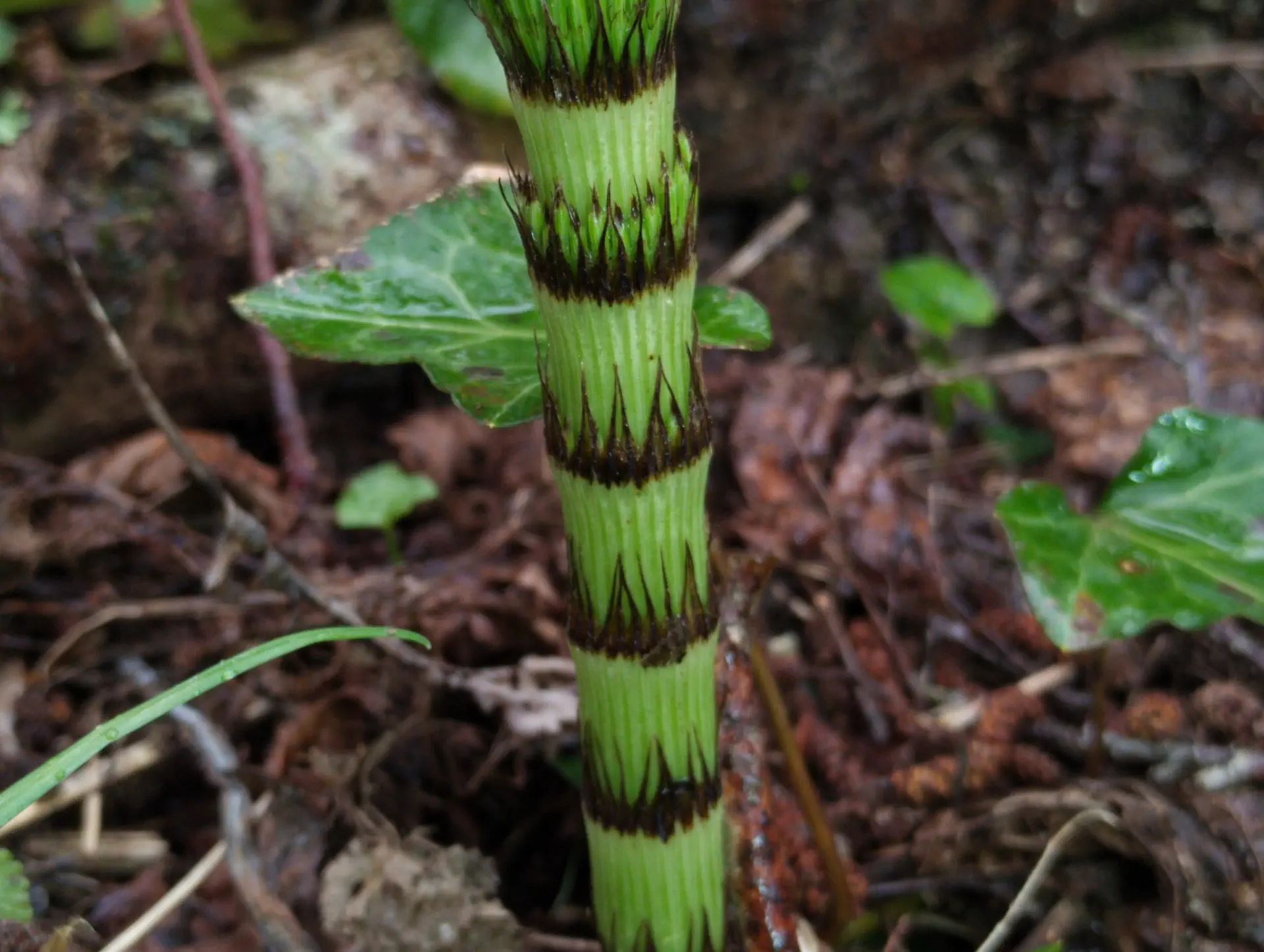
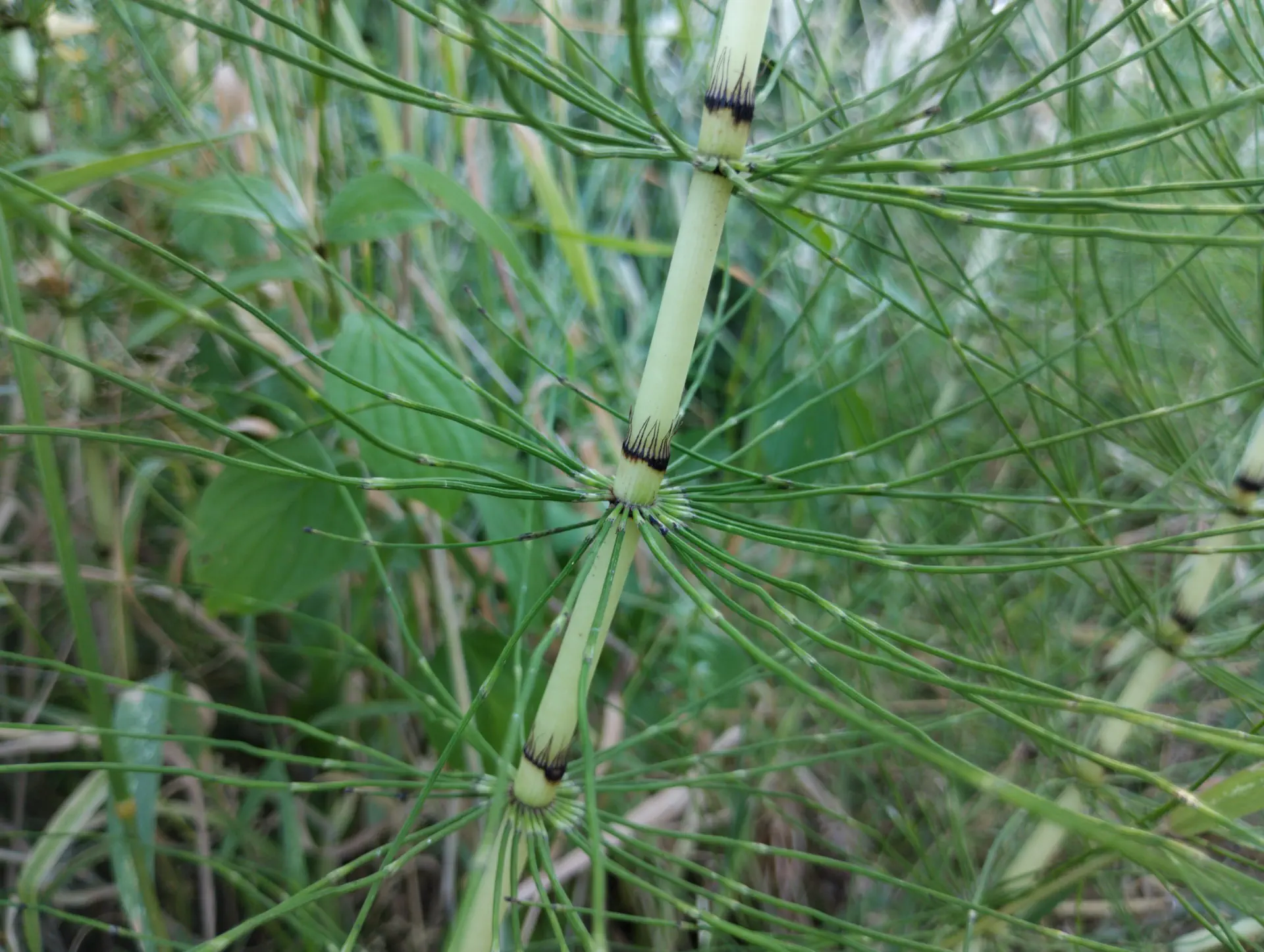
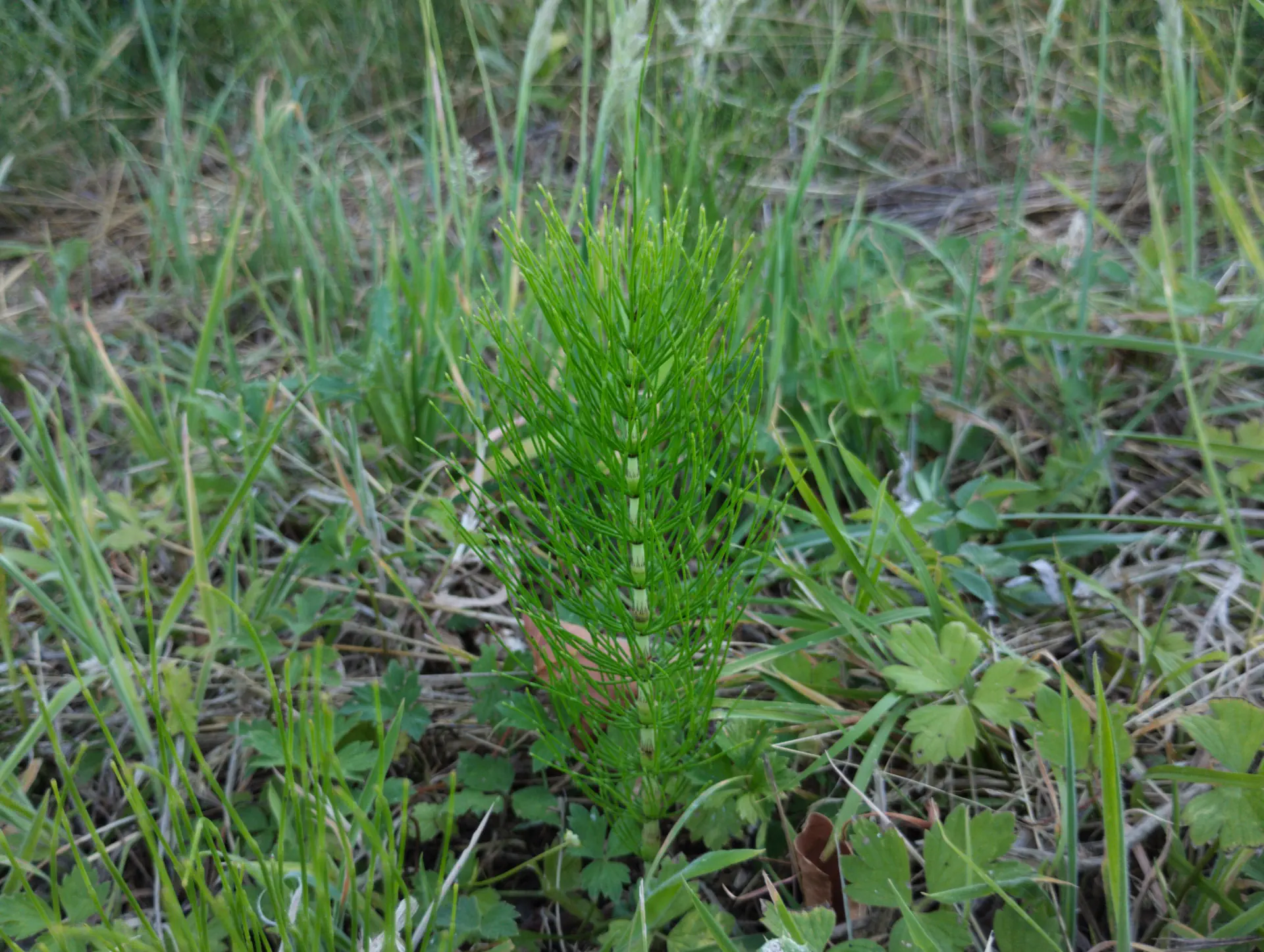
Possible confusion with E. arvense L., 1753, whose stems have sheaths with less than 15 teeth, while those of E. telmateia have sheaths with more than 15 teeth.
Diploid (2n = 216).
A similar-looking North American species, E. braunii Milde, 1862, is often treated as a subspecies of E. telmateia under the name E. telmateia subsp. braunii (Milde) Hauke, 1978.
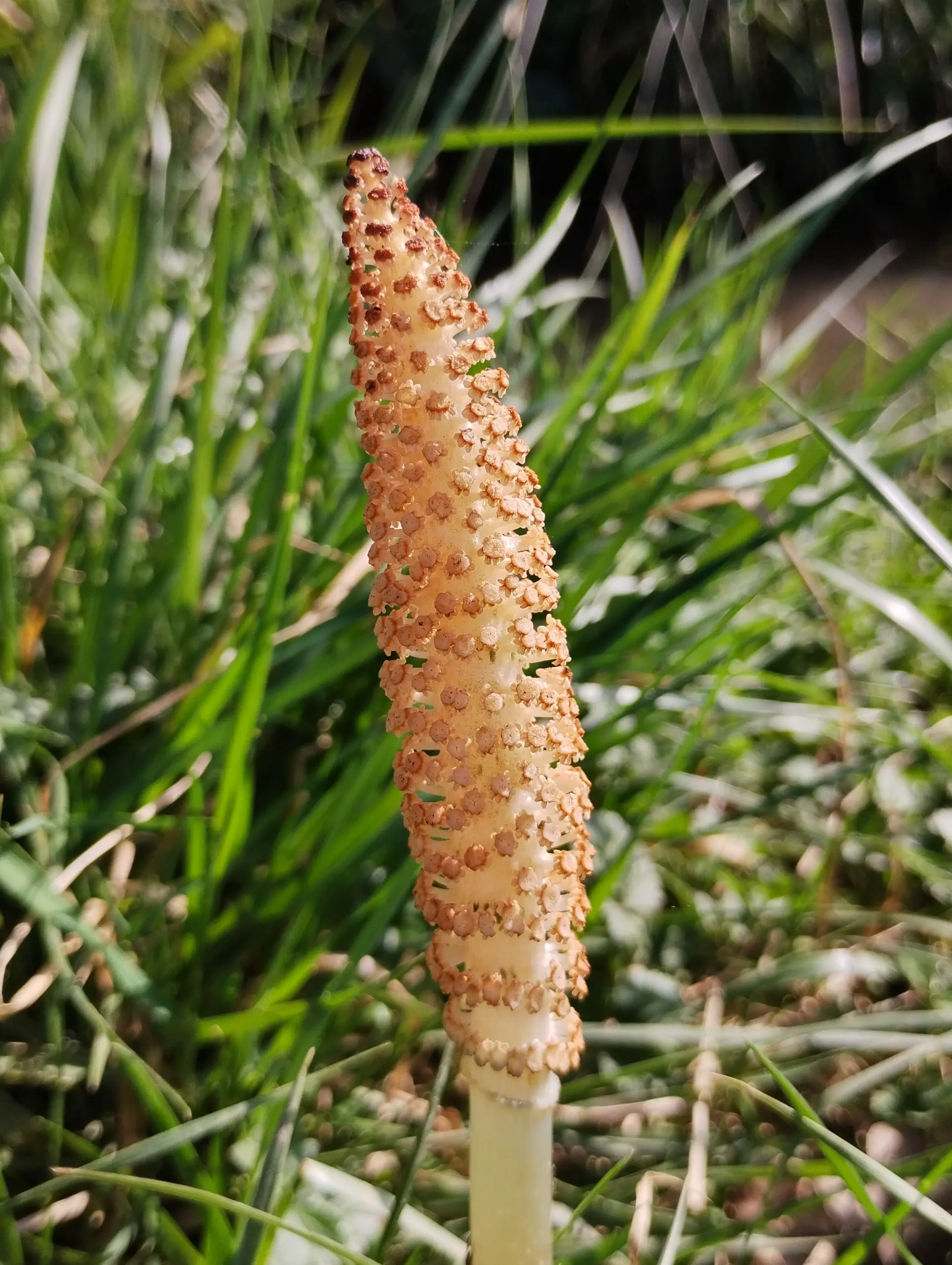
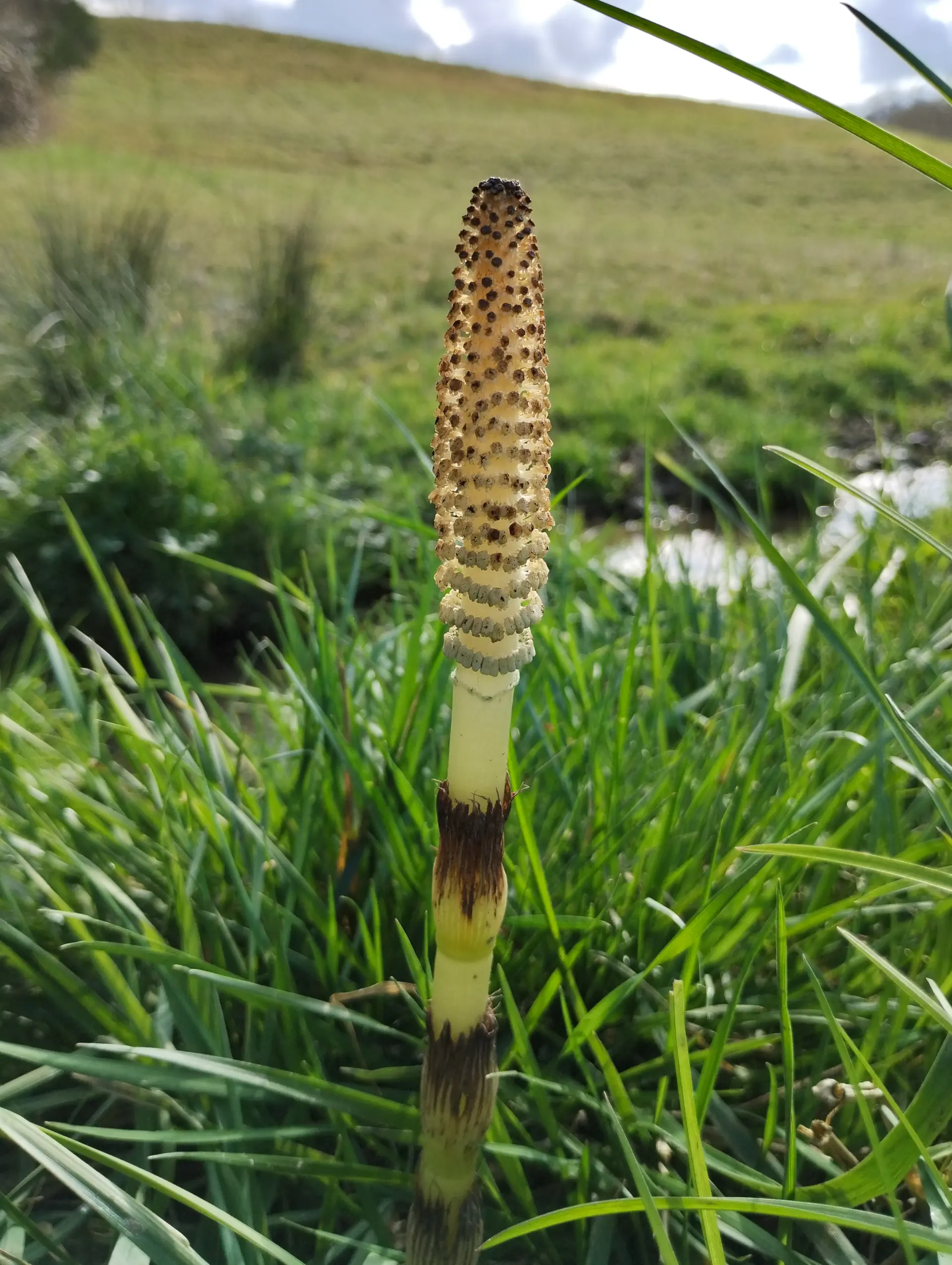
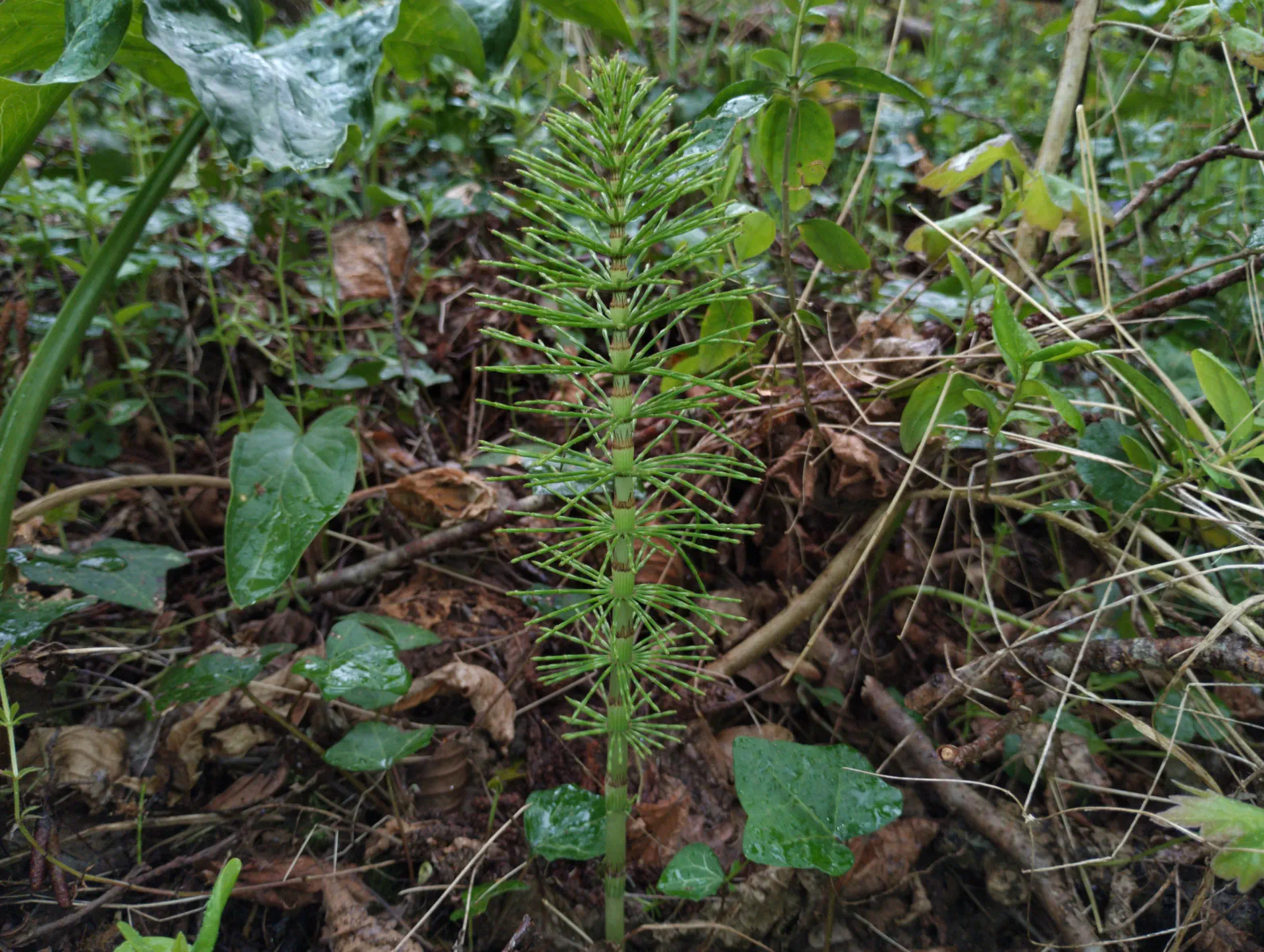
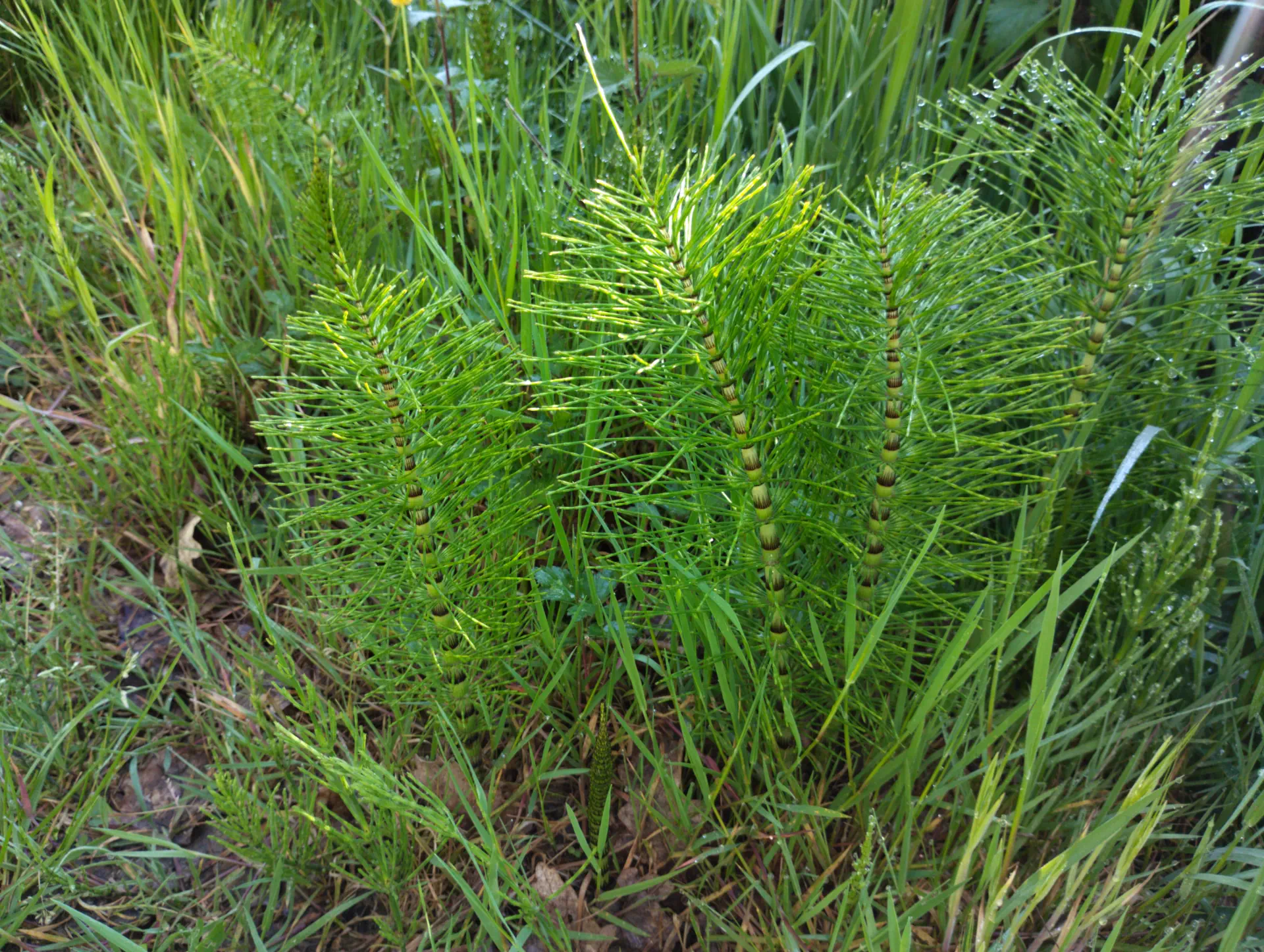
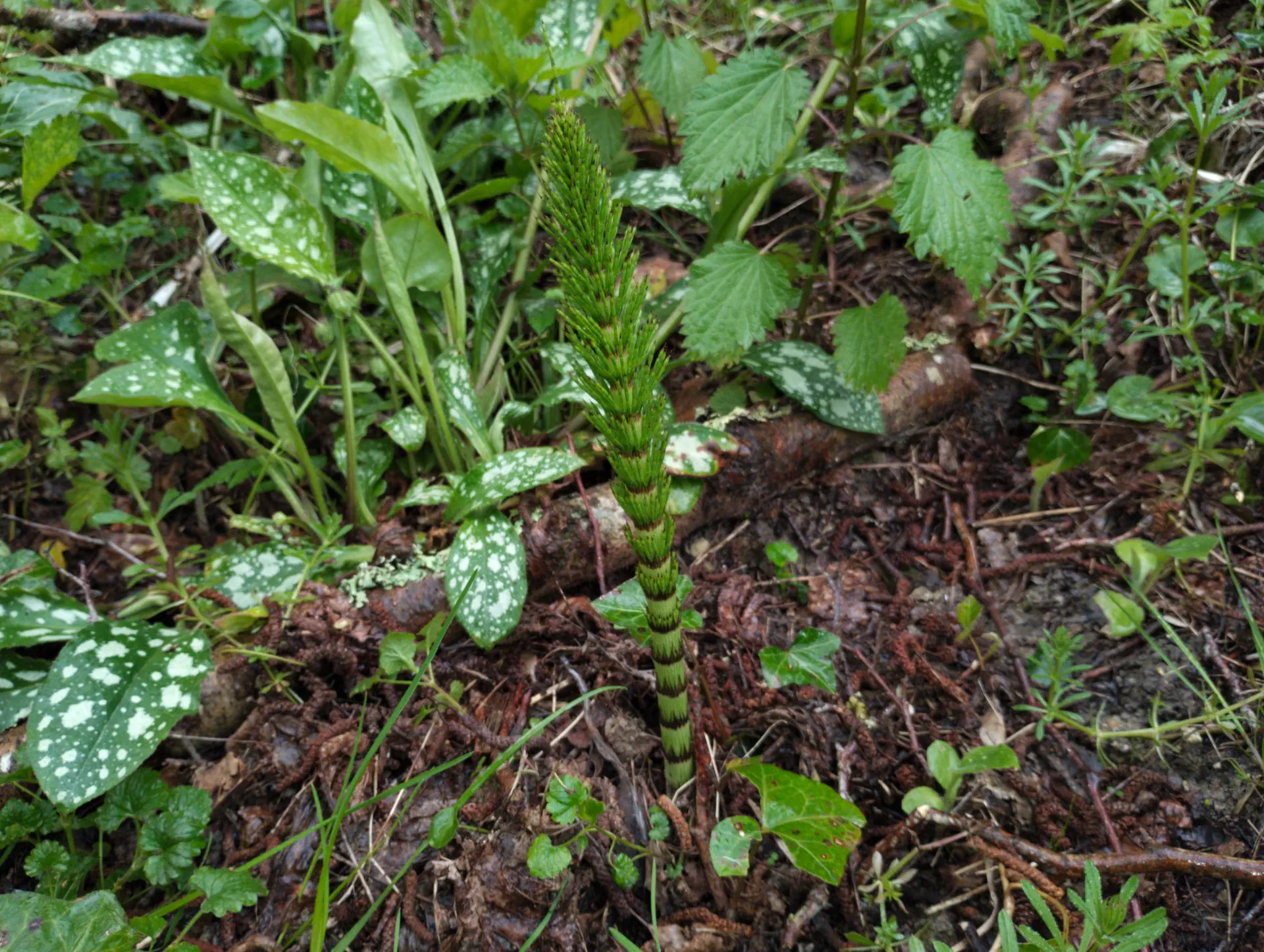
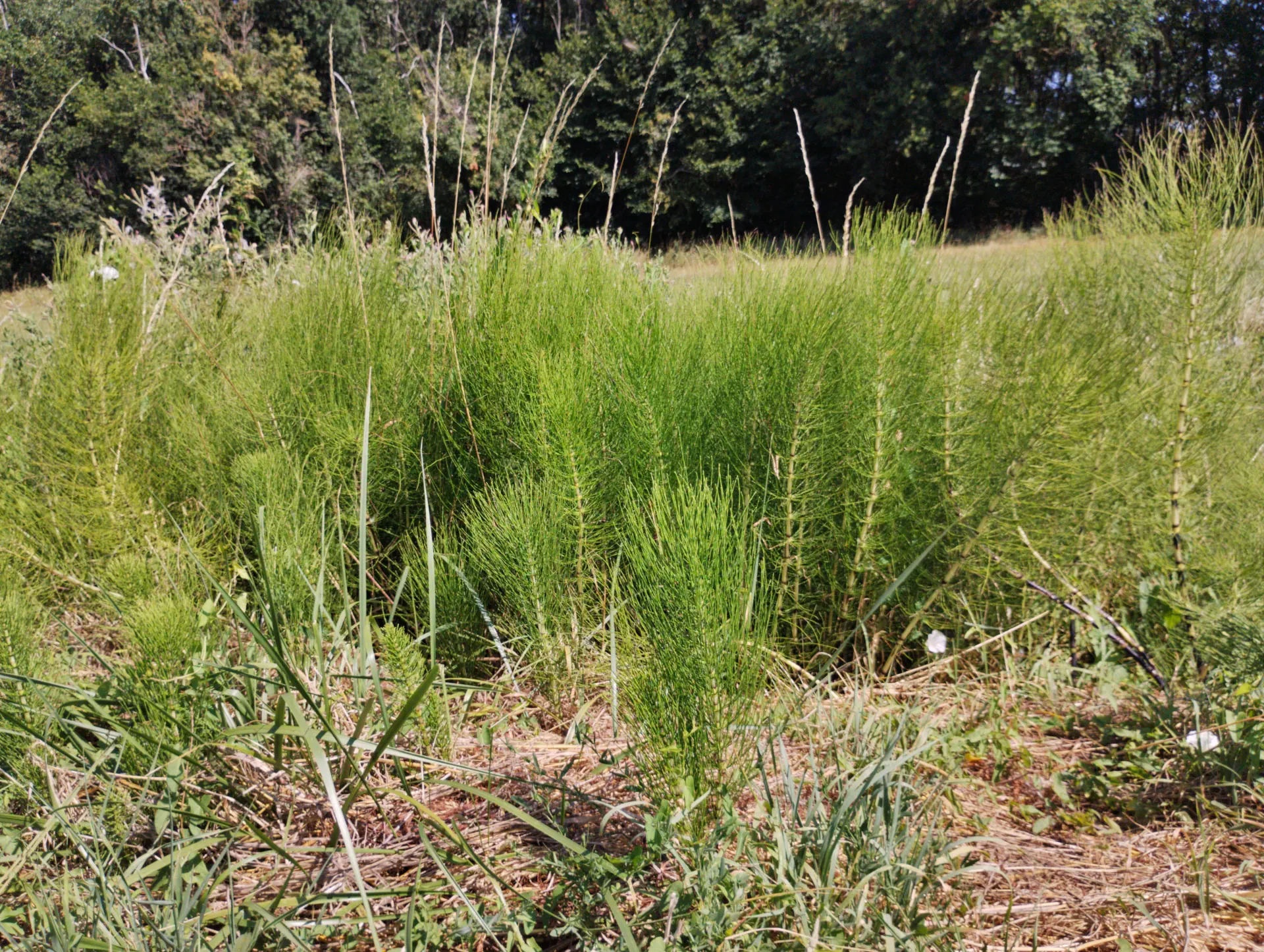
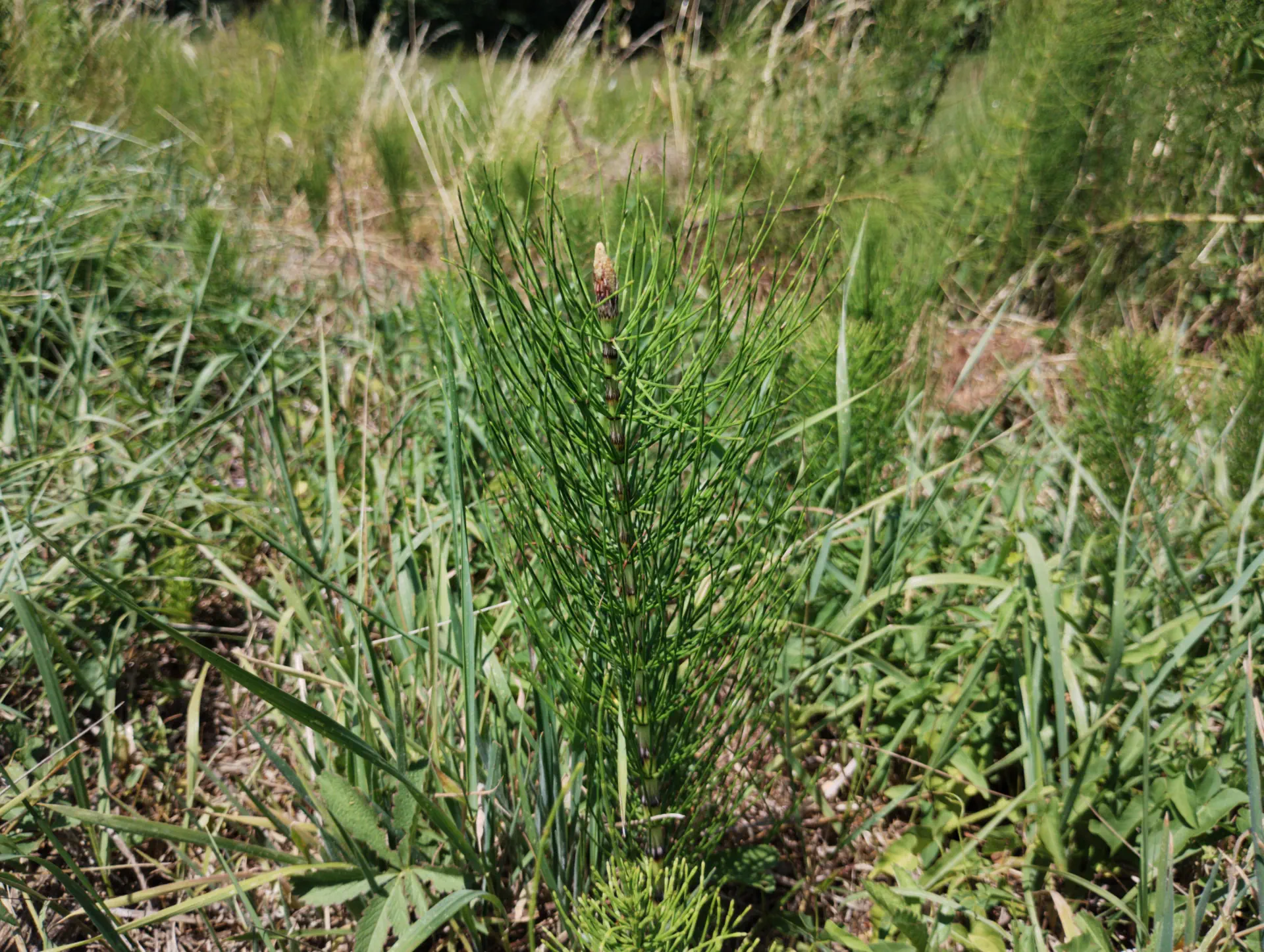
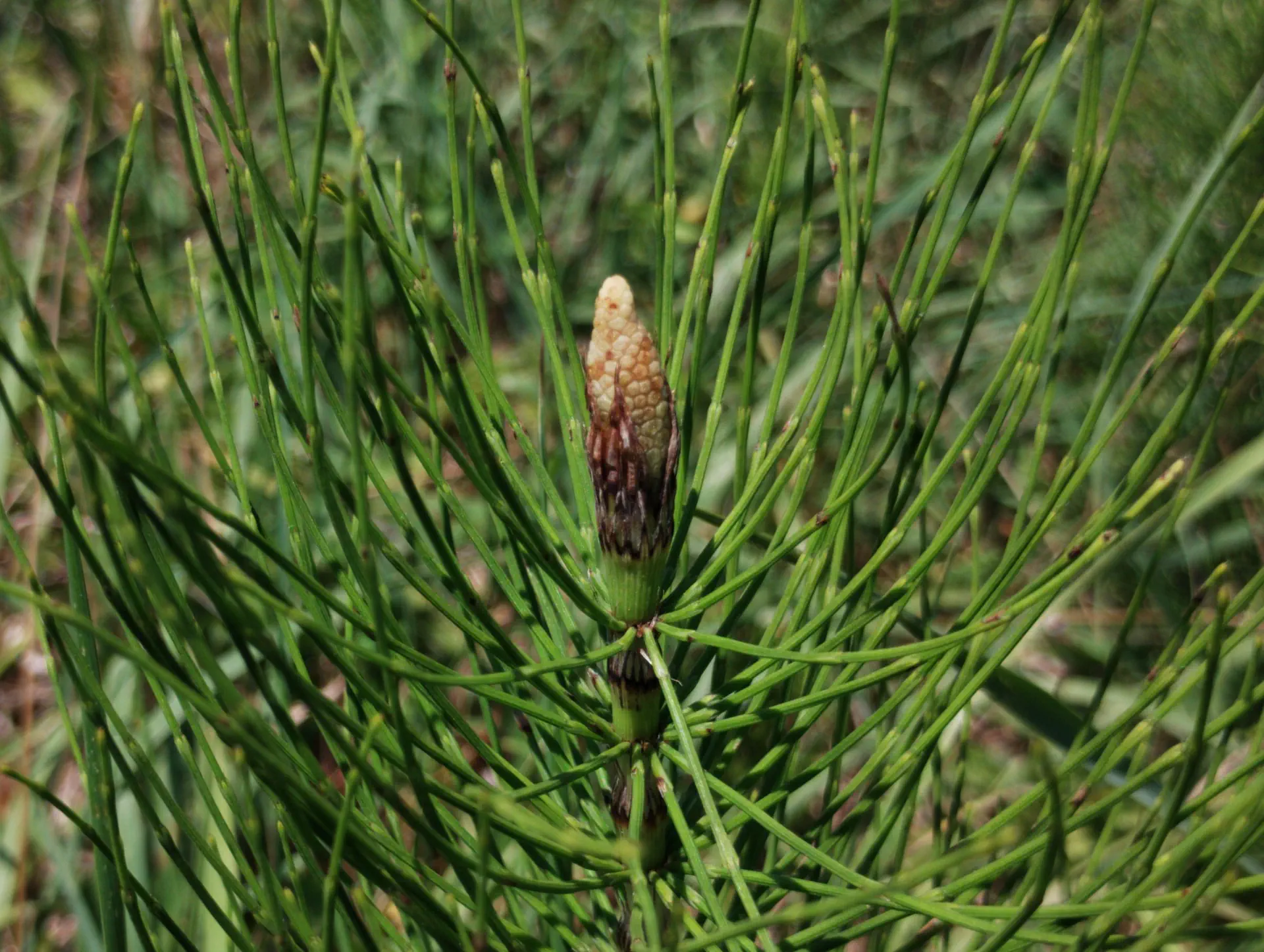
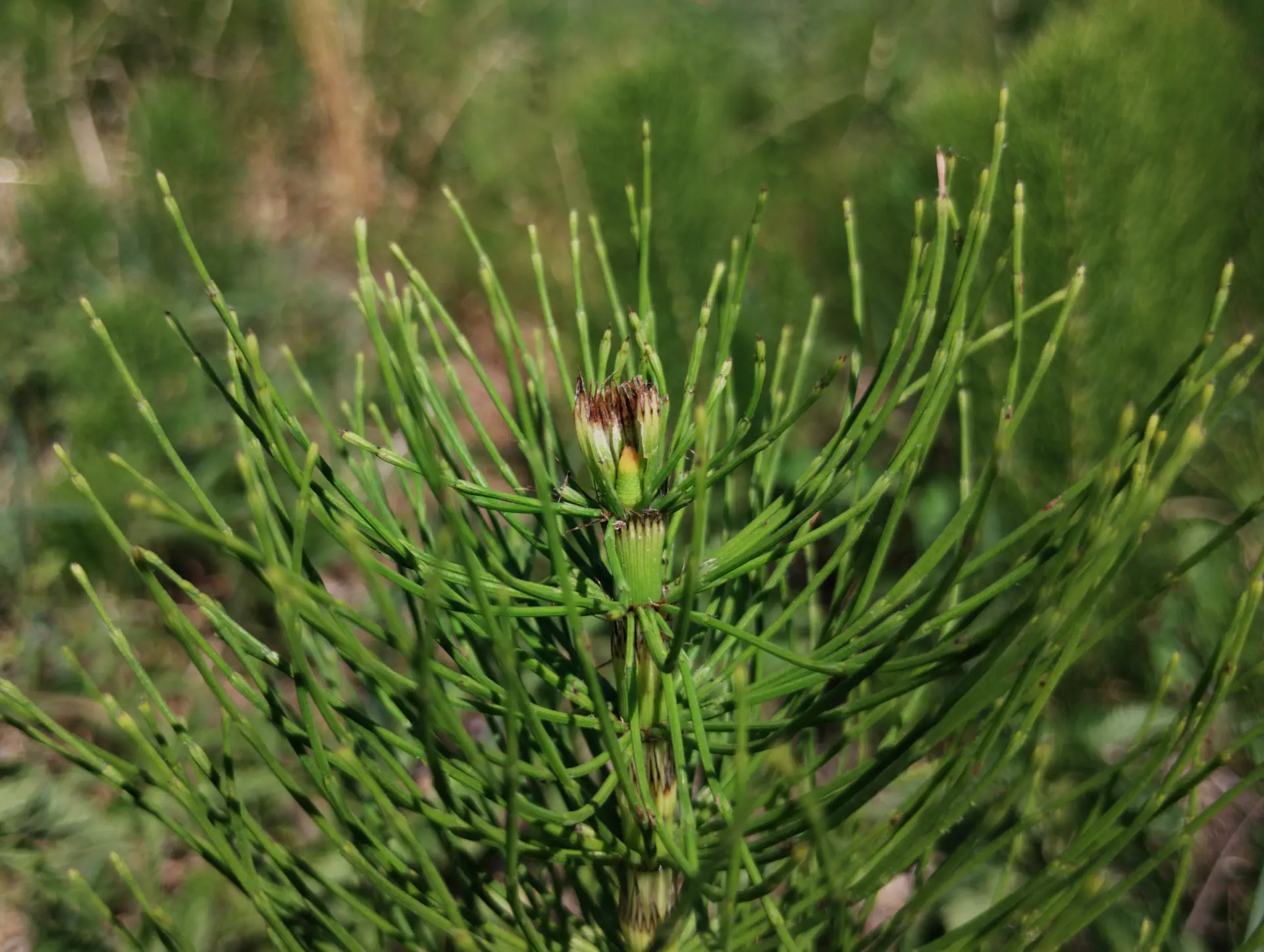
E. telmateia produces two kind of stems consecutively: first, non-chlorophyllous, strobilus-bearing stems (“fertile stems”), followed by chlorophyllous, branches-bearing stems, to allow photosynthesis (“sterile stems”).
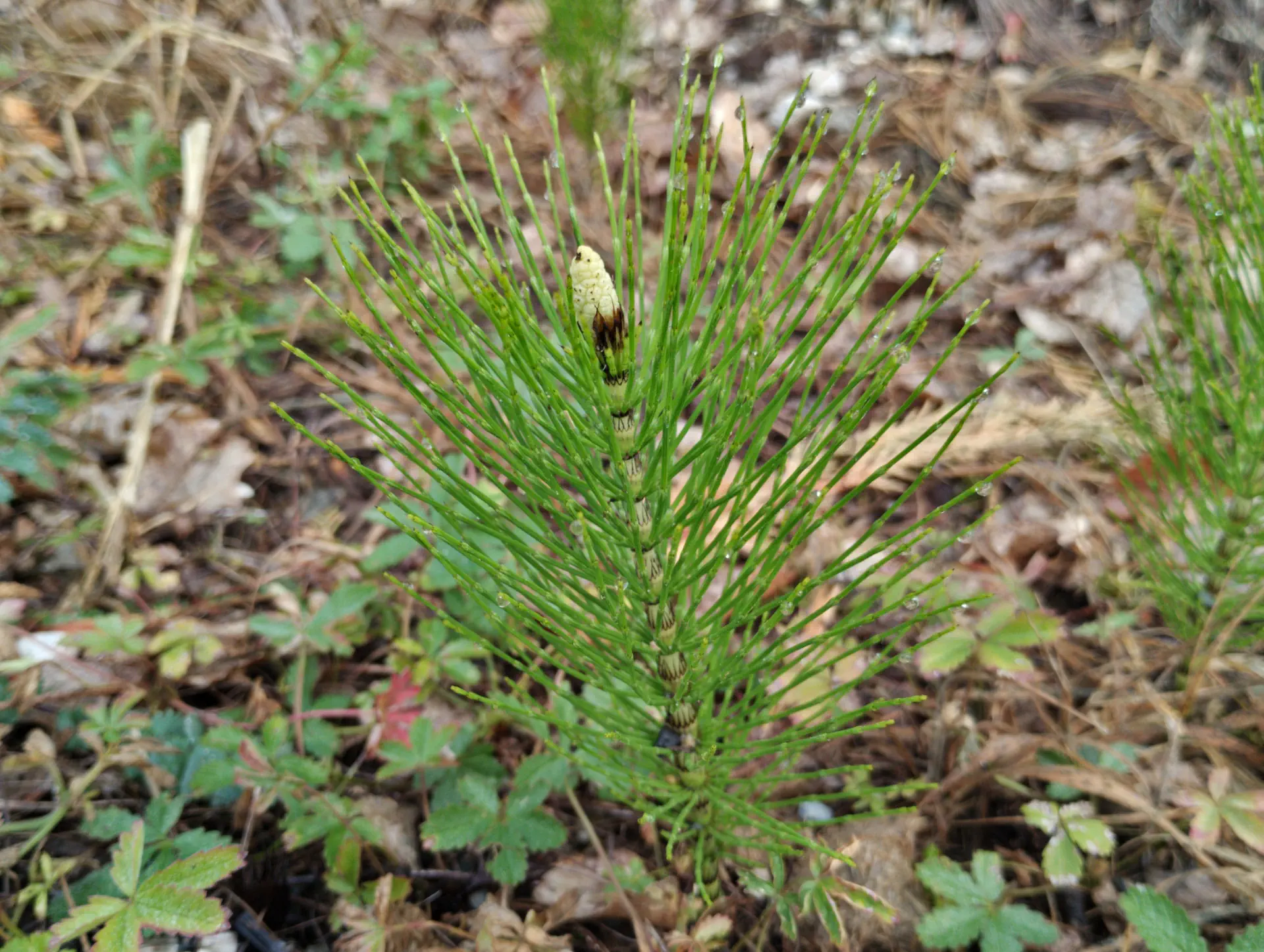
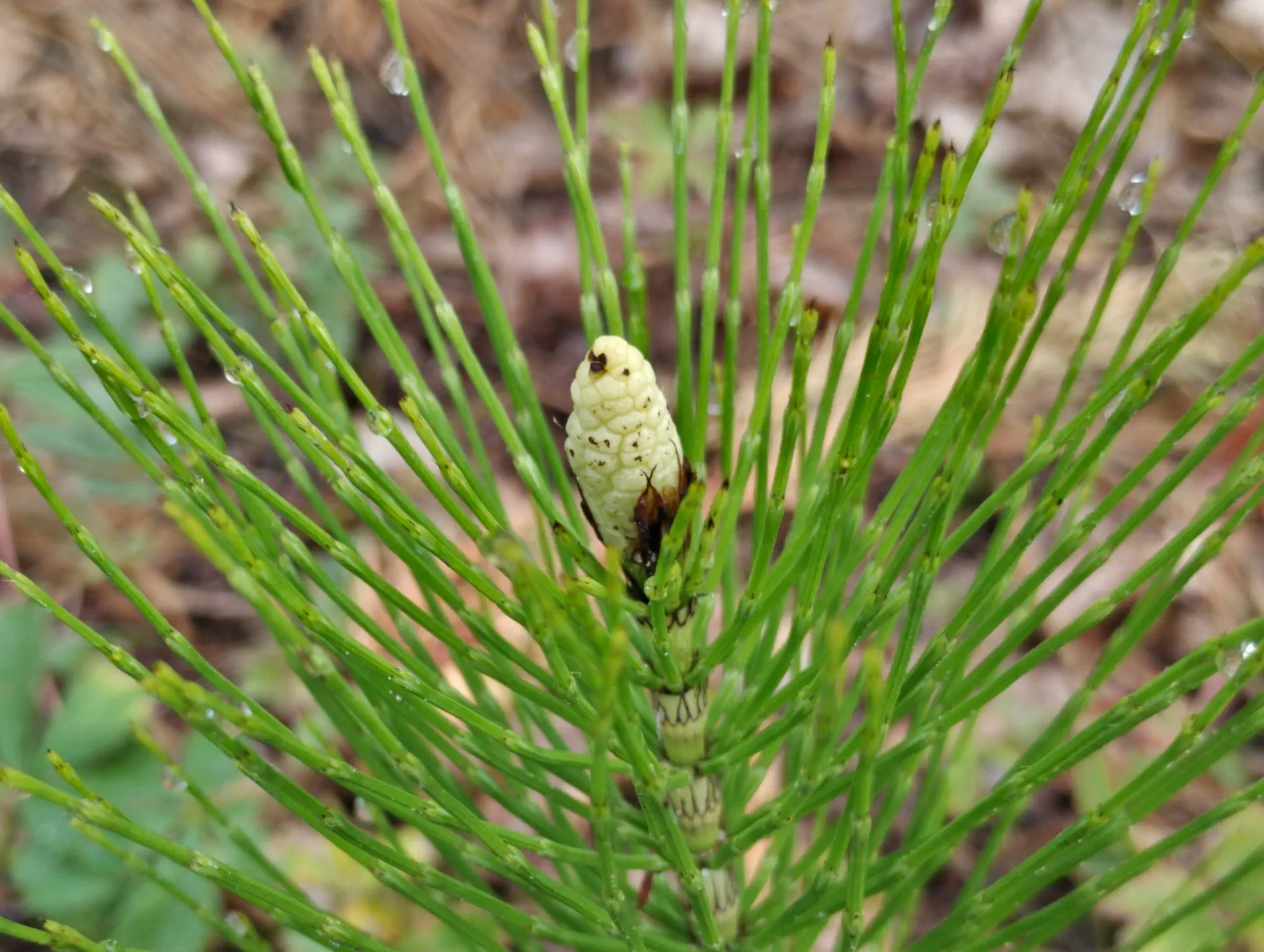
However it is not uncommon to find individuals with chlorophyllous stems that also bear a strobilus. This often occurs in areas where the plant is mowed during the growth of the chlorophyllous stems. The stress induced by the mutilation of the stems may prompt the plant to produce spores to ensure its survival. See the anomalies section below for some examples.
Hybridizes with:
- E. arvense L., 1753 to produce E. × robertsii Dines, 2002;
- E. palustre L., 1753 to produce E. × font-queri Rothm., 1944, P;
- E. sylvaticum L., 1753 to produce E. × bowmanii C.N.Page, 1989.
Photographs
Anomalies
Sources
Badré, F., & Deschatres, R. (1979). Les Ptéridophytes de la France : liste commentée des espèces (taxinomie, cytologie, écologie et répartition générale). Candollea, 34(2), 379-457. https://doi.org/10.5169/seals-880127
Christenhusz, M., Bento Elias, R., Dyer, R., Ivanenko, Y., Rouhan, G., Rumsey, F., & Väre, H. (2017). Equisetum telmateia (Europe assessment). The IUCN Red List of Threatened Species, 2017. https://www.iucnredlist.org/species/203004/85452008
Dines, T.D, & Bonner, I.R. (2002). A new hybrid horsetail, Equisetum arvense x E. telmateia (E. x robertsii) in Britain. Watsonia, 24, 145-157.
Prelli, R., & Boudrie, M. (2024). Les fougères et plantes alliées d’Europe (2nd ed., p. 113). Biotope.
Tison, J.M., & de Foucault, B. (2014). Flora Gallica : Flore de France (p. 15). Biotope.